By Penny Langford

The European Union’s revised European Sustainability Reporting Standards (ESRS) promise a substantial reduction in sustainability reporting volume. The European Commission says the rules adopted in July cut mandatory datapoints by more than 60%, reduce total datapoints by more than 70% and could lower reporting costs by more than 30% per company.
For mining companies, however, the change is unlikely to mean a simple reduction in compliance work.
The revised framework still depends on double materiality, digital reporting and external limited assurance. Mining groups will therefore need fewer disclosures, but stronger systems for deciding which issues are material, tracing information to site-level evidence and demonstrating that published figures are complete and reliable.
That distinction is important for producers of copper, lithium, nickel, gold, silver and other critical minerals. The sector’s most material risks : water, tailings, biodiversity, community rights, labor conditions, emissions and permitting : are operationally complex and geographically dispersed. Reducing the number of required fields does not remove the need to collect the underlying evidence.
What the revised ESRS changes
The European Commission adopted the revised ESRS on July 3. The measures remain subject to scrutiny by the European Parliament and Council before taking effect, with mandatory application expected for financial years beginning in 2027 and an early-application option for some companies reporting for 2026.

The Commission says the revision:
- Cuts mandatory datapoints by more than 60%.
- Reduces total datapoints by more than 70%.
- Removes voluntary datapoints from the core standards.
- Introduces clearer materiality filters.
- Is expected to reduce reporting costs by more than 30% per company.
The framework is intended to focus reporting on information that investors and other stakeholders need to understand a company’s sustainability risks, impacts and opportunities. The European Commission’s corporate sustainability reporting page describes double materiality as the basis for assessing both how sustainability issues affect a company and how the company affects people and the environment.

For miners, the practical effect is a shift from broad data collection to more defensible data selection.
A company may no longer need to report every available metric connected to biodiversity or water. It will still need to explain why a topic is material or not material, how that conclusion was reached and whether the supporting information is sufficiently robust for assurance.

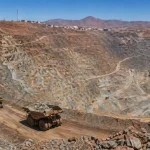
Mining ESG evidence increasingly connects site controls, operational systems and external assurance.
Fewer datapoints do not mean fewer data dependencies
The headline reduction is significant, but datapoints are only the final output of a broader reporting process.
A mining group preparing an ESRS report may need to combine:
- Water withdrawal, discharge and recycling data from multiple sites.
- Tailings facility inspections and risk classifications.
- Scope 1 and Scope 2 emissions from mobile and fixed equipment.
- Scope 3 information from contractors, smelters and logistics providers.
- Workforce, safety and turnover data.
- Community grievance and consultation records.
- Land disturbance, rehabilitation and biodiversity information.
- Supplier and human-rights due diligence.
- Financial exposure to climate, permitting and transition risks.
Much of this information does not originate in a corporate sustainability department. It sits in laboratory systems, maintenance platforms, fleet-management software, procurement databases, enterprise resource planning systems and local spreadsheets.
The revised standards may reduce the number of fields that appear in the final report, but they do not eliminate the need to reconcile those systems. In some cases, the cost of compliance may move upstream: from report preparation to data architecture, internal controls and site-level verification.
That is particularly relevant for mining companies operating across different jurisdictions. A water-quality result from a lithium brine operation, a rehabilitation estimate from a copper mine and a contractor safety metric from a nickel project may be collected under different local standards. Before the information can be consolidated, the company must establish common definitions, reporting boundaries and control procedures.
This is where digital tagging becomes important. Machine-readable reporting can improve comparability, but only if the underlying data is mapped consistently. Companies that built systems around the original ESRS will need to remap data models, revise reporting controls and determine which previously collected information is still required.
The result may be lower recurring reporting volume but higher near-term transition costs.
Assurance keeps pressure on data quality
The revised ESRS does not remove the broader CSRD assurance structure. Sustainability information remains subject initially to limited assurance, meaning an external assurance provider must evaluate whether anything has come to its attention indicating that the information is materially misstated.
Limited assurance is less extensive than reasonable assurance, but it is not a purely administrative review. Auditors still need to understand the reporting process, identify risk areas, test selected controls and examine supporting evidence.
For miners, the most difficult questions are likely to concern:
- Reporting boundaries: Which joint ventures, contractors and facilities are included?
- Data ownership: Who is responsible for the completeness and accuracy of each metric?
- Estimation: How are emissions, closure liabilities or water risks calculated where direct measurement is unavailable?
- Materiality: Why was a topic excluded, and what evidence supports that decision?
- Change control: Can the company show how a number was revised and approved?
These questions create a strong incentive to maintain auditable data trails even where a metric is not ultimately included in the published report.
The revised rules may reduce the number of disclosures, but they also make poor materiality decisions more visible. If a company excludes water stress from its reporting while operating in a basin with significant community and regulatory concerns, the explanation may attract more scrutiny than a standardized disclosure would have.
IRMA shows what “material” can mean at site level
The expansion of independent mining audits illustrates why corporate ESG reporting cannot be separated from operational evidence.
At Valterra Platinum’s Unki mine in Zimbabwe, the first IRMA renewal audit assessed performance against 428 requirements. The operation achieved an IRMA 75 level after substantially or completely meeting all 40 critical requirements and scoring at least 75% in each of IRMA’s four principle areas.
The IRMA renewal announcement said performance improved in business integrity, planning for positive legacies and environmental responsibility, while social responsibility remained at the previous level.
That result illustrates the depth of site-level evidence that can sit behind a high-level ESG statement. A corporate report may contain only a small number of indicators relating to environmental responsibility or community engagement. The underlying assurance process can involve hundreds of requirements, stakeholder interviews, corrective-action reviews and document checks.
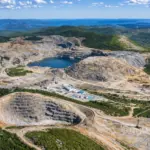
Site-level assurance can involve hundreds of requirements beyond the metrics included in a corporate report.
A similar process is scheduled at Albemarle’s Planta Salar de Atacama operation in Chile. According to IRMA’s audit announcement, KPMG Performance Registrar Inc. will conduct the on-site phase of a renewal audit in two periods in October.
The first phase is focused on local stakeholders, including community members and government officials. The second includes meetings with mine workers and site personnel. The operation extracts concentrated lithium brine and produces associated potash and other salts.
The audit is not a substitute for CSRD reporting. It is a separate responsible-mining assurance process. But it demonstrates the level of detail that stakeholders increasingly expect around water, labor, community engagement and operational controls : particularly in critical-minerals supply chains.
Linkable data table: what changes for mining companies
| Compliance area | Revised ESRS position | Likely mining-company implication |
|---|---|---|
| Mandatory datapoints | Reduced by more than 60% | Less final-report volume, but selective reporting requires stronger materiality decisions |
| Total datapoints | Reduced by more than 70% | Voluntary disclosures are narrowed, but core evidence remains important |
| Reporting cost target | More than 30% reduction expected by the Commission | Savings depend on whether systems can be efficiently remapped |
| Double materiality | Remains central | Companies must assess impact and financial materiality across sites and value chains |
| Digital tagging | Retained under the broader CSRD reporting architecture | Data models, taxonomies and controls must remain machine-readable |
| Limited assurance | Retained as the initial assurance level | Site evidence, control testing and audit trails remain necessary |
| IRMA-style stakeholder scrutiny | Separate from ESRS but expanding | Water, rights, labor and community data may face deeper external examination |
The table provides a useful framework for comparing reporting simplification with operational compliance requirements. The main conclusion is that the reporting layer is becoming smaller while the evidence layer remains substantial.
Mining ESG compliance 2026: base, bull and bear scenarios
| Scenario | Compliance environment | Cost and operational effect | Indicators to monitor |
|---|---|---|---|
| Base case | Revised ESRS reduces disclosure volume, while assurance and materiality requirements remain | Reporting teams save on recurring preparation, but spend continues on data governance, tagging and site controls | Final delegated-act timing, revised taxonomies, assurance-provider guidance |
| Bull case for efficiency | Companies successfully consolidate ESG data into controlled digital systems | Reporting costs fall close to the EU’s target as duplicate collection and manual reconciliation decline | Fewer spreadsheet-based processes, common site definitions, automated evidence trails |
| Bear case for miners | Materiality disputes, weak site data or assurance findings delay reporting and require remediation | Upfront systems spending rises and expected savings are eroded by restatement, consulting and control upgrades | Qualified assurance conclusions, repeated data corrections, unresolved water or rights issues |
The base case is the most plausible for large mining groups. Companies with mature enterprise systems may achieve meaningful savings, but those savings are unlikely to appear evenly across the organization. Corporate reporting may become more efficient while site-level data collection, control testing and assurance preparation remain expensive.
The bull case depends on standardization. A copper producer with common water, emissions and safety definitions across operations can benefit from automation and reusable controls. A diversified group with legacy systems, joint ventures and inconsistent local data may capture fewer benefits.
The bear case is most relevant where companies treat the revised ESRS as a reason to reduce investment in data systems. A shorter report can still expose weak controls if external assurance identifies gaps in measurement, evidence or materiality assessment.

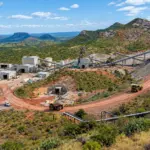
Water monitoring remains a material operational issue even when disclosure requirements are streamlined.
What mining executives should do next
Mining companies should approach the transition as a data-control project rather than a document-editing exercise.
The first step is to map each material topic to an accountable operational owner. Water data should have clear responsibility at the site and group levels. Tailings, emissions, worker safety and community grievances require the same treatment.
The second is to compare existing ESRS mappings with the revised standards. Companies should identify which datapoints have been removed, which remain mandatory and which internal metrics are still needed to support materiality conclusions or assurance.
The third is to test evidence quality before the first reporting cycle under the revised framework. A metric that can be calculated is not necessarily a metric that can be assured. Companies need documented methods, version control, approval workflows and clear explanations for estimates.
Finally, operators should maintain engagement with communities, workers and rights holders even where a specific disclosure has been removed. External expectations do not disappear because a datapoint becomes voluntary or is excluded from the final standard.
The EU’s revised ESRS should reduce unnecessary reporting burden. For miners, the lasting competitive advantage will come from knowing where the reduction is real and where the underlying evidence still matters.
In 2026, mining ESG compliance is becoming less about collecting everything and more about proving that the right information has been identified, controlled and tested.
Shareable takeaways
LinkedIn:
The EU’s revised ESRS cut mandatory datapoints by more than 60% and total datapoints by more than 70%. For miners, that does not eliminate ESG costs: double materiality, digital tagging, limited assurance and site-level evidence still require robust data systems.
X:
Fewer ESG datapoints do not mean fewer mining data costs. EU ESRS revisions reduce reporting volume, but water, tailings, rights, emissions and assurance still depend on controlled site-level evidence.