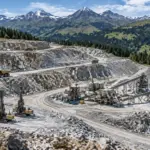
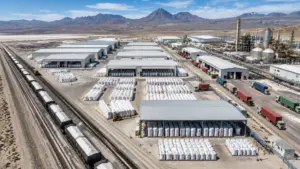
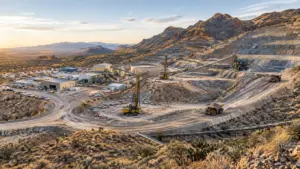
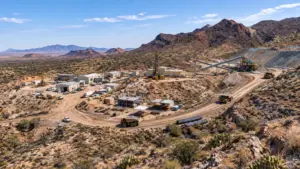
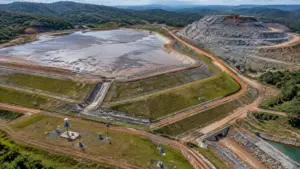
Lithium brine evaporation ponds and processing infrastructure in Argentina’s high-altitude Andes.

Lithium Argentina has closed a $180 million strategic investment from Ganfeng Lithium, strengthening the Chinese producer’s position in Argentina’s brine sector while giving Lithium Argentina additional capital and a more defined ownership structure across several projects in Salta province.
The investment is structured as a six-year unsecured convertible note carrying a 4% coupon. Ganfeng can convert the note into Lithium Argentina common shares at $12.50 per share. If converted in full, the note would result in the issuance of approximately 14.4 million additional shares.
Ganfeng already held about 9.6% of Lithium Argentina before the transaction. Full conversion of the note would increase its ownership to approximately 16.1% on a fully diluted basis, according to Lithium Argentina’s transaction announcement.
The deal comes as lithium producers and developers compete for strategic capital after a period of lower prices, project delays and tighter scrutiny of supply-chain exposure. Argentina remains one of the world’s most important brine-lithium jurisdictions, alongside Chile and Bolivia, and has attracted investment from Chinese, North American and Australian companies seeking long-term access to battery materials.
Key terms of the Ganfeng investment
| Deal term | Detail |
|---|---|
| Strategic investment | $180 million |
| Instrument | Six-year unsecured convertible note |
| Coupon | 4% |
| Conversion price | $12.50 per Lithium Argentina share |
| Potential new shares | Approximately 14.4 million |
| Ganfeng ownership before conversion | Approximately 9.6% |
| Ganfeng ownership after full conversion | Approximately 16.1% fully diluted |
| PPG joint venture ownership | 67% Ganfeng, 33% Lithium Argentina |
| PPG operator | Ganfeng Lithium |
| Principal assets | Pozuelos–Pastos Grandes, Pastos Grandes and Sal de la Puna |
The transaction was completed alongside the formation of a new joint venture known as PPG. The venture consolidates three Argentine brine assets under Millennial Lithium B.V., a Dutch holding company that will be owned 67% by Ganfeng and 33% by Lithium Argentina.

The structure gives Ganfeng majority ownership and operatorship of the combined PPG portfolio. Lithium Argentina retains a substantial minority interest and exposure to future development, production and offtake from the projects.
A larger Ganfeng footprint in Argentina
The PPG joint venture brings together assets that were previously held through separate ownership arrangements.
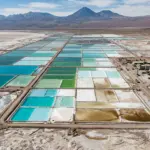
The Pozuelos–Pastos Grandes project was previously owned entirely by Ganfeng through Lithea Inc. and its Argentine branch. Pastos Grandes was held approximately 85.1% by Lithium Argentina and 14.9% by Ganfeng before the new structure. At Sal de la Puna, Lithium Argentina held 65% and Ganfeng 35%.
After closing, those interests are consolidated into the 67%/33% PPG joint venture. The parties said the ownership split reflects the relative resources, capital contributions and technology inputs associated with the projects.
Ganfeng will operate the joint venture, while major decisions related to budgets and financing will require approval from both partners. Offtake rights are expected to be allocated in proportion to ownership.
The arrangement extends a partnership that already includes Cauchari-Olaroz, an operating lithium brine project in Jujuy province. Lithium Argentina and Ganfeng collectively own 91.5% of the Exar project company, with the remaining 8.5% held by Jujuy’s provincial mining company, JEMSE.

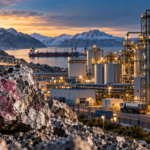
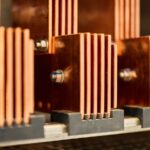
Processing tanks, piping and pumping systems form the bridge between brine extraction and battery-grade chemicals.
What the investment means for Lithium Argentina
For Lithium Argentina, the $180 million investment provides a strategic source of capital at a time when lithium developers face pressure to preserve liquidity and control construction spending.
The company has not described the note as being limited to a single project. Its importance is broader: the transaction gives Lithium Argentina funding capacity while allowing it to retain a 33% interest in the consolidated PPG assets.
That balance may be significant for future project development. Rather than funding every stage of the PPG portfolio independently, Lithium Argentina can participate in a larger operating platform led by Ganfeng. The arrangement could reduce duplication across infrastructure, processing and technical functions, although the final capital requirements and development schedules for individual projects remain subject to further planning and approvals.
The company also retains exposure to Argentina’s longer-term lithium growth without holding majority operating responsibility across the entire PPG portfolio. That reduces some execution obligations but leaves Lithium Argentina dependent on joint-venture decisions and Ganfeng’s development pace.
For investors and project financiers, the key issue will be how quickly the consolidated assets move from resource and development work into construction and production decisions.
Ganfeng’s supply-chain strategy
Ganfeng’s investment strengthens its upstream position in a country that is central to the company’s international expansion.
The company has built a presence across lithium mining, brine development, chemical conversion and battery-material supply. A larger position in Argentine brine assets gives Ganfeng greater control over the origin of future lithium feedstock and expands its role from partner to majority owner and operator across the PPG portfolio.
That strategy reflects a wider shift in the lithium industry. Producers and battery-material companies are increasingly seeking direct exposure to resources rather than relying exclusively on spot purchases or third-party suppliers.
The approach also helps connect Argentine production with processing and customer networks in Asia and other battery markets. Yet ownership alone does not remove the operational risks associated with high-altitude brine projects. Water management, evaporation performance, reagent use, infrastructure access, permitting and community relations remain important variables.
The investment therefore represents more than a financial transaction. It links resource ownership, project operatorship and potential downstream supply security in one structure.

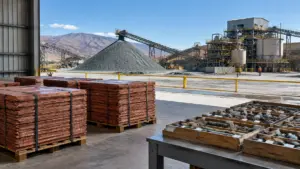
Pumping stations and pipe networks support the movement of lithium-bearing brine through the extraction process.
Argentina’s strategic role in lithium
Argentina has become a major destination for lithium investment because of its extensive salt-flat resources, established mining expertise and policy push to expand exports. The country’s principal lithium-producing provinces : Jujuy, Salta and Catamarca : form part of the so-called Lithium Triangle, which also includes northern Chile and southwestern Bolivia.
Brine projects can offer cost and scale advantages, but development timelines are often long. Companies must build roads, power systems, water infrastructure, processing plants and worker facilities in remote locations. High-altitude conditions can increase construction and logistics costs.
The deal’s project implications will therefore depend on how the partners sequence development across the PPG assets. Consolidation could improve planning and technical coordination, but it could also create competition for capital between projects.
Lithium Argentina and Ganfeng will need to determine which resources can be advanced first, what processing technology will be used and how production targets align with market conditions. Those decisions will matter in a market where supply forecasts remain divided.
Skillings’ lithium market analysis has highlighted the tension between delayed supply, mine curtailments and the potential return of idled capacity. Meanwhile, critical-minerals refining concentration remains a central concern for governments seeking supply chains that extend beyond extraction.
What to watch after closing
The investment removes a major transaction milestone, but several operating and financial questions remain.
Market participants will be watching for:
- A detailed development timetable for the PPG projects.
- Updated capital requirements and financing plans.
- Progress on technical studies, permits and infrastructure.
- The pace of construction or expansion decisions at individual projects.
- Ganfeng’s operating plans and production targets.
- The treatment of future offtake between the two partners.
- Lithium prices and their effect on project economics.
- Community and environmental requirements in Salta.
The conversion of the note is another important variable. If Ganfeng converts the full amount, its ownership of Lithium Argentina would rise to approximately 16.1%, increasing its influence at the parent-company level as well as its majority position in the PPG joint venture.
For Lithium Argentina, the transaction creates a path to remain exposed to Argentina’s lithium growth while sharing operatorship and development responsibilities with a larger strategic partner. For Ganfeng, it secures a stronger position in a major lithium basin and adds another link between Argentine resources and its broader battery-material supply chain.
The immediate financial benefit is clear: Lithium Argentina has secured $180 million in strategic capital. The longer-term value of the transaction will depend on whether that capital, combined with Ganfeng’s operating role, can move the PPG projects toward construction and commercial production.
Sources
- Lithium Argentina: PPG joint venture and $180 million strategic investment
- Lithium Argentina and Ganfeng form a new joint venture
- Reuters: Ganfeng starts lithium production at Argentina’s Mariana project
- Skillings: Lithium price outlook and hard-rock supply curtailments
- Skillings: Critical minerals refining concentration