Gold near $4,300 an ounce and silver around $63 have strengthened mine economics, but higher rates, a firm dollar, rising operating costs and long project timelines are keeping supply risk at the center of the 2026 outlook.

Gold mining enters 2026 with an unusual combination of strong prices and rising production costs. Gold is trading near $4,300 an ounce, while silver is near $63 an ounce, levels that support exceptional revenue for producers and improve the economics of new projects.
The operating environment is less straightforward than the headline prices suggest. Higher interest-rate expectations and a stronger U.S. dollar can pressure precious-metals valuations. At the mine level, diesel, explosives, labor, freight, maintenance, royalties and sustaining capital are all pushing costs higher.
The result is a widening gap between assets that can convert high prices into free cash flow and projects that still depend on favorable assumptions, contract discipline and timely construction.
Gold mining costs have moved to a higher baseline
The World Gold Council reported that global average all-in sustaining costs, or AISC, reached $1,785 an ounce in the first quarter, up 5% quarter over quarter and 16% year over year.

That was the 28th consecutive quarter of year-over-year AISC growth. Royalties were a major contributor, with royalty and production-tax costs rising as governments captured more revenue from higher gold prices.

Fuel and freight remain important risks. The World Gold Council said U.S. diesel prices rose sharply during the quarter, while freight and consumables costs at Gold Fields increased by 40% from the beginning of the Middle East conflict.
At the same time, the sector still generated record margins because gold prices rose faster than costs. Average AISC margins reached $3,076 an ounce in the first quarter, according to the World Gold Council. That margin is not equivalent to net income or free cash flow, but it shows the scale of the current operating tailwind.
Linkable data table: gold mining economics in 2026
| Indicator | 2026 reference point | Why it matters |
|---|---|---|
| Gold spot price | About $4,300/oz | Supports producer margins but can increase royalties and taxes |
| Silver price | About $63/oz | Improves by-product credits for gold and polymetallic mines |
| Global average AISC | $1,785/oz in Q1 | Shows the sector’s higher underlying cost base |
| Year-over-year AISC change | +16% | Cost inflation remains structural |
| Average AISC margin | $3,076/oz in Q1 | Gold prices have outpaced cost inflation |
| Barrick 2026 gold AISC guidance | $1,760–$1,950/oz | Company guidance reflects continued cost pressure |
| Cariboo construction target | First gold in Q1 2029 | New supply remains several years away |
| Cariboo go-forward capital | About C$990 million | Funding and execution remain central project risks |
Sources: World Gold Council, Barrick Gold and Osisko Development disclosures. Company-level AISC figures are not directly comparable where reporting bases, by-product credits or metal mixes differ.
Rates and the dollar remain important pressure points
The gold price has benefited from geopolitical uncertainty, central-bank demand and investment flows. However, monetary policy can still change the direction of the market.
Higher real interest rates increase the opportunity cost of holding a non-yielding asset such as gold. A stronger U.S. dollar can also reduce purchasing power for buyers using other currencies. Those effects matter not only for bullion but also for mining equities, whose valuations reflect expected future cash flows.
This explains why mining shares can lag gold during periods of rate volatility. Investors may apply a higher discount rate to long-life assets even when the current spot price is strong. Developers are particularly exposed because their construction capital is spent before production begins.
For operators, the key issue is not whether rates are high or low in isolation. It is whether financing costs, project capital and commodity prices move in the same direction. A project that appears robust at $4,300 gold can still face delays if lenders, contractors or equipment suppliers reprice risk.
Contracts are becoming a larger part of the cost story
Mining contracts typically stretch across fuel, drilling, blasting, underground development, haulage, processing, power, equipment maintenance and construction. When costs rise quickly, the commercial terms determine who absorbs the increase.
Several provisions deserve closer attention in 2026:
- Fuel escalators that pass diesel movements through to mine owners.
- Labor-indexed rates that adjust with wages and regional shortages.
- Fixed-price construction packages that can become difficult to deliver during inflation.
- Take-or-pay commitments for power, transport or processing capacity.
- Availability guarantees for mining fleets and critical equipment.
- Change-order provisions tied to ground conditions, permitting or design changes.
Long-term contracts can protect a mine from short-term volatility, but they can also lock in unfavorable terms if assumptions change. The World Gold Council noted that larger producers were better placed to manage fuel disruption through inventories, hedging, power-purchase agreements and long-term procurement.
The same advantage does not always exist for smaller producers. Single-asset companies may have less negotiating power and less flexibility to absorb delays or supplier repricing.
Automation can help, but it is not a complete solution. Fleet management, remote operations and predictive maintenance may reduce unit costs over time, yet they require reliable networks, trained personnel and upfront capital. Skillings has examined how autonomous mining technology is increasingly tied to mine-wide communications infrastructure rather than equipment alone.

Processing infrastructure remains exposed to energy, maintenance, consumables and sustaining-capital costs.
Nevada pipeline: strong economics, difficult execution
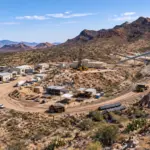
Nevada remains one of the most important gold jurisdictions in North America, but the region illustrates the difference between resource potential and near-term supply.
Barrick’s Fourmile project continues to be positioned as a potential standalone Tier One asset. The company has also advanced decline development and infrastructure contracting at Bullion Hill, with drilling focused on resource conversion and a prefeasibility study targeted for 2028, according to its 2026 second-quarter update.
The pipeline benefits from high gold prices, established infrastructure and a skilled mining workforce. It is also exposed to:
- Rising underground development rates.
- Contractor availability and wage inflation.
- Permitting and water-management requirements.
- Power and fuel costs.
- Higher sustaining-capital assumptions.
- Delays between resource conversion and construction decisions.
Technical studies can show attractive life-of-mine AISC, but many were prepared using earlier cost assumptions. The difference between a study completed before the latest inflation cycle and an operating mine today can be material.
That is why Nevada projects should be assessed on cost sensitivity rather than headline AISC alone. A project with a nominal $1,100 or $1,400 life-of-mine AISC may remain competitive, but decision-makers need to test higher diesel, labor, construction and sustaining-capital costs before committing capital.
Cariboo moves from development into construction
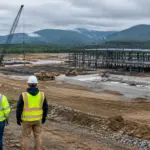
The Cariboo Gold Project in British Columbia provides a useful contrast to Nevada. Osisko Development’s project has moved beyond exploration and early underground work into full construction.
According to project updates available through Cariboo Gold, construction began in 2026 under a schedule targeting first gold in Q1 2029 and commercial production in the second half of 2029. The project was approximately 22% complete by the end of July, with around 3 kilometers of underground development completed.
Osisko has estimated approximately C$990 million in go-forward capital, with engineering, procurement and construction contracts being committed in stages. The company has also engaged JDS Energy & Mining for project-build support.
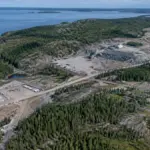
Cariboo’s timeline highlights the supply problem facing the wider gold industry. Even with strong prices, new production does not arrive immediately. Underground development, infill drilling, permitting, procurement, construction and commissioning can take years.
The project also faces the familiar risks of a large build: contractor performance, inflation, equipment delivery, community agreements, environmental approvals and financing conditions. The British Columbia Environmental Assessment Office remains an important source for regulatory updates.

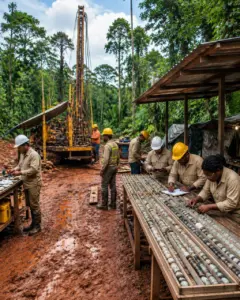
Underground development and resource-conversion drilling are central to Cariboo’s construction schedule.
Gold and silver outlook: base, bull and bear cases
The following framework is illustrative rather than a price target or investment recommendation.
| Scenario | Gold assumption | Silver assumption | Operating implications |
|---|---|---|---|
| Bear case | $3,300–$3,900/oz | $45–$58/oz | Stronger dollar and higher real rates pressure margins; marginal projects are deferred |
| Base case | $3,900–$4,700/oz | $55–$80/oz | Producers preserve liquidity, prioritize sustaining capital and advance only well-funded projects |
| Bull case | Above $4,700/oz | Above $80/oz | Geopolitical risk and investment flows support margins; construction and exploration activity accelerate |
The base case assumes that gold remains historically strong but does not rise indefinitely. It also assumes that operating costs remain elevated, with royalties, fuel, labor and consumables preventing the industry from returning to its pre-inflation cost structure.
Silver adds another layer of uncertainty. Skillings’ silver price prediction 2026 analysis points to a projected 46.3-million-ounce market deficit, flat mine supply and increasing recycling. Industrial demand, solar thrifting, refinery capacity and investment flows will determine how that deficit reaches the price.
For gold miners with silver credits, sustained silver prices near $63 can improve revenue and lower reported gold-equivalent costs. But the benefit depends on recovery rates, payable terms and whether silver is produced as a primary metal or a by-product.
What decision-makers should monitor
The strongest gold mining news in 2026 will not be limited to spot prices. Operators, investors and policymakers should monitor:
- AISC with and without by-product credits.
- Royalty and tax sensitivity at higher gold prices.
- Fuel hedging and supplier-contract coverage.
- Construction progress against committed capital.
- Contractor rates and change-order exposure.
- Resource conversion at Nevada and Cariboo projects.
- Interest-rate and dollar trends affecting project finance.
- Free-cash-flow conversion after sustaining capital.
Gold near $4,300 and silver near $63 provide a powerful economic incentive to produce more metal. They do not, however, remove the constraints created by permitting, construction, contracting, labor, infrastructure and cost inflation.
The central issue for gold mining news in 2026 is therefore supply quality rather than supply enthusiasm. Projects that are funded, permitted, contracted and advancing underground work are moving closer to the front of the pipeline. Others may remain economically attractive on paper while waiting for capital, approvals or a more favorable cost environment.
LinkedIn snippet
Gold near $4,300 an ounce is supporting record mine margins, but global AISC has reached $1,785 an ounce after 28 consecutive quarters of year-over-year growth. Nevada and Cariboo show why supply remains slow: contracts, construction, permitting and cost inflation still determine when new ounces arrive.
X snippet
Gold near $4,300 and silver near $63 support miners, but AISC has risen to $1,785/oz. Nevada and Cariboo show the supply constraint: high prices improve economics, yet contracts, permitting and construction still set the timeline. #GoldMining #Silver #MiningNews