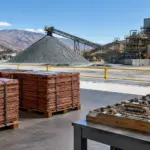
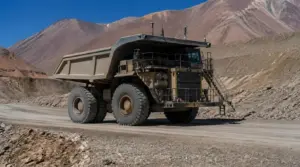
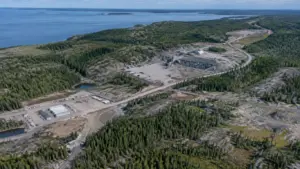
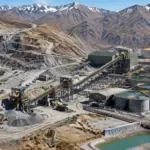
European-style hard-rock lithium mining operation with processing and transport infrastructure in an Alpine setting.

By Penny Langford
Critical Metals Corp. has secured a key court order allowing European Lithium to move ahead with shareholder and optionholder meetings on its proposed acquisition, advancing a transaction initially valued at about A$1.16 billion, or approximately US$835 million.
The order from the Supreme Court of Western Australia is an important procedural milestone, but it does not represent final court approval of the acquisition. European Lithium must still obtain securityholder approvals and return to court for a second hearing before the schemes can become effective.
The all-stock transaction would give Critical Metals (Nasdaq: CRML) full ownership of European Lithium (ASX: EUR), including its interest in the Tanbreez rare earths project in Greenland and its cash and marketable securities. The deal would also deepen Critical Metals’ position in Europe’s emerging lithium supply chain through the Wolfsberg Lithium Project in Austria.
The companies are targeting implementation in early November, subject to the remaining conditions.

Court order clears the way for votes
The first court hearing, held on Sept. 15, authorized European Lithium to convene separate meetings of its shareholders and listed optionholders. The court also approved the process for distributing the scheme booklet, which contains information on the transaction, the revised share-exchange terms and the risks facing securityholders.
The meetings are scheduled for Oct. 22, according to public company updates. European Lithium also plans to hold a general meeting on the same day to consider related resolutions.
The distinction between the first and second court hearings is significant. Under Australia’s scheme-of-arrangement process, the first hearing determines whether the proposed meetings can proceed. A second hearing, held after the votes, determines whether the court will approve the schemes themselves.
Only after that second order, together with the satisfaction or waiver of other conditions, can the acquisition be implemented.
Critical Metals director Mike Hanson, who leads the special committee overseeing the transaction, described the court process as a step toward bringing European Lithium’s assets into the Critical Metals group.
“Lodgement of the Scheme Booklet with ASIC is an important step forward and reflects the steady progress both companies are making toward completion,” Hanson said in the company’s Aug. 28 update.
Deal value reflects an earlier exchange ratio
Critical Metals announced the proposed acquisition in April at an estimated value of about US$835 million. That figure was based on an exchange ratio of 0.035 Critical Metals shares for every European Lithium share, using Critical Metals’ unaffected share price and the applicable exchange rate at the time.
The equivalent amount was reported as roughly A$1.16 billion. Because the transaction is share-based, its effective value will change with Critical Metals’ Nasdaq share price, the Australian dollar-U.S. dollar exchange rate and the final number of shares issued.
The parties later amended the exchange mechanics. Under the revised terms, the exchange ratio will be linked to Critical Metals’ 20-day volume-weighted average price before the relevant transaction milestone:
- 0.045 Critical Metals shares per European Lithium share if the Critical Metals VWAP is at or below US$8.
- 0.025 Critical Metals shares per European Lithium share if the VWAP is at or above US$16.
- A ratio that moves linearly between those levels when the VWAP falls between US$8 and US$16.
That floating structure reduces the risk that a sharp movement in Critical Metals’ share price will materially alter the economics for one side of the transaction. It also means that the originally disclosed dollar value should not be treated as a fixed cash purchase price.
The transaction will be completed through two interdependent schemes: one covering European Lithium shares and another covering its listed options, traded on the Australian Securities Exchange under the ticker EUROC.
Small holders may be eligible for a sale facility under which the Critical Metals shares issued to them are sold on-market and the net proceeds are paid in cash.
Strategic rationale extends beyond lithium
The acquisition would expand Critical Metals’ European supply-chain footprint while consolidating ownership of key assets in Greenland and Austria.
European Lithium owns a 7.5% interest in the Tanbreez rare earths project in southern Greenland. Critical Metals already holds the remaining interest, meaning completion would give it full ownership of the project.
Tanbreez is expected to provide Critical Metals with a large rare earths development platform in a jurisdiction aligned with Western supply-chain objectives. Full ownership would simplify decision-making, capital planning and future financing discussions as the project moves toward a development decision.
The deal would also provide access to European Lithium’s cash resources. At the time of the original announcement, European Lithium reported approximately A$306 million in cash, while Critical Metals held about US$124 million in standalone cash. The transaction terms include a requirement for European Lithium to have at least A$330 million in net cash and liquid assets at completion.
For Critical Metals, the proposed acquisition is therefore both a mining consolidation and a balance-sheet transaction. It would combine lithium, rare earths and cash resources within a single listed company focused on critical-minerals development.
That strategy reflects the wider competition to secure mineral supply chains closer to European and North American manufacturers. Skillings has previously examined how critical-minerals refining concentration and new export controls are reshaping supply-chain risk.

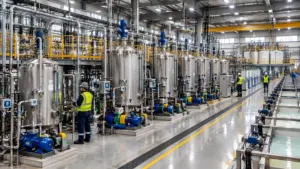
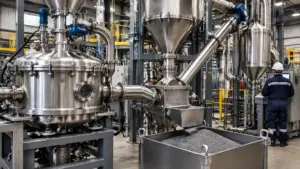
Processing and mineral-separation equipment at a European lithium facility.
Wolfsberg anchors the European lithium case
European Lithium’s Wolfsberg project is located in Carinthia, about 270 kilometers south of Vienna. Critical Metals describes the project as fully permitted and strategically positioned near established road and rail infrastructure.
Wolfsberg is intended to produce lithium products for the European market from hard-rock spodumene ore. Its location gives the project a different strategic profile from many of the world’s large lithium operations, which are concentrated in Australia, South America and China.
The project still faces the practical risks associated with mine development, including construction, financing, commissioning, operating costs, permitting compliance and the need to establish reliable downstream production. Full ownership by Critical Metals could give the company greater control over project sequencing and financing, but it does not eliminate execution risk.
The transaction comes as lithium markets continue to move between periods of oversupply and concerns about future demand from electric vehicles, energy storage and industrial applications. As outlined in Skillings’ lithium outlook coverage, investment decisions increasingly depend not only on resource size but also on project location, processing access, financing capacity and customer commitments.
Remaining conditions and milestones
The transaction remains conditional on a series of corporate, regulatory and financial requirements. The main milestones are summarized below.
| Milestone or condition | Status or requirement | Why it matters |
|---|---|---|
| Scheme booklet | Lodged with ASIC for review; court process authorized distribution | Gives securityholders information needed to assess and vote on the transaction |
| First court hearing | Completed on Sept. 15 | Allows shareholder and optionholder meetings to be convened |
| Shareholder meeting | Scheduled for Oct. 22 | European Lithium shareholders must approve the Share Scheme |
| Optionholder meeting | Scheduled for Oct. 22 | Holders of listed EUROC options must approve the Option Scheme |
| Final court hearing | Still required after the meetings | The court must approve the schemes before they become effective |
| Net cash condition | At least A$330 million in net cash and liquid assets at completion | Protects the agreed balance-sheet profile of the transaction |
| Regulatory approvals | All required approvals, consents, waivers or modifications must be obtained | Ensures the transaction satisfies applicable legal and market requirements |
| Other securities | Cancellation deeds required for unlisted options and ZEPOs | Establishes how securities outside the listed share base will be treated |
| Material adverse change | No qualifying material adverse change or prescribed occurrence | Protects both parties against significant deterioration before closing |
| Target implementation | Early November, subject to all conditions | Provides the current indicative completion timetable |
The October votes will be the next major test. Approval will depend on the voting thresholds required under the schemes and the relevant Australian corporate law provisions. Even if both meetings support the transaction, the court will retain discretion at the final hearing.
The parties must also continue to satisfy due-diligence, regulatory and conduct-related conditions. European Lithium has agreed to exclusivity provisions that limit its ability to pursue competing proposals, subject to specified exceptions.

Rail and processing infrastructure illustrating the logistics requirements of a European lithium supply chain.
Consolidation could reshape the ownership structure
The acquisition would also change Critical Metals’ shareholder base. European Lithium owns approximately 34% of Critical Metals through a large cross-holding, as well as its 7.5% interest in Tanbreez.
Critical Metals has said the cross-held shares are expected to be canceled as part of the transaction. That would reduce some of the dilution associated with issuing new shares while increasing the company’s public float.
The result would be a more widely distributed ownership structure, although the transaction would still issue new Critical Metals shares to European Lithium securityholders. The final share count will depend on the amended exchange ratio and the treatment of listed and unlisted securities.
For investors and operators, the deal offers a useful measure of how critical-minerals companies are combining development assets, cash and strategic ownership positions rather than pursuing single-commodity growth alone. The transaction links European lithium production ambitions with Greenland rare earths and broader Western supply-chain objectives.
It also illustrates why court approval should not be confused with closing. Critical Metals has cleared the first procedural hurdle, but the acquisition remains dependent on securityholder votes, final court approval and several financial and regulatory conditions.

Spodumene-bearing pegmatite ore being sampled during a lithium exploration and processing workflow.
What to watch next
The most important near-term indicators are the final scheme booklet, the outcome of the October meetings and any changes to the indicative timetable.
Market participants will also watch the Critical Metals share price because the floating exchange ratio makes the final number of shares issued sensitive to the company’s VWAP. That mechanism could affect both the effective transaction value and the ownership percentages of the combined company.
If the votes pass and the Supreme Court of Western Australia grants final approval, the transaction could be implemented in early November. Until then, the deal remains a court-supervised proposal rather than a completed acquisition.
For the European lithium sector, the transaction highlights the growing value placed on permitted projects, regional infrastructure and strategic control of supply. For Critical Metals, completion would create a broader critical-minerals platform: but one whose success will ultimately depend on financing, construction and the ability to convert assets into operating production.
Sources: Critical Metals’ acquisition announcement; Critical Metals’ scheme-process update; Reuters coverage.