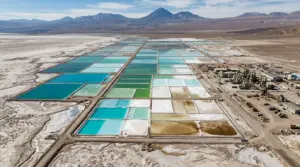
Helicopter-supported diamond drilling on a steep Golden Triangle mountainside.

By Penny Langford
Goliath Resources has reported multiple drill holes containing visible gold at the Golden Gate Zone of its Surebet discovery in British Columbia’s Golden Triangle, including an intercept grading 13.81 grams per tonne gold over 4.85 metres.
The company also reported 5.27 grams per tonne gold equivalent over 9.85 metres from the Surebet Zone. Goliath said both zones remain open for expansion.
The results, reported by the company on Sept. 16 and covered in company releases and GlobeNewswire, add to an expanding body of exploration data from the Golddigger property.

The headline numbers are notable for their grade and the presence of visible gold. But the latest holes remain exploration results rather than a resource estimate. The next questions will centre on continuity, true width, geometry and whether the mineralized structures can eventually support a mineable and permitted operation.

Key intercepts from the latest drilling
The results highlighted by Goliath came from holes drilled into the Golden Gate and Surebet zones.
| Hole ID | Zone | Interval | Grade |
|---|---|---|---|
| GD-26-478 | Golden Gate | 4.85 metres, as reported | 13.81 g/t Au |
| GD-26-426 | Surebet | 9.85 metres, as reported | 5.27 g/t AuEq |
The Golden Gate result is reported as gold only. The Surebet interval is reported on a gold-equivalent basis, or AuEq, which combines gold with the contribution of other payable metals according to stated assumptions.
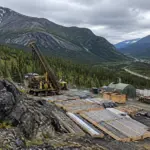
Goliath said hole GD-26-478 intersected visible gold in a volcanic-hosted interval at Golden Gate. Hole GD-26-426 returned the Surebet Zone intercept and formed part of the company’s ongoing effort to test the broader mineralized system.
Grades in drill results are weighted averages across the reported interval. They do not indicate that every metre contains the headline grade, and they do not by themselves establish the size or economic value of a deposit.

Drill core from a remote alpine exploration program.
Why Golden Gate matters to Surebet
Surebet is a multi-zone gold-silver discovery on Goliath’s Golddigger property. The system includes the Surebet, Golden Gate, Bonanza and other mineralized zones, with drilling aimed at defining their scale and relationship.
The latest Golden Gate intercept is important because it combines a high grade with the geological evidence of visible gold in a step-out setting. Step-out drilling tests whether mineralization continues beyond previously drilled areas. Positive results can expand the interpreted footprint, but they also create a larger geological model that must be tested with additional holes.
For a potential future resource, the company will need to demonstrate more than isolated high-grade intervals. Technical teams will examine:
- Continuity: whether mineralization persists between drill holes and along strike.
- Width: whether reported intervals represent substantial mineable widths or narrow structures.
- Orientation: how the zones dip and plunge relative to the surrounding rock.
- Grade distribution: whether high grades are consistent enough to support mine planning.
- Metallurgy: how efficiently gold and other metals can be recovered.
- Geotechnical conditions: whether the host rock can support underground or surface development.
- Infrastructure requirements: including power, access, water management and concentrate transport.
The company’s statement that Surebet remains open for expansion indicates that drilling has not yet defined the limits of the system. That can create exploration upside, but it also means the deposit’s final scale and configuration remain uncertain.
Golden Triangle setting raises both interest and complexity
The Golden Triangle is one of Canada’s best-known mineral districts. It hosts past-producing and current mining operations and development projects, including Brucejack, Red Chris and Premier. The region is recognized for high-grade gold and silver mineralization associated with sulphide-bearing structures, intrusive systems and complex geological controls.
Its reputation has helped attract exploration capital and technical expertise. It has also demonstrated the practical challenges of building and operating mines in northern British Columbia.
Surebet is located in rugged terrain where drill crews and equipment typically depend on helicopters, temporary camps and carefully planned seasonal logistics. Steep slopes, glaciers, heavy precipitation and limited road access can restrict the amount of work completed during the field season.
For exploration companies, the short drilling window affects everything from mobilization schedules to assay timing. Delays in moving rigs, fuel and core supplies can push work into the following season. For mine developers, the same geography can translate into higher construction and operating costs.

Remote drill access is a defining feature of exploration in the Golden Triangle.
Exploration success is not yet a resource statement
The distinction between exploration results and a mineral resource is central to interpreting Goliath’s announcement.
A drill intercept demonstrates that mineralization was encountered along a particular hole at a particular location. A mineral resource requires a broader body of geological data, including sufficient drilling, geological interpretation, sampling and quality-control work to support an estimate of tonnage and grade.
That estimate must then be reported under applicable disclosure standards. It can be classified into categories such as inferred, indicated or measured, depending on the level of geological confidence.
The latest results may contribute to a future resource model, but they do not establish one. They also do not demonstrate economic viability. Economic studies would require further work on mining methods, recovery rates, capital costs, operating expenses, infrastructure and permitting.
The company’s earlier releases show a continuing pattern of drilling across the Surebet system. Goliath has previously reported the expansion of the Golden Gate and Bonanza zones, as well as new mineralized areas between them. The cumulative data could help define a more connected system, although additional drilling is needed to confirm that interpretation.
Permitting and First Nations engagement remain key risks
Any path from discovery to production in British Columbia involves a long sequence of technical, environmental, regulatory and community requirements.
The provincial government’s mining life-cycle and permitting framework covers exploration, development, production, reclamation and closure. Mechanized exploration activities such as drilling require authorization, while a producing mine requires additional permits under the Mines Act and related environmental legislation.
British Columbia also requires engagement with Indigenous Peoples throughout the mining life cycle. The province identifies Indigenous engagement as part of the permitting process. For a remote project such as Surebet, First Nations engagement will be relevant to land access, environmental stewardship, cultural values, employment, contracting, infrastructure and long-term project governance.
The time required to move from exploration to production varies by project. It depends on the scale of the proposed mine, environmental effects, infrastructure needs, permitting complexity and the quality of consultation and collaboration. A discovery can therefore be geologically significant while remaining many years from any development decision.
What investors and operators will watch next
The next round of technical information will help determine whether the latest results are part of a coherent and scalable mineralized system.
Key markers include:
- More step-out drilling at Golden Gate. Additional holes could show whether the high-grade zone extends along strike or down dip.
- Results from connecting areas. Drilling between Golden Gate, Bonanza and Surebet may clarify whether the zones are separate structures or components of a broader system.
- Reported true widths. Downhole lengths can overstate or understate the thickness of a mineralized body depending on the angle of intersection.
- Metallurgical testing. Gold associated with sulphide-bearing structures may require detailed recovery testing before processing assumptions can be made.
- A formal resource estimate. This would provide a more structured measure of tonnage, grade and geological confidence.
- A development and permitting strategy. Access, infrastructure, environmental studies and First Nations engagement will become increasingly important as exploration advances.

Core logging helps define mineralized structures and guide follow-up drilling.
For now, Goliath’s latest results strengthen the exploration case for Surebet and expand the flow of high-grade data from Golden Gate. The 13.81 g/t gold over 4.85 metres intercept is a significant exploration result, while the 5.27 g/t AuEq over 9.85 metres interval adds further information from the central Surebet Zone.
The more consequential test will be whether those grades and widths can be reproduced across a sufficiently large and continuous volume of rock. Until that geological, engineering and regulatory work is complete, Surebet remains a promising exploration discovery rather than a defined mine project.
Related coverage: gold and silver market developments and mining ESG, permitting and disclosure.