By Penny Langford

For mining companies, ESG compliance is moving from a reporting exercise into a condition of access: access to permits, financing, insurance, strategic government support and, increasingly, customers.
Brazil’s Senate approval of the National Policy for Critical and Strategic Minerals illustrates the change. The framework would create the National Council for the Industrialization of Critical and Strategic Minerals, known as CIMCE, alongside a potential R$2 billion Mineral Activity Guarantee Fund and up to R$5 billion in tax credits for domestic processing, transformation and urban mining projects. The bill has advanced for presidential sanction, according to Demarest.
The policy is designed to accelerate Brazil’s position in lithium, nickel, copper, rare earths, graphite and other strategic minerals. But the incentives come with a more interventionist framework around project qualification, traceability, transactions and regulatory oversight.
That creates a practical question for operators and investors: can a project demonstrate not only that it has a resource, but also that its water rights, tailings facilities, community engagement and environmental data are sufficiently robust to withstand regulatory review?
More Read
ESG is becoming a permit-to-operate system
The central shift in 2026 is that ESG controls are increasingly being tested through operational evidence rather than corporate statements.

A sustainability report may describe water stewardship. A regulator, lender or customer may now ask for the underlying water rights, abstraction limits, sampling records, discharge results, corrective actions and monitoring data.
The same applies to tailings. Companies are expected to maintain facility inventories, identify accountable executives and engineers, document independent reviews, monitor pore pressure and deformation, and maintain credible emergency-response and closure plans.
The Global Industry Standard on Tailings Management provides a technical reference point, with requirements covering the full tailings lifecycle. It does not replace national law, but it gives regulators, insurers, lenders and customers a common framework for testing whether a company’s controls are credible.
Brazil’s emerging critical-minerals framework adds another layer. Demarest says the proposed national traceability system would capture information on ore origin, environmental licensing, mining rights and participants in the production chain. That would make ESG data part of the documentation used to establish whether material is legally produced and eligible for strategic support.

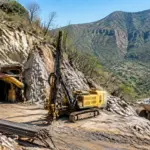
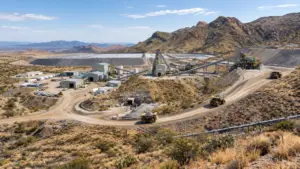
Environmental monitoring equipment is becoming part of the evidence required for mine permitting and disclosure.
Brazil’s policy links strategic minerals to governance
The Senate-approved framework is primarily an industrial and mineral policy. It does not replace Brazil’s existing environmental licensing, water-use or dam-safety regimes.
Its significance is that it places critical-minerals projects inside a more visible national-interest process.
CIMCE would define or update the list of critical and strategic minerals, identify priority projects and support access to the policy’s financial instruments. The framework also introduces review mechanisms for certain changes of control, foreign participation, mining-right transactions and international agreements involving strategic minerals.
For project developers, this means the approval pathway may extend beyond the traditional sequence of mining rights, environmental licenses and financing. Corporate structure, beneficial ownership, offtake arrangements, domestic processing plans and traceability systems may also become relevant to project qualification.
The proposed incentives therefore should not be viewed as a simple reduction in project risk. They may improve access to capital for qualifying processing and transformation projects, while increasing the evidence required to demonstrate compliance.
The Brazilian Ministry of Mines and Energy’s investor guide describes water-use rights as a core instrument for legal certainty and sustainable resource management. It also sets out the roles of the National Mining Agency, environmental agencies, Ibama and other institutions involved in permitting.
That institutional map matters because a project can obtain one approval while still carrying unresolved obligations elsewhere. A mining concession does not automatically settle environmental licensing. An operating permit does not eliminate water-rights constraints. A safety authorization does not replace environmental assessment.
Water rights are becoming a project schedule risk
Water is moving closer to the centre of project economics, particularly in copper, lithium and processing developments.
The key issue is not only how much water a mine uses. It is whether the operator can show that withdrawals, recycling, discharge and downstream impacts are governed through enforceable rights and reliable data.
A water dispute can affect a project in several ways:
- Delay or restrict environmental licensing;
- Trigger new baseline studies or impact assessments;
- Require changes to processing or tailings design;
- Increase treatment, recycling and monitoring costs;
- Create conflict with agricultural, Indigenous or traditional users;
- Lead to enforcement action or operating restrictions; and
- Affect the project’s financing and insurance profile.
For investors, water risk is increasingly a schedule and cash-flow issue rather than a standalone environmental metric. A project that requires additional water infrastructure or faces a seasonal abstraction limit may need more capital and a longer construction timeline.
The same logic applies to tailings water balances. Rainfall, seepage, freeboard, drainage capacity and deposition practices are interconnected. A failure to reconcile those systems can turn an engineering issue into a regulatory event, production stoppage and disclosure problem.

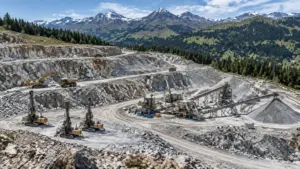
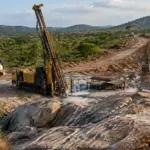
Tailings governance depends on coordinated engineering inspections, drainage controls and continuous monitoring.
A linkable compliance framework for operators
The table below connects the main policy levers with the evidence companies may need to produce and the operational drivers that could alter project economics.
| Policy lever | Compliance indicator | Primary evidence | Scenario driver |
|---|---|---|---|
| CIMCE project qualification | Strategic-mineral classification and priority status | Project registry, ownership records and processing plan | Speed and scope of implementing rules |
| R$2 billion guarantee fund | Eligibility for project guarantees | Financial model, governance controls and project documentation | Availability of guarantees and contribution requirements |
| R$5 billion tax-credit program | Domestic processing or transformation | Processing design, local-value plan and production records | Depth of beneficiation and timing of credit access |
| Mineral traceability | Auditable origin and chain of custody | Mining rights, licenses, transaction records and data controls | Digital-system readiness and reporting standards |
| Tailings governance | Facility-level risk control | Design basis, inspections, instrumentation and independent reviews | Regulatory adoption of stricter standards |
| Water rights | Legal and operational control of withdrawals and discharge | Permits, hydrological baselines, sampling data and regulator correspondence | Catchment stress, seasonal limits and community claims |
| Community and Indigenous engagement | Documented consultation and benefit-sharing | Consultation records, disclosure materials and agreements | Legal challenge, consent requirements and project location |
| ESG disclosure | Consistency across financial and sustainability reporting | Controlled metrics, assurance trail and board oversight | ISSB, CSRD, customer and lender requirements |
This framework is useful because it places compliance indicators beside the policy instruments that may affect project value. It also highlights where uncertainty remains: many of the financial and regulatory effects will depend on implementing regulations and administrative practice.
Base, bull and bear cases for ESG compliance
The next phase of mining ESG compliance is unlikely to follow one uniform path. The effect on operators will depend on how quickly regulators adopt detailed rules, how much evidence is required and whether financial incentives offset additional controls.
Base case: higher compliance costs, manageable execution
In the base case, Brazil implements the critical-minerals framework gradually. CIMCE provides priority treatment to selected projects, while environmental licensing and water-rights requirements remain in place.
Companies face higher costs for:
- Tailings engineering and independent review;
- Water monitoring and recycling systems;
- Traceability and data management;
- Community consultation;
- ESG assurance; and
- Additional legal and regulatory review.
Projects with complete records and domestic processing plans may benefit from improved financing access. However, the guarantee fund and tax credits do not remove the need to obtain environmental and water approvals.
Bull case: policy support accelerates compliant projects
In the bull case, CIMCE creates clear qualification criteria, the guarantee fund improves access to capital and tax credits help make Brazilian processing projects commercially viable.
The strongest beneficiaries would likely be projects that can demonstrate:
- Domestic beneficiation or transformation;
- Reliable water availability and recycling;
- GISTM-aligned tailings governance;
- Traceable mineral origin;
- Strong community and Indigenous engagement; and
- Consistent, assured ESG data.
Under this outcome, compliance becomes a competitive advantage. Operators with mature environmental systems could move through approval and financing processes more efficiently than projects still assembling basic records.
Bear case: incentives coexist with permitting conflict
In the bear case, implementation is delayed or contested, while water disputes, tailings incidents or community opposition increase scrutiny.
Projects could face:
- Longer approval timelines;
- Higher engineering and monitoring costs;
- Restrictions on water use;
- Additional impact studies;
- Delays in accessing incentives;
- Litigation or administrative challenges; and
- Higher financing and insurance costs.
The most exposed projects would be those relying on accelerated permitting without resolving water, tailings or community risks. Priority status may improve administrative attention, but it cannot guarantee social acceptance or eliminate legal obligations.
What operators should prepare now
The immediate priority is not to produce another broad ESG statement. It is to build a single, controlled evidence base that can support regulators, lenders, customers and the board.
That should include:
- A reconciled tailings inventory covering active, inactive, closed and legacy facilities.
- A permit register linked to construction, production and closure milestones.
- A water-rights register showing abstraction limits, discharge conditions and renewal dates.
- Site-level monitoring data for water quality, water levels, seepage, pore pressure and deformation.
- Documented accountability for executives, engineers and contractors.
- Independent reviews of high-consequence tailings facilities.
- Traceability controls connecting mineral origin to rights, permits and processing.
- Scenario-based closure and remediation estimates that can be reflected in financial planning.
- Community and Indigenous consultation records that show what information was provided and how concerns were addressed.
- Assurance-ready ESG data aligned across sustainability reports, financial filings and customer disclosures.

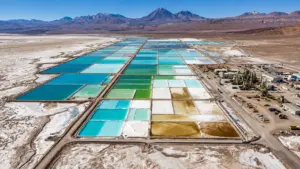
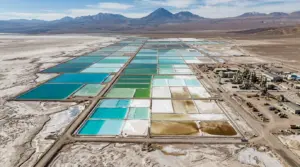
Water-treatment and recycling infrastructure can reduce exposure to abstraction limits while strengthening permit evidence.
The direction of travel
Brazil’s critical-minerals policy shows how governments are pairing industrial incentives with stronger control over strategic supply chains. The broader mining sector is moving in the same direction.
ESG compliance is becoming enforceable through permits, water rights, tailings records, traceability systems and transaction reviews. Disclosure still matters, but disclosure without operational evidence is becoming less useful.
For operators, the strategic question is whether environmental and social controls are embedded in mine planning, capital allocation and production systems. For investors and policymakers, the question is whether a project’s claims can be tested against reliable, site-level records.
The result is a higher compliance burden, but also a clearer basis for distinguishing projects that are ready to advance from those that remain exposed to permitting, water and tailings risk.
In 2026, the strongest mining ESG programs will not be the ones with the most polished language. They will be the ones that can show, in documents and data, how a mine is licensed, monitored, governed and prepared to respond when conditions change.