
Talk to any mining developer who has recently walked out of New Delhi’s gleaming auction halls with a winning bid, and they will tell you the same thing: the real battle doesn’t happen in the boardroom. It happens on the ground.

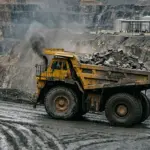
Sectoral reviews shared by the Union Ministries of Coal and Mines ahead of the 6th National Conference of Chief Secretaries reveal a sobering disconnect between central policy ambition and ground-level reality. Out of 733 mineral blocks auctioned by Indian states, only 125 mines—roughly 17%—were operational as of August 2026. The remaining 608 blocks are caught in a web of regulatory purgatory, stretching the journey from auction badge to first ore production past a daunting seven-year mark. Central ministries are now urging state administrations to drop bureaucratic silos and adopt “mission mode” coordination before global supply chains tighten any further.
Rare Earths, Monazite, and the Search for Deep-Drilling Mastery
This operational lag carries heavy stakes. As the global scramble for clean-energy inputs intensifies, central review notes warn that “extreme domestic supply-chain vulnerabilities” continue to plague Indian manufacturing. Near-surface deposits are rapidly depleting, yet domestic deep-drilling capabilities remain nascent. For engineers and geologists on the ground, exploring deep-seated critical minerals—and refining them into the high-purity strategic elements required by advanced tech—remains an uphill technical battle.
To break dependence on external suppliers, the Centre has pushed coastal states to finally unlock beach sand minerals, particularly monazite. For years, extracting monazite has moved at a snail’s pace due to complex regulatory oversight and dense coastal habitation. Yet, untangling this bottleneck is the beating heart of the Union Budget’s mandate to build Dedicated Rare Earth Corridors across Odisha, Kerala, Andhra Pradesh, and Tamil Nadu, securing the permanent magnets vital for electric vehicles and defense systems.
Land, Forests, and the Exhausting Realities of Local Acquisition
While New Delhi has rolled out progressive bidding reforms—such as the March 2026 Mineral (Auction) Second Amendment Rules allowing companies to carve out unviable forest or inhabited acreage—winning a lease does not clear the path forward.
More Read

Ask any project manager on-site what stops a mine from opening, and the answer is invariably land acquisition. Developers find themselves navigating a grueling gauntlet:

- Untangling decades of fragmented, non-digitized land records
- Untangling disputed ownership titles and complex compensation assessments
- Sitting through tense, protracted Rehabilitation and Resettlement (R&R) negotiations village by village
- Managing local friction and resistance to physical possession
Environmental hurdles compound the frustration. Even when communities are on board, projects stall indefinitely because state governments have failed to establish pre-identified land banks for compensatory afforestation, trapping Stage-I and Stage-II forest clearances in endless bureaucratic loops.
Cesses, Logistics, and a Self-Inflicted Fiscal Wound
Beyond land and forests, operators face a labyrinth of administrative friction. Mining teams must navigate sequential approvals across a plethora of state departments while absorbing a dizzying stack of uncoordinated state cesses and overlapping levies. In the minor minerals sector, missing single-window digital portals and delayed District Survey Reports turn routine compliance into a compliance nightmare. Meanwhile, periodic law-and-order disruptions halt exploration, and illegal sand mining drains state coffers of legitimate royalties.
More Read
Even when the ore finally comes out of the ground, getting it to market is a race against infrastructure bottlenecks. Gaps in first-mile connectivity, missing rail sidings, and fragmented transit permit systems inflate logistics costs right at the doorstep of production.
The ultimate irony of this gridlock is fiscal. India’s mining sector pumps over ₹1.9 lakh crore ($22.5 billion) annually into the national economy, with a remarkable 90% of those revenues flowing straight into state treasuries. By allowing auctioned blocks to gather dust in clearance files, mineral-rich states are essentially starving their own communities of funding. For investors, engineers, and policymakers alike, the message is clear: auctioning a block is just the prologue. True strategic security depends on whether local administrations can clear the path from paper to production.
Sources
- Amid Supply Chain Issues, India’s Strategic Mining in Critical State
https://cssm.etimg.com/industry/indl-goods/svs/metals-mining/amid-supply-chain-issues-indias-strategic-mining-in-critical-state/articleshow/135218819.cms - Mineral (Auction) Second Amendment Rules, 2026 — Ministry of Mines
https://mines.gov.in/admin/storage/ckeditor/Ministry_of_Mines_Notifies_Mineral__Auction__Secon_1775629925.pdf - Union Budget 2026–27 — Budget Speech
https://www.indiabudget.gov.in/doc/budget_speech.pdf - Ministry of Mines Review of Mineral Block Auctions and Operationalisation
https://www.pib.gov.in/PressReleasePage.aspx?PRID=2265021&lang=1®=1 - India’s Critical Mineral Exploration and Auction Programme
https://www.pib.gov.in/PressReleasePage.aspx?PRID=2277041&lang=1®=1