WEC Water has successfully implemented an advanced waste water treatment system at a gold mine in Burkina Faso, marking a significant step toward sustainable mining practices. By addressing critical water management challenges, the project enhances operational efficiency while minimizing environmental impact in a drought-prone region.

Challenges of Traditional Wastewater Management
Initially, the mine relied on tanker trucks to remove sewage from seven collection points, including worker camps and operational facilities. This approach presented multiple challenges:
- High operational costs due to rising diesel prices.
- Traffic disruptions from sewage trucks affecting mine productivity.
- Health and environmental risks from potential sewage overflows.
- Water wastage in a region where water conservation is crucial.
Recognizing the inefficiencies, the mine engaged WEC Water in early 2023 to audit its existing waste water treatment system and develop a cost-effective, sustainable solution.
Related News
- How Remote Sensing is Transforming Sustainable Mining
- EU Warns of Counterstrike as U.S. Tariffs Push Steel Prices Higher
- Atlas Copco’s Electric Compressors Power Portugal’s Marble Industry
- Ukraine and the U.S. Partner in the Critical Minerals Sector
Innovative Waste Water Treatment System
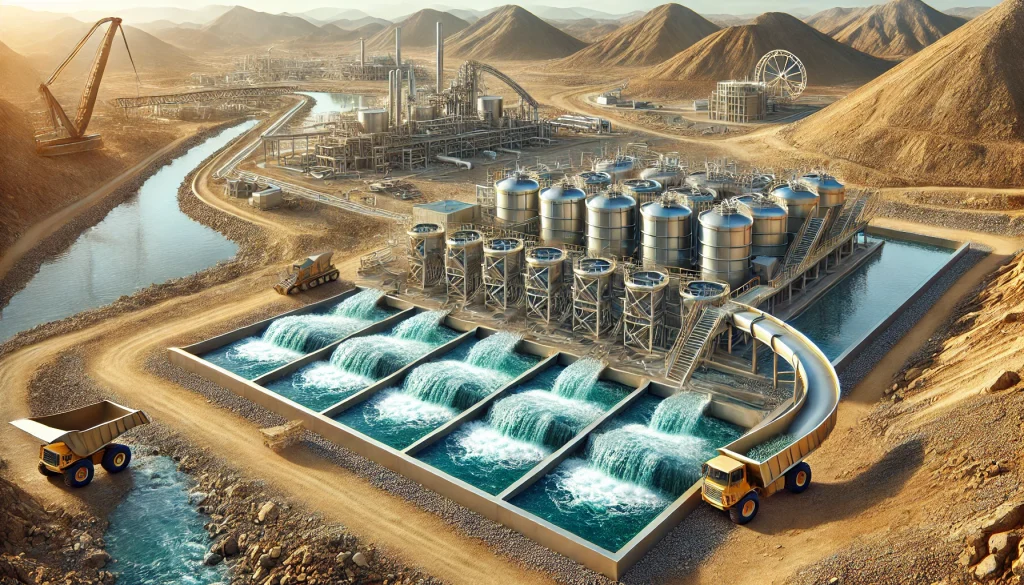
WEC Water implemented a three-part wastewater management system designed to maximize efficiency and sustainability:
1. Centralized Wastewater Collection & Pumping
A newly installed network channels sewage to a centralized wastewater treatment plant, eliminating the need for tanker trucks.
2. Advanced Biological Waste Water Treatment
The plant processes 60-100 cubic meters of wastewater per day using an activated sludge system that significantly reduces nitrogen and chemical oxygen demand (COD).

3. Treated Water Reuse for Mining Operations
A storage lagoon retains the treated water for secondary applications, including dust suppression, irrigation, and safe environmental discharge.
Nigel Birchall, Senior Contracts and Project Manager at WEC Water, emphasized the logistical challenges of installing the system in a remote mining location. “Transporting the entire treatment system safely to the site required considerable planning. However, the modular design—packaged within standard shipping containers—simplified logistics and installation.”
How the Waste Water Treatment Process Works
The treatment plant is based on the modified Ludzack-Ettinger process, an advanced biological system that enhances nitrogen removal. The multi-step treatment process includes:
- Screening & Buffering: Initial filtering removes debris, and wastewater is stored in a concrete buffer tank to regulate flow.
- Biological Processing: Wastewater passes through anoxic and aerobic bioreactors, where nitrogen is removed, and oxidation occurs. Air blowers and diffusers ensure optimal aeration.
- Sludge Management: Recirculated sludge maintains system efficiency, while excess sludge is periodically dried and removed.
- Chemical Treatment & Disinfection: Aluminium sulphate is added to meet phosphate limits, and hypochlorite disinfects the treated effluent before it enters the storage lagoon.
Enhancing Water Reuse in Mining Operations
By transforming wastewater into a reusable resource, the system significantly reduces the mine’s dependence on potable water and rainwater, which are scarce in Burkina Faso’s arid climate. The treated effluent is now used for dust suppression and irrigation, lowering environmental impact and improving water conservation efforts.
With on-site oversight from WEC Water’s process, mechanical, and commissioning engineers, the system was successfully installed and optimized for long-term efficiency.
Setting a Benchmark for Sustainable Mining
As mining companies increasingly prioritize sustainability, this project sets a new standard for efficient waste water treatment in the resource sector. By integrating innovative water treatment solutions, WEC Water is not only enhancing mine operations but also contributing to water conservation in regions where every drop counts.