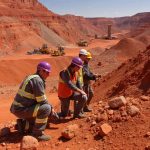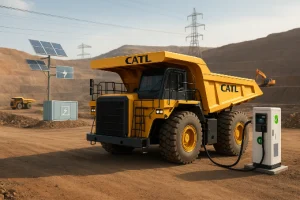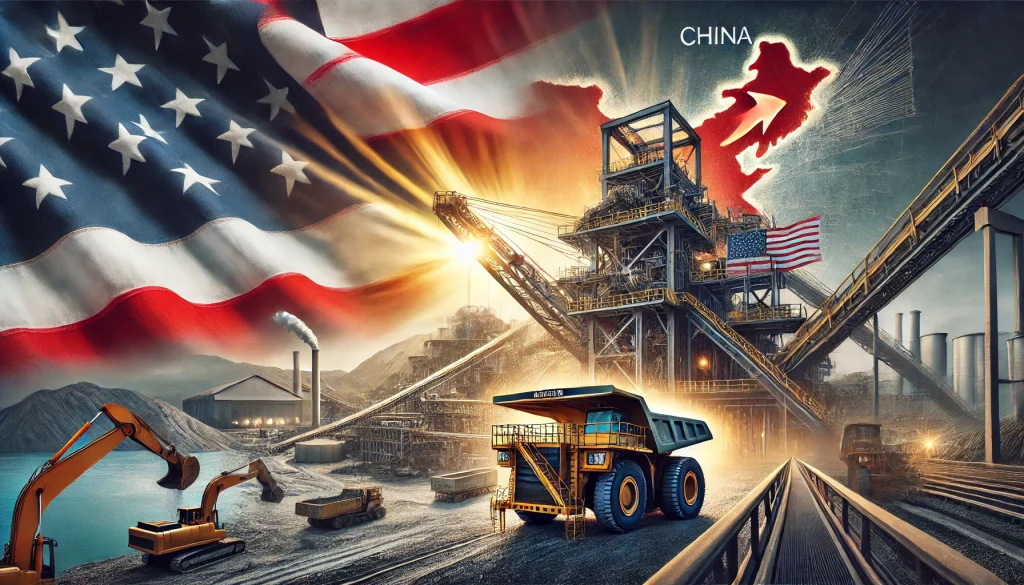
President Donald Trump has officially invoked the Defense Production Act, a Cold War-era statute, to boost domestic mining efforts and secure a steady supply of critical minerals. The order, issued on March 20, 2025, aims to increase production across U.S. mining operations and reduce the country’s longstanding dependence on mineral imports—particularly from China, which currently supplies over 50% of the minerals critical to U.S. defense and energy infrastructure.

A Strategic Shift Amid Growing Geopolitical Tensions
The activation of the Defense Production Act comes amid escalating trade and security tensions with Beijing. China has recently imposed export controls on a range of minerals essential to defense technologies, electric vehicle batteries, and renewable energy systems. Intelligence agencies and defense officials have repeatedly flagged this dependence as a vulnerability, prompting the administration’s decisive pivot.
“This order will sharply increase the production of critical minerals and rare earths,” Trump stated at a White House press briefing. He criticized burdensome regulations that have historically stifled the mining sector, arguing that fast-tracking federal approvals and expanding operations on public lands is a national security imperative.
Related News
- QIMC Launches New Hydrogen Exploration Camp in Nova Scotia’s Cumberland Basin
- First Atlantic Nickel and Colorado School of Mines Partner to Explore Geologic Hydrogen in Newfoundland
- South African Phosphate Mine Faces New Environmental Lawsuit
- Metals Markets and the Impact of Tariff Policies on Precious Metals
Pentagon Mobilized, Federal Lands in Focus
Under the directive, the Pentagon is instructed to identify high-priority mineral sites on federal lands and expedite permits for extraction. The Defense Production Act also enables the government to allocate resources and offer financial incentives to companies pursuing new mining projects, with priority given to materials deemed vital to defense manufacturing.
Industry officials have welcomed the move, describing it as a necessary intervention to revive a flagging sector. “We’ve been asking for this level of commitment for years,” said Jim Noonan, a spokesperson for the National Mining Association. “The Act gives us the tools we need to compete globally.”
Diplomatic Outreach: Ukraine and Beyond
In parallel with the domestic push, Trump announced plans to forge international agreements to diversify U.S. mineral sourcing. Notably, he confirmed that negotiations are underway to access Ukraine’s rare earth reserves, a region rich in untapped mineral wealth.

“I’m also signing agreements in various places to unlock access to rare earth metals and minerals globally, particularly in Ukraine,” Trump stated, signaling a broader resource diplomacy initiative.
Data Underscores Import Dependency
The U.S. has long relied heavily on foreign sources for essential minerals. JPMorgan data indicates that nearly 80% of U.S. aluminum and about 45% of its copper is imported, with Canada being a primary partner. The Defense Production Act is now being leveraged to change that equation by encouraging domestic production and reducing supply chain vulnerabilities.
Environmental Backlash and Regulatory Challenges
While the move is being celebrated by mining companies and some lawmakers, environmental groups have voiced strong opposition. Critics warn that accelerating mining on federal lands could compromise ecological balance, harm local communities, and derail climate commitments.
“This is a clear example of prioritizing short-term industrial gains over long-term environmental stewardship,” said Tara Jensen, policy director at EarthGuard, a conservation nonprofit. “The lack of public input and environmental review in this process is deeply concerning.”
Balancing Economic Growth and Sustainability
The challenge ahead lies in reconciling two competing demands: achieving mineral self-sufficiency and maintaining responsible environmental practices. Experts suggest that without a robust regulatory framework, the expansion could generate unintended consequences—both politically and ecologically.
“The Defense Production Act is a powerful tool, but how it’s applied matters,” said Andrew Tully, a resource policy expert at the Wilson Center. “The real test will be whether the administration can balance speed with sustainability.”
A Wartime Law in a Peacetime Economy
Originally enacted during the Korean War to secure industrial output, the Defense Production Act has been periodically revived—most recently during the COVID-19 pandemic to ramp up medical supplies. Trump’s latest invocation of the law to support mining marks another evolution in its use, turning wartime powers toward economic resilience.
Conclusion: A High-Stakes Gamble
Trump’s activation of the Defense Production Act signals a pivotal shift in U.S. industrial policy, one that aims to fortify national security by shoring up control over critical resources. Whether this bold strategy will yield lasting benefits or provoke backlash hinges on how effectively the administration can execute its plan, build international alliances, and mitigate environmental fallout.
As the U.S. mining industry braces for a resurgence, the path forward is fraught with legal, ecological, and diplomatic complexities. The stakes are high—and the world is watching.