ZIOC considers Middle East and Republic of Congo locations as investors including former Anglo and Xstrata chiefs back shift toward low-emission steel feedstock

Zanaga Iron Ore Company (ZIOC) is exploring plans to build a pelletising plant in either the Republic of Congo or the Middle East, a strategic move designed to unlock value from its long-stalled $2 billion iron ore project in Central Africa. The AIM-listed firm confirmed that a feasibility study has been completed, with site evaluations underway in Congo’s Pointe-Indienne Special Economic Zone (SEZ) as well as in Saudi Arabia and the United Arab Emirates.
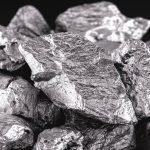
The plant would process iron ore into high-grade pellets suitable for use in electric arc furnaces (EAF), which are rapidly gaining ground as a lower-emission alternative to traditional blast furnace steelmaking. This value-added transformation would position ZIOC to tap into the growing premium market for Direct Reduction Iron (DRI)-grade products.
“Priority will be given to evaluation of sites in the Pointe-Indienne SEZ in Republic of Congo, or sites identified in the Middle East,” the company said in a statement on Wednesday.
Related News
- Trump Invokes Defense Production Act to Jumpstart U.S. Mining Sector
- QIMC Launches New Hydrogen Exploration Camp in Nova Scotia’s Cumberland Basin
- First Atlantic Nickel and Colorado School of Mines Partner to Explore Geologic Hydrogen in Newfoundland
- South African Phosphate Mine Faces New Environmental Lawsuit
Pelletising Plant Key to Unlocking Project Value
The proposed pelletising plant could significantly boost the project’s financial viability. According to ZIOC, reaching DRI specifications for its iron ore could add up to $6 billion to the project’s net present value (NPV). If the plant is successfully integrated into the development plan, the company estimates the total NPV could rise to $9.5 billion, up from earlier projections.
Pelletised iron ore, prized for its consistency and efficiency in electric arc furnaces, fetches a substantial premium in global markets. ZIOC’s move is part of a broader trend in the mining sector to align with the decarbonization of steel, which accounts for roughly 7% of global carbon emissions.
Strategic Interest from Gulf States
ZIOC confirmed it has received strong interest from stakeholders in Saudi Arabia and the UAE, where governments are backing efforts to establish integrated, low-carbon steel value chains. Gulf Iron and Steel (GIS)—described as a “consortium of strategic industry entities”—is expected to acquire 20% of the marketing rights for Zanaga’s iron ore.

This development follows a pattern of resource-driven industrial partnerships in the region. Mark Cutifani, former CEO of Anglo American and an investor in ZIOC’s latest funding round, was instrumental in bringing Saudi state-owned Manara Minerals into Vale Base Metals last year, where he now serves as chairman.
Local Power Deal Supports Congo Option
While Gulf partnerships are gaining traction, ZIOC has also strengthened its footing in the Republic of Congo. A memorandum of understanding signed with the local power provider, Centrale Électrique du Congo (CEC), will support the potential development of the pelletising plant within the Pointe-Indienne SEZ. The plant could be powered using domestic gas resources, reducing infrastructure costs and offering energy security for the project.
More Read
The Pointe-Indienne SEZ, located near the port city of Pointe Noire, is being developed by Arise IIP, a pan-African infrastructure group led by Gagan Gupta, another investor in ZIOC’s latest funding round.
High-Profile Backers Fuel Project Resurgence
To finance the restructuring and advancement of the project, ZIOC secured a $21.5 million private placement backed by a heavyweight consortium of former mining executives and private capital firms. Among the backers: Mark Cutifani and Tony Trahar, both former Anglo American CEOs; Mick Davis, ex-CEO of Xstrata; New York-based Heeney Capital Resource Partners; and Rio Tinto veteran Phil Mitchell.
Proceeds from the placement will be used to repurchase Glencore’s 43% stake in ZIOC, giving the new investor group greater strategic control. The placement could be upsized to $23 million by March 26, the company said.
“We look forward to commencing this work upon settlement of the second tranche of the fund raise and, through these investigations, we aim to quantify the benefits to the Project and our investment, community, state and industry stakeholders,” said ZIOC CEO Martin Knauth.
The Zanaga Iron Ore project, first studied in 2014, has languished in development limbo for nearly a decade due to infrastructure challenges, commodity cycles, and shareholder disputes. The renewed push—centered on building a pelletising plant and reconfiguring logistics—marks the company’s most concerted effort yet to bring the asset into production.
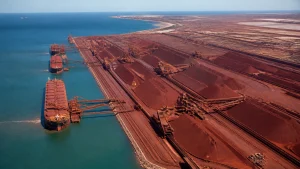
Other optimisations under consideration include constructing a 30 million tonnes-per-annum pipeline to transport ore from mine to port and switching to dry tailings processing, which could reduce capital expenditures by an additional $2 billion over the project’s life.
A High-Stakes Bet on Green Steel
By aligning with global trends toward cleaner steel production, ZIOC is attempting to reframe the Zanaga project not just as a mining play, but as a long-term supplier to the green industrial economy. The construction of a pelletising plant—whether in Africa or the Gulf—could be the linchpin to unlocking that transition.
But success will hinge on financing, infrastructure, and geopolitical stability. With heavyweight investors now at the helm and strategic partners circling, Zanaga’s long-dormant iron ore deposit may finally be on the verge of becoming an active player in the low-carbon steel revolution.