By Charles Pitts

The global iron ore market is currently pivoting on a narrow eight-hour window scheduled for July 16. As unionized workers at BHP’s Port Hedland operations prepare for the first major industrial action at the terminal in decades, the ripple effects are already being felt across commodity exchanges. Iron ore prices have surged to a two-month peak, reclaiming highs not seen since May, as traders bake in a risk premium for the world’s most critical steelmaking ingredient.
Port Hedland is not merely a harbor; it is the central nervous system of the global seaborne iron ore trade. Handling approximately 280 million tonnes per year (Mt/yr) for BHP alone, any friction in its gears threatens the stability of supply chains stretching from the Pilbara to the blast furnaces of northern China. With the July 12 spot prices reflecting mounting anxiety, the industry is closely watching whether this 2:00 PM to 10:00 PM stoppage is a symbolic gesture or the precursor to a prolonged winter of discontent.
The Port Hedland Bottleneck: A 280Mt/yr Exposure
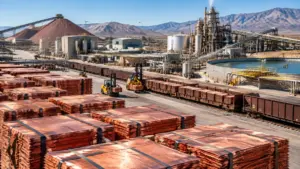
To understand why an eight-hour strike has sent prices to May highs, one must look at the sheer scale of the infrastructure at risk. Port Hedland, the world’s largest bulk export port, facilitates roughly US$150 million in iron ore shipments every single day. BHP’s portion of this throughput represents nearly a third of the global seaborne market.
The exposure is not limited to the volume of the ore itself but the precision of the logistics. The port operates on a rigorous tidal and berthing schedule. A stoppage of even one shift can cause a backlog of bulk carriers in the outer harbor, leading to increased demurrage costs and a logistical “whiplash” effect that can take days to rectify.
More Read



According to industry data, Port Hedland ships roughly 1.7 million tonnes of iron ore daily. While BHP has stated it has contingency plans to maintain safety and minimize disruption, the symbolic nature of the strike is what is truly driving the market. This is the first major port-side industrial action in the Pilbara in a generation, signaling a shift in labor relations that could redefine operational risks for the remainder of 2026.
The Nature of the Dispute: Why July 16?
The planned strike follows six months of stalled negotiations between BHP and the Combined Ports Unions. At the heart of the dispute are demands for a new four-year enterprise agreement covering pay, conditions, and job security for approximately 160 to 200 port and maintenance workers.
More Read

The unions have strategically selected July 16, a “double-up” day where a higher density of staff is typically on-site for scheduled maintenance. This targets the very infrastructure that keeps the conveyor belts running and the ship-loaders moving. While the physical supply of ore in stockpiles remains vast, the ability to move that ore onto vessels is the primary point of failure being leveraged.
BHP’s daily revenue at risk during the strike is estimated between US$80 million and US$120 million. For the Western Australian government, the stoppage represents a direct hit to royalty receipts, further complicating the political optics of the dispute.
Market Reaction: Iron Ore Hits Two-Month Peaks
As of July 12, 2026, the iron ore spot price has responded with characteristic volatility. After a period of relative stagnation in June, the threat of disruption has propelled prices back toward the US$120/tonne resistance level seen in May.
Iron Ore Price Drivers (July 2026)
- Labor Risk Premium: Markets are pricing in the possibility that a successful strike on July 16 could lead to rolling stoppages throughout Q3.
- Low Port Inventories: Steel mills in China have been operating on lean inventories, making them more sensitive to potential shipping delays.
- Macro Sentiment: Expectations of further stimulus in the Chinese property sector have provided a supportive floor for prices, which the strike threat has now broken through.

For deeper context on how these price movements compare to previous quarters, our Mining Review archives provide a historical look at Pilbara supply shocks. The current “risk-on” sentiment suggests that traders are less concerned with the loss of eight hours of tonnage and more concerned with the precedent of labor-led disruptions in a formerly stable jurisdiction.
Supply Chain Risk Analysis: Who Feels the Squeeze?
The immediate victims of a Port Hedland bottleneck are the vessel operators and the Tier 1 steel mills. When loading windows are missed, bulk carriers are forced to wait at anchor, incurring daily costs that can exceed $30,000 per vessel.
For Chinese steel producers, particularly those in the Hebei and Jiangsu provinces, the Pilbara is the primary source of high-grade fines. While these mills often have 15 to 20 days of stock on hand, any sustained disruption at Port Hedland forces them into the spot market to seek Brazilian or domestic alternatives, which are often more expensive or lower in quality.
Furthermore, the strike targets the maintenance division. If essential repairs are delayed on July 16, it could lead to unforced outages later in the month. The reliability of the aging infrastructure at Port Hedland is a constant concern for operators, and the labor dispute adds a layer of uncertainty to an already complex technical environment.
Q3 2026 Price Forecast: Base, Bull, and Bear Cases
As we move past the July 16 deadline, the trajectory of iron ore will depend on whether BHP and the unions can return to the bargaining table or if the conflict escalates.
Base Case: Short-Term Volatility
- Price Range: $110 – $118/tonne.
- Outcome: The July 16 strike occurs as a one-off event. BHP uses contingency staff to keep essential loadings moving. Prices stabilize once it becomes clear that shipments are normalizing.
Bull Case: Escalated Stoppages
- Price Range: $125 – $135/tonne.
- Outcome: The July 16 strike is followed by “rolling” actions: stoppages of 4 to 8 hours every few days. This prevents the port from ever clearing its backlog, creating a persistent supply squeeze. Global buyers scramble for non-Australian ore, driving prices to yearly highs.
Bear Case: Rapid Resolution
- Price Range: $95 – $105/tonne.
- Outcome: A last-minute breakthrough in negotiations on July 14 or 15 leads to the strike being called off. The “risk premium” evaporates instantly, and the market refocuses on cooling demand from the Chinese construction sector.
| Metric | Port Hedland Snapshot (BHP Operations) |
|---|---|
| Annual Export Capacity | ~280 million tonnes (Mt/yr) |
| Daily Shipping Volume | ~1.7 million tonnes (Port Total) |
| Strike Duration | 8 Hours (July 16, 2:00 PM – 10:00 PM) |
| Revenue at Risk (Daily) | $80M – $120M |
| Current Price Trend | 2-Month High (May Levels) |
The Outlook: A New Era of Labor Relations?
The tension at Port Hedland reflects a broader trend in the 2026 mining landscape: the return of organized labor power in critical mineral hubs. As the energy transition increases the value of efficient mineral extraction and transport, the workforce responsible for those operations is seeking a greater share of the margins.

For investors and operators, the July 16 strike is a stress test. It tests BHP’s ability to manage its massive logistical footprint under pressure and tests the market’s resilience to supply-side shocks. Regardless of the outcome on Thursday, the “May Highs” reached this week serve as a reminder of how quickly the global iron ore market can ignite when the Pilbara’s gatekeepers decide to walk off the job.
As we monitor the situation, stay tuned for live updates on the Skillings Mining Intelligence feed, where we will be tracking vessel movements and spot price fluctuations in real-time as the 2:00 PM local time deadline approaches.