By Charles Pitts

PORT HEDLAND, Australia : Approximately 200 unionized workers at BHP’s Port Hedland iron ore export terminal walked off the job Thursday, marking the first industrial strike at the world’s largest bulk export facility in more than a quarter-century.
The eight-hour stoppage, which began at 2:00 p.m. local time on July 16, 2026, followed a breakdown in negotiations between the mining giant and labor representatives. The action represents a significant escalation in a long-running dispute over a new enterprise agreement, freezing operations at a critical node in the global steel supply chain.
Industry analysts estimate the eight-hour disruption could cost BHP between $40 million and $50 million in lost revenue, depending on the speed of operational recovery. While the company has reported record production levels in recent months, the sudden halt at the port terminal introduces a new layer of volatility to an iron ore market already grappling with shifting demand from China.
First Major Disruption Since 2000
The walk-off is the first of its kind at Port Hedland since 2000. For 26 years, the facility has maintained a relative state of industrial peace, even as BHP and its peers transitioned toward increased automation and larger-scale logistics.
More Read

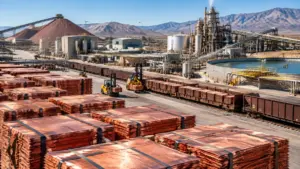
Port Hedland is the primary gateway for Australia’s Pilbara region, handling approximately 575 million tonnes of material annually. It is the lifeblood of the Western Australian economy and a foundational component of global industrial manufacturing. BHP alone reported record iron ore production of 265 million tonnes in the most recent fiscal period, much of which flows directly through the berths currently affected by the strike.

“This is not a decision taken lightly,” said a union spokesperson present at the picket line. “But after months of failed talks through the Fair Work Commission, the workforce felt there was no other path to secure a fair enterprise agreement.”

More Read

Negotiation Deadlock and the 16% Offer
The core of the dispute centers on the terms of a new four-year enterprise agreement. BHP has publicly stated it offered a 16% pay increase over the four-year term: an offer the company describes as “highly competitive” and reflective of current market conditions.
Union leadership, however, argues the offer fails to address broader concerns regarding job security, roster flexibility, and the rising cost of living in remote mining hubs. The unions have warned that if a deal is not reached, industrial action could potentially persist for up to a year, with rolling stoppages designed to impact BHP’s shipping schedules.
BHP management expressed disappointment over the strike, noting that the company remains committed to reaching an agreement that is “sustainable for the long-term health of the business.”
“Our focus remains on the safety of our people and maintaining the integrity of our operations,” a BHP spokesperson said. “We believe our current offer is fair and rewards our employees for their significant contribution to our record-breaking production.”
Market Snapshot: Iron Ore and Global Supply
The timing of the strike is particularly sensitive for the iron ore market. As noted in the Skillings Mining Intelligence – The Investment Edge July 15, 2026, the sector is currently navigating a delicate balance between supply surpluses and cost-floor support.
Before the strike, most institutional forecasts for 62% Fe iron ore CFR China in 2026 were clustered around $90–$105 per tonne. However, supply shocks of this magnitude have historically pushed prices into an “upside band” of $110–$125 per tonne. If the Port Hedland disruption persists or expands to include other operators, analysts warn that the global seaborne supply could tighten rapidly, forcing Chinese steel mills to draw down port inventories.
| Metric | FY2025 Actuals | FY2026 Guidance |
|---|---|---|
| BHP Global Iron Ore Production | 263 Mt | 258 – 269 Mt |
| WAIO Production (100% Basis) | 290 Mt | 284 – 296 Mt |
| Port Hedland Total Capacity | ~575 Mt/yr | ~575 Mt/yr |
| Estimated Strike Revenue Impact | N/A | $40M – $50M (8-hour) |
Logistics and Technology Risks
Modern mining operations are highly integrated, meaning a stoppage at the port can quickly back up the entire value chain, from the rail networks to the open-pit mines hundreds of kilometers away. BHP’s Western Australia Iron Ore (WAIO) operations rely on a sophisticated “pit-to-port” model where any bottleneck at the shipping terminal forces a slowdown in rail car dumping and mine site extraction.

BHP has been investing heavily in automation and port infrastructure, including the construction of a sixth car dumper (CD6) at Port Hedland, intended to support capacity growth toward 330 million tonnes per year. However, these technological advancements still rely on a specialized workforce for maintenance, berthing, and terminal management: the very workers who participated in Thursday’s walk-off.
What’s Next: The July 21 Deadline
The Fair Work Commission has scheduled the next round of formal mediation for July 21, 2026. Both parties are expected to return to the table, though the union’s threat of a year-long campaign of disruption remains a significant point of leverage.
For investors and mining industry professionals, the focus now shifts to the duration of the dispute. While an eight-hour strike is manageable within BHP’s existing stockpiles, any transition to multi-day stoppages or “work-to-rule” actions could jeopardize the company’s ability to meet the upper end of its 269 Mt production guidance for the 2026 financial year.
As global markets watch Port Hedland, the outcome of the July 21 talks will likely determine whether this event remains a historical footnote or the beginning of a prolonged period of industrial unrest in the Pilbara.