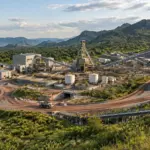
Chinese steelworks and iron ore handling infrastructure at a coastal terminal.

By Sonny Rollins
Singapore iron ore futures briefly fell below US$95 a tonne before recovering to about US$96.40, as Chinese steelmakers moved to curb production and reduce inventories amid weak demand and sustained pressure on profitability.
More than 50 major Chinese steelmakers have called for output reductions, according to market reports, as mills seek to protect cash flow in a deteriorating operating environment. More than 90% of Chinese steel mills are reportedly unprofitable, with industry conditions described as more severe than the downturns of 2008, 2015 and 2018.
The latest weakness reflects a market increasingly driven by demand destruction rather than supply disruption. China remains the dominant buyer in the seaborne iron ore market, and falling steel output is reducing the need for additional cargoes even as major miners continue to deliver large volumes.
Iron ore prices retreat as mills reduce buying
The decline in Singapore futures adds to a period of subdued iron ore trading. The 62% iron ore benchmark has largely remained below US$100 a tonne, with inventories at Chinese ports elevated and steel margins compressed.

A Reuters report carried by Mining Weekly previously described a similar pattern: rising portside inventories, weaker steel consumption and continued supply from major exporters combined to pressure prices. The report cited Chinese port stocks of 175.44 million tonnes during the period covered, while Singapore futures traded below US$97 a tonne.
The current move is more significant because it comes alongside coordinated efforts by steelmakers to reduce production and inventories. Lower iron ore prices offer some relief on raw material costs, but that benefit is limited when finished steel demand and selling prices are also weakening.
Chinese pig iron output through August was 563.4 million tonnes, down 3.1% year on year. The decline indicates that blast furnace utilization and iron ore consumption are weakening across the steel sector rather than at only a small number of mills.
Key market indicators
| Indicator | Latest reported figure | Market significance |
|---|---|---|
| Singapore iron ore futures | About US$96.40/t | Recovered after briefly falling below US$95/t |
| Chinese steel mills reported unprofitable | More than 90% | Limits restocking and raises pressure to cut output |
| Chinese pig iron output through August | 563.4 million tonnes | Down 3.1% year on year |
| Major producers’ ore mined since 2016 | 11.1 billion tonnes | Highlights long-term reserve depletion |
| Aggregate reserve replacement | About three-quarters | Indicates a structural replacement shortfall |
| Major producers’ cash margins | US$50–60/t | Leaves less room for sustained price weakness |
CMRG increases pressure on iron ore suppliers
The price decline is also unfolding as China Mineral Resources Group, the state-backed iron ore procurement body, takes a more forceful role in negotiations with major miners.
Chinese steel mills were told to suspend acquiring Rio Tinto’s Pilbara Blend product earlier in September, according to market reports. CMRG has applied similar pressure to purchases involving BHP and Fortescue as contract negotiations intensify.
Industry coverage from IndexBox said CMRG advised several steelmakers to pause new purchase discussions with Rio Tinto while negotiations were at a critical stage. The organization was established to consolidate China’s buying power and increase its influence over iron ore pricing and contract terms.
The purchase guidance does not necessarily mean that physical shipments have stopped. It does, however, give Chinese buyers greater leverage over contract negotiations and may encourage mills to delay purchases, draw down existing inventories or switch between comparable products.
For miners, the pressure comes at a time when the market is already questioning the sustainability of long-term volume growth. The majors remain among the lowest-cost suppliers, but weaker benchmark prices and tougher negotiations could reduce realized prices and narrow the margin available for new developments.
Reserve replacement is becoming more expensive
The short-term price decline is occurring against a more structural challenge for the iron ore industry: replacing the reserves already mined.
Wood Mackenzie research found that the six largest iron ore producers mined 11.1 billion tonnes of marketable reserves between 2016 and 2025. Only about three-quarters of that volume was replaced through reserve additions and conversions.
Net reserve replacement ratios across the six producers ranged from 28% to 159%, showing a wide gap between companies that expanded their resource base and those that depleted reserves faster than they replaced them.
Wood Mackenzie also found that cumulative growth capital expenditure per tonne of reserve added ranged from about US$2 to US$10. The fivefold difference reflects variations in orebody quality, project complexity, regulatory conditions and the amount of infrastructure required to sustain production.
The research identified additional challenges:
- Cash costs have risen sharply for some producers since 2016.
- Reserve grades have declined by as much as 1.6 percentage points among some major producers.
- Impurity levels, including alumina, are rising in some product streams.
- Industry margins converged at roughly US$50–60 a tonne by 2025.
- Much of the current project pipeline is intended to sustain existing output rather than create a major increase in supply.

Bulk handling equipment operates beside iron ore stockpiles at a major port facility.
Why the reserve issue matters during a price downturn
The reserve data adds a longer-term dimension to the current price weakness. If prices remain near the mid-US$90s, low-cost producers can continue operating profitably, but capital-intensive replacement projects may face greater scrutiny.
A producer can maintain shipments in the near term while its reserve position deteriorates. Over time, however, declining grades, higher strip ratios and rising processing requirements can increase costs and weaken product quality.
That distinction is important for Pilbara Blend and other established products. High-quality ore can support blast furnace productivity and reduce the volume of impurities entering the steelmaking process. But the value of those quality advantages depends on mill operating rates and the strength of product premiums.
When steelmakers are losing money, they may prioritize lower delivered costs and working-capital discipline over securing premium products. That gives centralized buyers such as CMRG additional negotiating power, even when higher-quality ores retain technical advantages.
Supply remains ample
The immediate market balance remains well supplied. Australia and Brazil continue to account for most seaborne exports, while new projects are expected to add further tonnes over time.
The ING Research outlook identified rising seaborne supply, elevated Chinese port inventories and weaker property-related steel demand as key pressures on iron ore. It also highlighted the potential impact of Guinea’s Simandou project, which could add significant high-grade supply as production expands.
Skillings previously examined the infrastructure implications of Simandou’s rail and port development, a project that could alter the competitive balance between established Australian suppliers and emerging West African production.
For now, the new supply is arriving into a market where demand is already under pressure. That makes the timing of ramp-ups important: additional tonnes could weigh more heavily on prices if Chinese mills continue reducing blast furnace output.

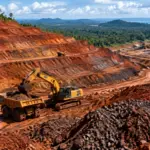
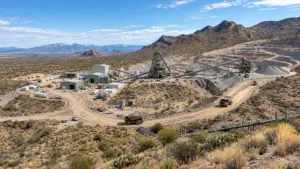
Open-pit iron ore production and haulage infrastructure in Western Australia.
What markets will watch next
The direction of iron ore prices will depend primarily on whether Chinese steel mills carry out the announced production cuts and how quickly inventories decline.
Three developments will be closely watched:
- Pig iron output: Further reductions would signal weaker underlying demand for imported ore.
- Steel inventory levels: A sustained drawdown could encourage restocking, while rising inventories would reinforce pressure on mills to cut output.
- CMRG negotiations: Contract outcomes with Rio Tinto, BHP and Fortescue could influence benchmark pricing, product premiums and the allocation of cargoes.
The market is also likely to monitor whether prices below US$95 trigger production curtailments among higher-cost suppliers. Goldman Sachs has previously identified the US$90–95 range as a potential cost-curve support zone, as a significant volume of supply becomes cash-negative below those levels.
That support may limit the depth of any prolonged decline, but it does not remove the risk of further short-term weakness. If Chinese steel demand continues to soften while inventories remain high, iron ore could remain below US$100 even as producers defend volumes and buyers push for lower contract prices.
The immediate story is therefore one of weaker steel demand and falling mill profitability. The longer-term story is more complicated: major miners are still supplying the market at scale, but replacing the ore they have already mined is becoming more expensive, technically difficult and strategically important.