A Breakthrough for Australia’s Battery Metal Ambitions
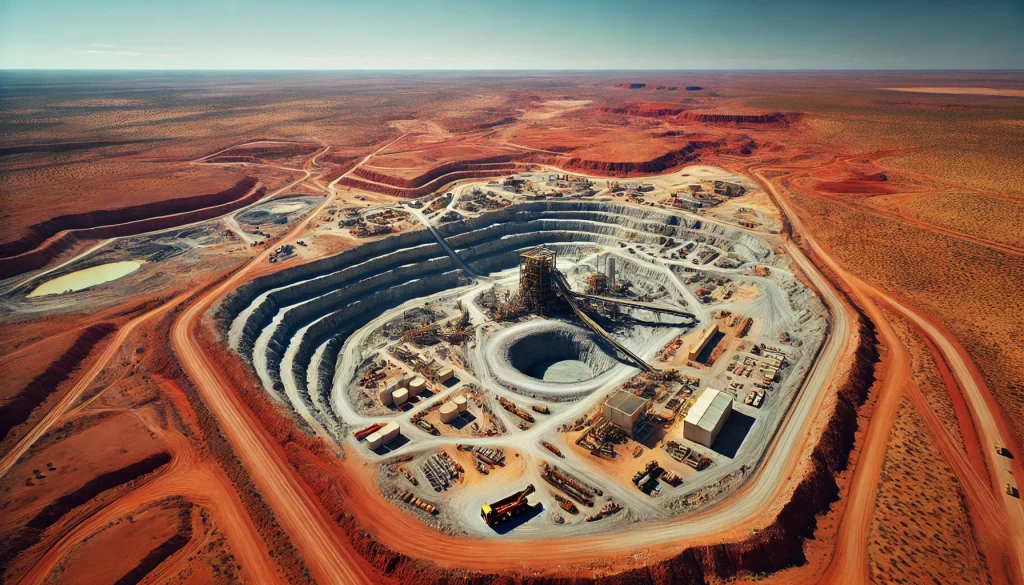
Western Australia is now home to Australia’s largest nickel sulphide deposit, as Western Mines Group (ASX: WMG) unveiled a 1.9 billion tonne mineral resource estimate (MRE) at its flagship Mulga Tank project, positioning the company at the center of the global nickel conversation.

“This is a globally significant deposit,” said Caedmon Marriott, managing director of Western Mines. “We’ve proven the main body of the complex hosts Australia’s largest nickel sulphide deposit—and we believe it ranks in the top 10 worldwide.”
The Numbers Behind the Discovery
The Mulga Tank MRE includes:
1.9 billion tonnes (Bt) at 0.27% nickel,
565 million tonnes (Mt) in the indicated category at 0.28% nickel,
1.4Bt inferred at 0.27% nickel.
In terms of contained metal, the deposit boasts:
- 5.3 million tonnes of nickel,
- 257,000 tonnes of cobalt,
- 161,000 tonnes of copper,
- 1.1 million ounces of platinum and palladium.
- While the grades are relatively low, the sheer tonnage and sulphide-hosted mineralisation make the deposit viable in a market increasingly shaped by demand for clean energy metals.
Related News
- Golden Valley Mine Commits $600,000 to Solar Energy and Processing Plant Upgrades Amid Gold Price Surge
- Mining Regulatory Clarity Act 2025 Aims to Secure U.S. Mineral Supply Chains and National Security
- DRC Considers Extension of Cobalt Export Ban Amid Market Rebound
Strategic Importance for Critical Minerals
Nickel’s rising role in electric vehicle (EV) batteries—particularly high-nickel chemistries like NMC 811—has amplified interest in secure, ethical sources. Australia’s mining reputation, along with ESG compliance, places Mulga Tank as a strategic supply opportunity for battery producers across Asia, Europe, and the U.S.
“Given geopolitical risks around Indonesian supply chains and China’s dominance in processing, this project could fill a crucial gap for Tier 1 offtake partners,” said Richard Close, a Perth-based critical minerals consultant.
Drilling Strategy and Resource Growth Potential
The MRE is built on an integrated reverse circulation (RC) and diamond drilling campaign, with 36 RC holes totaling 11,536m completed since February 2024.

RC drilling mapped shallow, disseminated nickel sulphide zones—prime for open-pit development—while ongoing diamond drilling is targeting deeper, higher-grade basal massive sulphide zones.
“We’ve already identified 23 intersections with over 1% nickel, and some with grades as high as 4.5% nickel and 4.8% cobalt,” Marriott added. “Our focus now is to zone in on those clusters.”
Next Steps for Western Mines
With the resource base in place, Western Mines will likely pivot toward:
- Infill drilling to increase confidence in high-grade zones
- Scoping studies for economic modeling
- Engagement with downstream partners for battery-grade nickel processing
The company’s strategy may involve developing a starter pit from the higher-grade material before scaling up to process the broader deposit.
Market Risks: Price and Processing
Despite its scale, Mulga Tank faces challenges. Nickel prices have slumped over 40% year-on-year amid surging supply from Indonesia and sluggish stainless steel demand in China.
“Grades below 0.3% require scale, low-cost processing, and top-tier infrastructure,” said Ian Gooding, a former Rio Tinto geologist. “But if metallurgy checks out, this could be a Tier 1 development.”
A Critical Step for Australia’s Mining Future
Western Mines’ breakthrough could redefine Australia’s position in the global nickel supply chain. As EVs, grid-scale batteries, and green hydrogen demand metals like nickel and cobalt, projects like Mulga Tank will form the backbone of long-term energy security strategies.
The company is now on the radar—not just for domestic investors but for multinational manufacturers looking to lock in long-term nickel sulphide supply.