Key Takeaways
- Nevada Gold Mines is deploying Komatsu’s autonomous haul trucks across surface operations.
- First U.S. deployment of Komatsu’s FrontRunner system.
- Private 5G network by Sedna and Nokia supports real-time control.
- Automation aims to improve safety, efficiency, and ESG alignment.
- Academic and labor experts urge caution around workforce impact.
- Capital markets view autonomy as part of ESG and competitiveness mandates.
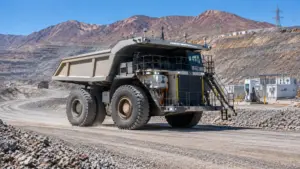
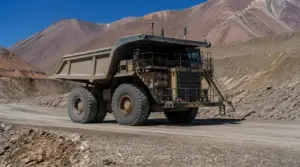
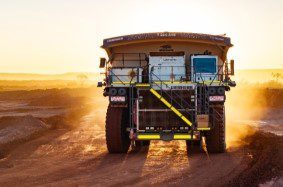
Nevada Gold Mines has begun deploying autonomous haul trucks across its surface mining operations in partnership with Komatsu, marking the first U.S. deployment of the FrontRunner Autonomous Haulage System.

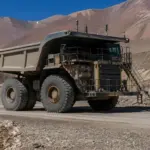
The rollout covers a fleet of 300- and 230-ton trucks at sites across Nevada. The initiative, jointly led by Barrick Gold and Newmont via their Nevada Gold Mines (NGM) venture, represents a pivotal step in the digital transformation of American mining. For an industry long dominated by physical labor and cyclical commodity cycles, this signals a technological pivot that many observers believe is overdue.
“This isn’t about technology for technology’s sake,” said Barrick CEO Mark Bristow. “We are creating safer environments by reducing operator exposure while unlocking efficiencies across our fleet.”
Nevada Gold Mines Breaks Ground on Automation Frontier
Komatsu’s FrontRunner system, long deployed in Australia, is making its U.S. debut on a scale rarely seen outside the Pilbara. The system eliminates the need for onboard drivers, using advanced GPS, radar, and AI software to run mining trucks in coordination.
“This collaboration with NGM represents a new high-water mark for U.S. mining autonomy,” said Braden Weisheit, general manager of mining technology solutions at Komatsu. “It’s not just about hardware — it’s about long-term systems integration, data visibility, and operational confidence.”
Komatsu first launched the FrontRunner in 2008, with deployments in Chile and Australia. Its performance has been well-documented: higher asset utilization, reduced idle time, and improved safety statistics. Bringing it to Nevada, however, adds operational complexity due to regulatory oversight, union dynamics, and varied terrain.

The implementation positions Nevada as a frontier state for autonomous haulage in the Western Hemisphere, a shift with implications for safety, sustainability, and long-term cost control. The state’s regulatory openness and rich mineral resources have made it a testing ground for multiple mining innovations.
5G Backbone Powers Smart Mining
To enable real-time coordination of autonomous haul trucks, telecom firms Sedna and Nokia are building out a private 5G network across the Cortez and Goldstrike complexes. This move underscores how digital infrastructure is now inseparable from physical mining equipment.
“The 5G backbone is critical,” said Sedna CEO Peter Dormehl. “It provides the ultra-low latency and robust uptime required for safety-critical operations.”
Nokia’s Don Leyn added: “We’re creating infrastructure not just for today’s mining, but for tomorrow’s entire connected ecosystem.”
A 5G-enabled mine can process terabytes of data from haul trucks, shovels, crushers, and sensors in real time. That feeds into analytics platforms that drive decision-making around maintenance schedules, fuel optimization, and emissions reductions. The reliability of that network, experts say, can be the difference between smooth scaling and systemic failure.
Risks, Rewards, and Workforce Transitions
While executives tout gains in fuel efficiency and lower injury risk, analysts note that integration of autonomous systems can strain legacy infrastructure and workforce dynamics. There’s also uncertainty over how quickly the cost benefits will materialize.
“Automation tends to create high-skilled roles while eliminating routine ones,” said Dr. Meredith Tanaka, a mining automation expert at UBC. “The question is whether retraining keeps pace with technology.”
Labor groups are watching closely. Nevada’s mining unions, while not outright opposed to innovation, have raised concerns about job security and retraining promises. “These transitions need to include the people who helped build the industry,” said Jeremy Glass, regional rep for the United Mine Workers of America. “Otherwise, it’s just high-tech downsizing.”
NGM has pledged workforce retraining and emphasized its commitment to local jobs, but did not specify projected changes in headcount. Internally, sources suggest upskilling initiatives will focus on systems monitoring, fleet analytics, and maintenance of robotics platforms.
ESG, Capital Markets, and the Autonomy Mandate
Autonomous haul trucks are not just about cutting costs or reducing accidents. Increasingly, they’re viewed as part of the broader Environmental, Social, and Governance (ESG) mandate facing global miners. Institutional investors have pressed large producers to improve safety records, lower emissions, and prove long-term viability in carbon-constrained markets.
“A predictable, AI-managed fleet helps lower idle time and optimize fuel burn,” said analyst Mariana Ruiz at Deloitte Natural Resources. “These translate directly into Scope 1 emissions cuts — and that shows up in your ESG report card.”
For Barrick and Newmont, the optics are also strategic. With NGM now accounting for a large portion of their North American output, demonstrating ESG-aligned innovation in a politically visible state like Nevada strengthens positioning with regulators and capital markets alike.
A Competitive Necessity in Global Mining
Rival global miners like Rio Tinto and BHP have operated autonomous fleets in Australia for over a decade. Analysts see NGM’s move as a sign the U.S. is catching up.
“This is no longer a test case,” said mining consultant Andrew Leclerc. “It’s a cost imperative and a reputational requirement for ESG-conscious investors.”
According to McKinsey data, autonomous haulage systems can reduce mining costs by up to 15% while increasing productivity by 20% over time. The firm’s 2024 report projected that by 2030, over 25% of global surface mine fleets would be at least partially autonomous.
Nevada’s adoption of autonomous haul trucks sets a precedent for other jurisdictions seeking to modernize extraction while meeting environmental and labor benchmarks. States like Arizona and Colorado are already piloting similar technologies in copper and molybdenum operations.
For Nevada Gold Mines, the initiative isn’t simply a digital experiment. It’s a long-term bet on competitiveness in a global market increasingly shaped by automation, connectivity, and investor scrutiny. And with that bet comes a redefinition of what mining in America looks like in the 21st century.