Austrian investor Cevdet Caner has made a bold entry into Africa’s mining landscape, acquiring majority control of a copper-cobalt project in the Democratic Republic of Congo (DRC)—the world’s largest cobalt producer and a region long dominated by Chinese mining interests.

Through his investment firm IU Invest SE (NIU), Caner has taken a 60.34% stake in London-listed Critical Metals PLC via a subscription of more than 61 million new shares. The deal gives NIU control of the Molulu Project, a cobalt and copper asset near Lubumbashi in southeastern DRC.
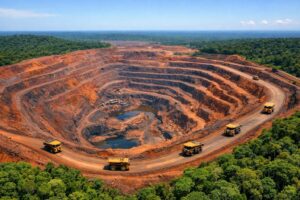
Critical Metals, which holds 70% of Molulu, initially acquired its interest in 2022. The site, once the preserve of artisanal miners, is now being transitioned into a mechanized, scalable operation targeting industrial output of cobalt—a vital battery metal—and copper, the backbone of electrification and grid expansion.
“We are thrilled to complete this acquisition in the Democratic Republic of Congo and begin work on growing the operation and accelerating local development,” Caner said in a statement.
Western Entry Point Into China’s Mining Shadow
The timing is significant. China accounts for roughly 70% of the global cobalt supply chain, underpinned by major DRC operations run by CMOC, Zijin Mining, and China Railway Group. These companies enjoy deep state backing and long-term offtake agreements with battery and EV manufacturers.
By contrast, Western governments and investors have been racing to secure alternative supply sources for critical minerals. The U.S. Inflation Reduction Act and EU Critical Raw Materials Act both prioritize cobalt and copper as strategic inputs for clean energy and industrial security.
More Read
NIU’s acquisition aligns directly with these policy objectives. For the first time in years, a Western-controlled firm has gained a foothold in a jurisdiction where Chinese firms have entrenched dominance.

Kinshasa has also signaled support for diversifying its partnerships. In 2023–24, the Congolese government reviewed several Chinese concessions, arguing for improved revenue-sharing and local benefits. NIU’s arrival may therefore find a political tailwind.
From Artisanal Mining to Industrial Scale
The Molulu Project reflects both opportunity and risk. For years, the site was worked by informal miners, raising concerns over safety, child labor, and environmental impacts.
More Read
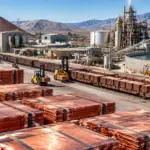
Critical Metals has advanced the project since 2022, completing infrastructure groundwork, early production tests, and resource mapping. With NIU’s capital, the company aims to formalize extraction, scale up processing capacity, and build export infrastructure.
This transition fits the DRC government’s push to industrialize artisanal operations, seeking higher revenues and better ESG standards. But scaling up brings new challenges: permitting, logistics, and community relations must be managed carefully to avoid conflict.
NIU’s Broader Strategy in Mining
For IU Invest, Molulu is not an isolated play. The Vienna- and U.S.-based firm has outlined plans to acquire and operate a diversified portfolio of strategic mineral assets across North America, Latin America, Europe, and Africa. Its stated ambition is to evolve into a fully integrated mining operator with assets supplying inputs for advanced industries, defense, and clean energy.
Cevdet Caner, 50, is best known for real estate and distressed-asset investments in Europe. His pivot into mining marks a long-term bet on demand growth in cobalt and copper. Sources close to NIU suggest a multi-year horizon, with a focus on operational control rather than speculative flipping.
Market and Political Challenges
Despite vast reserves, the DRC remains one of the world’s toughest mining jurisdictions. Infrastructure bottlenecks, shifting tax rules, and governance risks have derailed numerous projects.
Chinese operators have proven adept at navigating these complexities with state-backed financing and integrated supply chain support. Western firms, more exposed to shareholder scrutiny and ESG standards, have often lagged.
NIU’s move, though modest compared to multibillion-dollar Chinese ventures, signals renewed Western risk appetite. It also underscores a shift in capital markets, where critical minerals are increasingly treated as strategic assets rather than speculative commodities.
Skillings Analysis
- Strategic foothold: NIU’s move gives Western investors a rare entry into the DRC cobalt belt at a time of intensifying U.S.-China competition over resource security.
- Execution risk: Success will depend less on geology—Molulu is well understood—and more on navigating local politics, logistics, and ESG standards.
- Signal to peers: If NIU demonstrates viable operations, other private capital funds may follow, potentially diversifying a region long monopolized by Chinese firms.
Looking Ahead
Global demand for cobalt is forecast to grow steadily, driven by EV adoption and grid expansion, while copper faces structural shortages through 2027. Against that backdrop, NIU’s stake in Critical Metals is both a bet on long-term demand and a test of whether Western firms can re-establish presence in the DRC.
The next 12 months will be pivotal: progress on mechanization at Molulu, early offtake deals, and regulatory stability will determine whether NIU’s investment delivers traction—or becomes another cautionary tale in the complex landscape of Congolese mining.