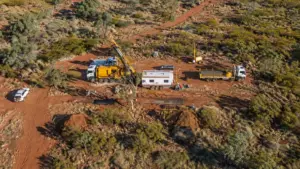
Sulphuric acid rarely features in discussions about critical minerals security. Yet copper and nickel producers depend on it to process certain ores. When supplies tighten, mines can face higher costs, procurement delays and pressure on production plans.

In 2026, disruption to sulphur supplies from the Middle East and restrictions on Chinese sulphuric acid exports exposed this vulnerability. The resulting squeeze affected mining operations and fertilizer producers. Although prices eased from their mid-year peaks, the episode revealed a supply-chain risk that extends beyond the minerals themselves.
For mining companies, the central question is no longer simply whether an orebody can be mined economically. It is also whether the chemicals required to process it will remain available at a viable cost.
Two disruptions tightened supply
Elemental sulphur and sulphuric acid are related, but they are not interchangeable. Elemental sulphur is a raw material used to manufacture sulphuric acid. The acid is then used in mineral processing, fertilizer production and other industrial applications.
The Middle East is a major source of internationally traded sulphur. Disruption to regional supply and shipping in 2026 constrained the movement of cargoes, tightening the market for this key feedstock. The effects spread to sulphuric acid buyers, including industries that depend on reliable deliveries for continuous operations.
More Read

China’s export restrictions added a second pressure point. China had been a major supplier of sulphuric acid to international markets, including Chile and Indonesia. Chinese customs data showed that exports fell from 116,703 tonnes in May 2026 to just 980 tonnes in June. The decline followed restrictions intended to protect domestic supply, particularly for fertilizer production.

The scale of the decline is clear, but the policy details require care. Industry reporting described a broad export halt from May, while other analysis noted that no formal public government announcement had been issued. The trade data establish that exports almost stopped; they do not, on their own, define every exemption or the precise legal scope of the restrictions.
The distinction matters. Middle Eastern disruption affected the supply of elemental sulphur, while China’s restrictions curtailed exports of the finished acid. Together, they tightened different parts of the same supply chain.
More Read

Chile: Acid supply becomes a copper risk
Chile illustrates how a chemical-market disruption can reach the mine gate.
Some copper operations use sulphuric acid to leach copper from ore. The process dissolves copper into a solution, allowing operators to recover it through subsequent processing stages. These operations need a dependable supply of acid to maintain planned production.
Chile’s reliance on imported acid left it exposed when Chinese shipments dried up. China supplied about 37% of Chile’s imported sulphuric acid in 2025. In March 2026, China sent no acid to Chile, compared with 151,268 tonnes in March 2025.
The potential production exposure is substantial. Morgan Stanley estimated that around 1.1 million tonnes of Chile’s annual leached copper output could be at risk if Chinese acid exports were restricted. This is an estimate of potentially exposed production, not evidence that Chile lost that volume of output. The effect on production could also take time to emerge because leaching is a relatively slow process.
The impact varies by mine. Operators with secure contracts, adequate inventories or access to alternative suppliers may be better positioned to manage disruption. Those relying on spot purchases may face higher delivered costs or difficulty securing enough acid.
A shipment in late August offered limited relief. A 32,000-tonne cargo of Chinese sulphuric acid left Nanjing for Chile, the first outbound shipment reported since May. The cargo represented only a small fraction of Chile’s annual acid imports. Reports indicated that it was an exceptional shipment, with further exports uncertain and wider restrictions still in place. It did not demonstrate that normal trade had resumed.
Indonesia: Sulphur weighs on nickel economics
Indonesia faces a different but related exposure. High-pressure acid leaching, or HPAL, plants process laterite ores using large quantities of sulphuric acid. That makes sulphur availability and pricing important variables in the cost of producing nickel intermediates.
Indonesia was a major destination for Chinese sulphuric acid exports before shipments almost stopped. It accounted for 28% of China’s exports between January and May 2026, according to reported customs data.
When sulphur prices rise, acid producers may face higher input costs. Those costs can flow through to HPAL operators, depending on their supply contracts, inventory positions and procurement arrangements. The effect will not be identical across plants.
Higher input costs do not automatically mean production cuts. Operators may draw down inventories, secure alternative cargoes or negotiate new supply arrangements. The more immediate operational risk arises when physical deliveries cannot arrive in time to sustain processing.
This is why a global benchmark price cannot tell the whole story. Delivered costs depend on freight, supplier access, contract terms and the location of each operation.
Falling prices do not guarantee secure supply
By September, sulphur prices had retreated from their mid-year peaks. Market reports showed declines in several importing markets as demand weakened and buyers resisted elevated offers. Fertilizer-market conditions also influenced purchasing and pricing.
That correction offers some relief, but it does not establish that supply risks have disappeared. Prices can fall because demand weakens, even when supply routes remain vulnerable. Nor does a lower spot price guarantee that a mine can obtain the volume it needs, when it needs it.
Procurement timing also matters. Material purchased at peak prices may remain in inventory after market prices decline. Contracted prices may adjust differently from spot benchmarks, while replacement cargoes can take time to reach a plant.
Mining companies therefore need to distinguish between three questions: Is acid available? Can it be delivered reliably? And can the operation afford it at the delivered price?
Processing security belongs in mine planning
The disruption raises practical questions for mine operators and project developers. How concentrated is the supply base? How much inventory can a site maintain? Are alternative suppliers qualified? Could local smelters provide acid, and can that material reach the operation economically?
Smelter-derived sulphuric acid can provide an alternative to acid produced from imported elemental sulphur. Copper smelting generates acid as a by-product, creating a potential supply source for nearby consumers. But the option depends on available production, commercial agreements, transport infrastructure and location. It cannot replace imports everywhere.
These factors belong in feasibility studies, operating plans and procurement strategies. Project assessments should consider reagent availability, supplier concentration, price volatility and the cost of maintaining reliable supply.
The exposure also varies by processing route. Copper leaching and nickel HPAL both use sulphuric acid, but their consumption patterns, cost structures and procurement options differ. Companies need to assess the requirements of each operation rather than assume a uniform impact across the sector.
A critical input hiding in plain sight
The 2026 sulphur disruption exposed a vulnerability across several industrial supply chains. Middle Eastern supply and shipping constraints tightened the elemental sulphur market. China’s export restrictions sharply reduced the availability of traded sulphuric acid. Mining and fertilizer producers faced higher costs, uncertain deliveries and pressure to find alternatives.
By September, prices had eased, and a limited Chinese shipment to Chile showed that some cargoes could move. Neither development proves that supply has returned to normal. The outlook remains dependent on export policy, shipping conditions, demand and the ability of buyers to secure alternative sources.
For mining companies, the lesson is clear: resource security and processing security are not the same. Ore reserves and installed capacity cannot deliver production on their own. Mines also need dependable access to the chemicals that make extraction possible.
Sulphur may not be the metal in the headline. But its availability can influence the cost, continuity and economics of producing the copper and nickel the global economy needs.