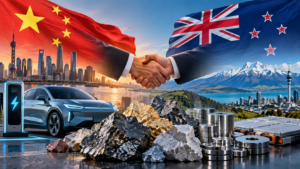
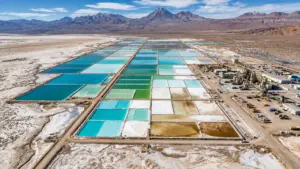
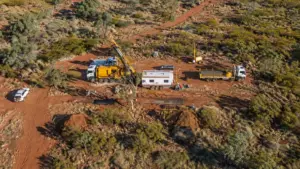
The next leader of the United Nations will take office as critical minerals reshape global trade, industrial policy and energy security. The transition comes at a time when governments are competing for secure mineral supplies and resource-producing countries are seeking greater economic returns from extraction.

For the mining industry, the key question is what the new Secretary-General will do with the UN’s existing critical-minerals agenda.
António Guterres’s second term ends on 31 December 2026. His successor will be appointed by the General Assembly following a recommendation from the Security Council. The selection process remains politically sensitive, with the Council’s five permanent members holding veto power.
The leadership change could influence international discussions on mineral supply chains, resource governance and economic development. It will not, by itself, change mining laws or determine commodity prices. Those outcomes depend on decisions by governments, regulators and businesses.
Critical Minerals Move Up the Global Agenda
Lithium, copper, nickel, cobalt and rare earth elements are essential to electric vehicles, batteries, renewable energy systems and digital infrastructure. Their growing importance has made access to these materials a strategic concern for governments and manufacturers.
More Read
But securing supplies is only part of the challenge. Countries that produce critical minerals also want a greater share of the value generated by extraction.

The UN has placed this issue within its wider development agenda. Its work on critical energy transition minerals examines how countries can build transparent, equitable and sustainable mineral value chains. The programme also addresses the environmental and social risks associated with expanding extraction.
For resource-producing countries, the opportunity extends beyond mining. Domestic refining, processing and manufacturing can create jobs and support industrial development. However, these activities require investment, infrastructure, technical skills and access to markets.
More Read

That creates a challenge for governments and mining companies alike. Producers want predictable investment conditions, while host countries want more economic value from their mineral resources.
The next Secretary-General will inherit this debate. The direction of the UN’s work could influence how governments approach these competing priorities.
The Candidates and the Critical-Minerals Question
As of 28 September 2026, the UN’s official selection page lists seven active candidates. Michelle Bachelet’s nomination was withdrawn by Chile in March and by Brazil and Mexico on 21 September. Virginia Gamba’s nomination was withdrawn in March.
The seven active candidates are Ivonne A-Baki, María Fernanda Espinosa Garcés, Rafael Mariano Grossi, Rebeca Grynspan Mayufis, Olara Otunnu, Carolyn Rodrigues Birkett and Macky Sall. The UN publishes their nomination records, vision statements and professional backgrounds.
Their relevance to mining must be assessed through their stated positions and documented records. Nationality or professional experience alone cannot establish what a candidate would do on critical-minerals policy.
Rebeca Grynspan: Connecting Minerals with Economic Development
Rebeca Grynspan of Costa Rica has a direct institutional connection to the critical-minerals debate through her leadership of UN Trade and Development (UNCTAD).
UNCTAD’s work examines how developing economies can move beyond raw-material exports and participate in higher-value stages of mineral supply chains. This includes the role of industrial policy, domestic processing and economic diversification.
These issues matter to countries seeking to retain more value from their mineral resources. They also matter to mining companies considering investments in refining, processing and local partnerships.
Grynspan’s experience makes these questions relevant to an assessment of her candidacy. However, UNCTAD’s institutional work should not automatically be treated as her personal policy programme. Her approach as Secretary-General would need to be judged by her own commitments and subsequent actions.
The Other Candidates: What Their Records Establish
The remaining candidates bring different diplomatic, political and institutional backgrounds to the selection process. Their published vision statements provide the basis for assessing their priorities.
Carolyn Rodrigues Birkett of Guyana has experience in diplomacy and government. Her candidacy raises questions about development and international cooperation. Guyana’s resource economy provides context, but it does not establish her personal position on mining policy.
María Fernanda Espinosa Garcés of Ecuador has held senior diplomatic roles, including the presidency of the UN General Assembly. Her views on development, environmental protection and multilateral cooperation are relevant to mining. Specific commitments on critical minerals, however, require direct evidence from her statements.
Rafael Mariano Grossi leads the International Atomic Energy Agency. His experience makes nuclear energy and uranium-related issues relevant to an assessment of his background. It does not, by itself, establish his position on uranium mining or the wider critical-minerals industry.
The same standard applies to Ivonne A-Baki, Olara Otunnu and Macky Sall. Their mining-related positions should be assessed through documented commitments, not assumptions based on their nationality or previous roles.
The available evidence supports examining each candidate’s experience and stated priorities. It does not justify attributing a detailed mining policy to candidates who have not explicitly outlined one.
Four Issues the Next UN Chief Will Inherit
1. Who Benefits From Mineral Wealth?
Mining can generate export earnings, employment and government revenue. Yet the economic benefits do not always extend far beyond extraction.
Many resource-producing countries want to develop domestic processing and manufacturing. Their goal is to capture more value before minerals enter international markets.
UNCTAD’s work on critical minerals addresses this challenge through the lens of economic diversification and industrial development.
For mining companies, these ambitions can shape investment decisions. Governments may seek local processing, infrastructure commitments or partnerships with domestic businesses.
Such policies can create opportunities, but they also affect project costs and commercial planning. Processing facilities require reliable power, transport, water, skilled workers and sufficient production volumes.
The next Secretary-General could give these issues greater prominence in the UN’s development work. National governments will still determine their own mineral policies and investment conditions.
2. Supply-Chain Security and Geopolitical Competition
Critical-mineral supply chains are vulnerable to disruptions when production or processing is concentrated in a small number of countries. Export restrictions, trade disputes and political instability can affect manufacturers far beyond the producing region.
The UN’s role is to provide a forum for countries to discuss these risks and pursue cooperation. The Secretary-General can convene governments and raise issues that require international attention.
But diplomacy cannot guarantee uninterrupted supplies. Governments will continue to make decisions based on their own economic and security interests.
For mining investors, the important signals will come from concrete changes in trade policy, investment rules and international cooperation. A change in UN leadership alone does not establish that any of these will occur.
3. Responsible Mining and Community Benefits
The expansion of mineral production brings environmental and social questions into sharper focus.
Mining projects can create jobs and public revenue. Poorly managed operations can also damage water resources, disrupt communities and leave costly rehabilitation obligations.
The UN’s critical-minerals agenda calls for sustainable value chains and stronger attention to the interests of producing countries and communities. Its July 2026 Security Council debate also highlighted the links between natural-resource governance, conflict and prosperity.
For companies, these issues affect project planning, community engagement and investor expectations. They can also influence the conditions attached to financing and access to markets.
The Secretary-General can help maintain international attention on these concerns. Actual operating requirements will continue to depend on national laws, permits, contracts and applicable international commitments.
4. Transparency and Illicit Mineral Trade
The origin of minerals is increasingly important to buyers, manufacturers and investors. Companies may need to demonstrate that materials come from legitimate sources and meet applicable due-diligence requirements.
This challenge is particularly significant in regions where illegal extraction, smuggling and conflict intersect.
At its July 2026 Security Council debate, the UN highlighted the need for stronger governance, transparency and local benefit-sharing. Member states also discussed international cooperation on natural-resource governance.
The debate did not produce a formal resolution, declaration or binding plan of action. It did, however, establish broad political support for continued attention to these issues.
For mining companies, the next step to watch is implementation. New programmes, national rules or commercial sourcing standards could affect how businesses document mineral origins and manage suppliers.
What Can the Secretary-General Actually Change?
The Secretary-General leads the UN Secretariat, represents the organisation diplomatically and helps shape its priorities. The office can bring governments together, raise emerging issues and encourage cooperation across the UN system.
But the Secretary-General does not issue mining licences, set royalties or determine commodity prices. Nor can the office independently impose a binding mining code on every country.
The appointment process itself reflects the balance of power within the UN. Under Article 97 of the UN Charter, the Security Council recommends a candidate for appointment by the General Assembly. The permanent members’ veto powers are central to that process.
For the mining industry, this distinction matters. A stronger UN focus on responsible sourcing or local value addition may influence policy debates. It does not automatically create new legal obligations for companies.
The practical effects will depend on decisions by member states, national regulators and businesses.
What Mining Investors Should Watch Next
The incoming Secretary-General’s first statements will offer an early indication of priorities. More meaningful evidence will emerge through appointments, work programmes and decisions by member states.
Four developments deserve particular attention:
- Critical-minerals policy: Whether the UN continues to support economic diversification and greater value addition in producing countries.
- Supply-chain cooperation: Whether international initiatives lead to practical measures on transparency and supply security.
- Resource governance: Whether the UN expands work on responsible extraction, illicit mineral trade and community benefits.
- Implementation: Whether existing principles lead to funded programmes, new agreements or changes in national policy.
These developments will provide a clearer picture of the transition’s implications than the appointment alone.
Investors should distinguish broad diplomatic signals from changes that affect project costs, market access or regulatory obligations. Those effects will become clearer only as governments and institutions act.
A Leadership Transition, Not a Policy Reset
The next UN Secretary-General will inherit an established critical-minerals agenda. Its priorities reflect rising demand, concentrated supply chains and the development ambitions of resource-producing countries.
Grynspan’s leadership of UN Trade and Development provides a direct institutional link to debates over mineral value addition and economic diversification. The other candidates’ positions should be judged by their own published commitments.
The leadership transition could influence how prominently critical minerals feature in international diplomacy. It could also shape the UN’s approach to cooperation between producing and consuming countries.
But the appointment will not determine the future of mining on its own. National policies, commercial decisions and the actions of UN member states will carry greater weight in determining what changes on the ground.
For the global mining industry, the central question is whether the UN can help turn mineral wealth into more resilient supply chains and broader economic benefits for producing countries and communities.
That is the measure to watch as the next Secretary-General takes office.