PANGKALPINANG, Oct 6– In a high-stakes show of force, Indonesia’s Attorney General on Monday handed over six seized smelters, approximately 680 metric tons of refined tin, and 108 heavy-machinery units to state tin miner PT Timah. The handover, witnessed by President Prabowo Subianto on Bangka Island, occurs as Jakarta intensifies its campaign against illegal tin mining and smuggling—moves that already are roiling global tin markets.

The assets, valued at an estimated Rp 4.6 trillion in potential annual revenue, were confiscated after corrupt deals involving tin executives were unraveled, revealing state losses of roughly Rp 300 trillion (US $18 billion) including environmental damage.
Smelter Transfers Raise Stakes in Indonesia’s Tin Reshuffle
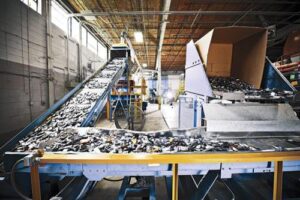
The scale of the transfer is significant. The six smelters now under Timah control represent a substantive portion of Indonesia’s refining capacity—capacity that illegal smelter operators had long leveraged by sourcing ore from unauthorized mining zones.
The confiscated refined tin stockpile and heavy equipment—tractors, excavators, processing plants—put Timah in position to absorb more of the downstream value chain directly. In effect, Jakarta is redirecting assets from illicit operators to its state champion.
Yet challenges remain: the condition, operability, and integration of these assets into Timah’s existing operations are not yet clear from public statements. The Attorney General’s office noted the assets “could generate” Rp 4.6 trillion per year, implying calibrations and refurbishment will be needed.
More Read
Market Impact: Price Surge and Supply Tightness
Tin markets have responded sharply. On the London Metal Exchange, three-month tin has jumped above US$37,500/ton, the highest since April. That rally reflects investor concern over disruptions from mine shutdowns and oversight crackdowns.

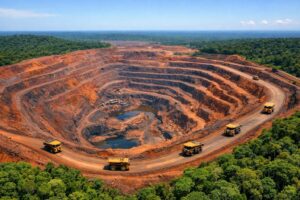
Indonesia’s crackdown reportedly entails shutting around 1,000 illegal tin mines in the Bangka–Belitung region, a move widely seen as central to reclaiming control over a sector where shadow production may have comprised as much as 80% of output.
Backing that estimate, Chinese customs reported Indonesia dispatched 1,192 t of “ore & concentrates” in the first eight months—contentious because only refined tin is supposed to leave under law. Meanwhile, Malaysia imported 642 t of tin concentrate in the first seven months.
More Read

Local smelters reliant on illegal ore are already feeling pressure: a survey by SMM showed that while Timah and major private smelters are stable (for now), smaller operators are facing tighter raw material flows and operational stress.
PT Timah Faces Mixed Fortunes Amid Restructuring
For PT Timah, the infusion of seized assets may rekindle growth prospects—but it arrives against stark headwinds. In H1 2025, Timah’s tin ore output plunged 32% YoY to 6,997 t, while refined production fell 29% to 6,870 t. That slump was blamed on competition from the illegal sector, torrential rain, and delays in opening new mines.
Nevertheless, Timah’s CEO remains optimistic about hitting the 2025 refined tin target of 21,500 t, suggesting that stronger regulatory enforcement and integration of new assets will bolster performance.
Still, integrating expropriated smelters and dealing with community backlash may complicate the transformation. On Monday, dozens of small-scale miners gathered outside Timah’s Pangkalpinang office demanding higher ore prices; police deployed water cannon and tear gas to disperse the crowd.
Governance, Legitimacy & Long-Term Risks
The asset handover underscores how deeply intertwined corruption and illegal mining have become in Indonesia’s tin sector. Investigations revealed that PT Timah executives colluded with private smelters through fabricated lease agreements, laundered transactions, and smuggling channels over years. Environmental damage from unregulated mining across Bangka–Belitung already has been estimated at US $16.8 billion.
In earlier litigation, prosecutors named five tin firms—including PT Refined Bangka Tin and PT Stanindo Inti Perkasa—as collaborators in the scheme, citing state losses of Rp 29 trillion from bogus smelting and Rp 271 trillion from environmental harm.
Legal analysts caution that this high-profile seizure and reallocation may invite further court challenges or claims of unlawful expropriation. Indonesia’s regulatory architecture—especially permitting, traceability mandates, export rules, and oversight—must be strengthened to avoid new loopholes. See discussion in Countering Illegal Tin Mining with Legal Reform (Rahayu 2024).
Skillings Analysis
- The handover signals a Washington-style “regulator becomes operator” shift. Timah may become not only the recipient of assets but the direct enforcer of legitimacy in Indonesia’s tin value chain.
- Market watchers should treat the tin price surge not as a temporary spike, but as a structural rebalancing—if Jakarta succeeds in reclaiming supply, downstream players must reposition fast.
- Timah’s ability to integrate these assets transparently and avoid new corruption scandals will define whether the government’s crackdown is long-term or just spectacle.
Outlook: What to Watch Into 2026
Looking ahead, key inflection points will include:
- Operational integration: Will Timah rapidly refurbish and deploy the seized smelters, and at what cost and timeline?
- Supply rebound: Can the crackdown rein in illicit mining before legal operators restore output? If so, global tin markets may shift from tightness to more sustainable balance.
- Judicial pushback: Dispossessed private investors or smelters may file lawsuits contesting claims of illegality or compensation, potentially dragging the transition into lengthy litigation.
For mining firms, this is a laboratory of “state takeover in resource sectors” with implications for asset security, reputational due diligence, and regional upstream strategy. In next quarter, watch for disclosures in Timah’s annual report, regulatory filings around the new smelters, and reactions from neighboring tin producers such as Myanmar or the DRC, who may see Indonesia’s turbulence as a window.