The Chile mining investment forecast has been raised to its highest level in nearly a decade, marking a renewed phase of long-term confidence in the world’s top copper-producing nation. According to Chile’s state copper agency Cochilco, total mining investment through 2034 is now projected to reach US$104.5 billion, representing a 26 percent increase compared to last year’s outlook. This sharp upward revision reflects strengthening global demand for copper and lithium, two minerals central to the global clean energy transition.

A significant share of this increased projection comes from developments at major existing operations. Key mining companies—including Codelco, BHP, and Collahuasi—are advancing large-scale projects designed to stabilize production, modernize facilities, and extend mine life. Cochilco noted that this updated Chile mining investment forecast is the strongest since the 2016–2025 period, underscoring renewed optimism across the sector.
Industry analysts highlight that Chile’s efforts to reduce regulatory uncertainty and enhance supply security for global markets have contributed to the positive sentiment. Despite persistent challenges such as rising costs and environmental constraints, mining remains the backbone of Chile’s economy.
Why the Chile Mining Investment Forecast Matters
The Chile mining investment forecast carries global significance due to copper’s central role in electrification, renewable energy infrastructure, and electric vehicles. With demand projected to rise sharply over the next decade, Chile’s ability to maintain and expand output will influence international supply chains and pricing trends.
Cochilco’s updated forecast also references several flagship projects:
More Read

- Escondida (BHP) – the world’s largest copper mine, undergoing major maintenance and modernization investments.
- Collahuasi (Anglo American & Glencore) – advancing a large concentrator expansion to increase long-term capacity.
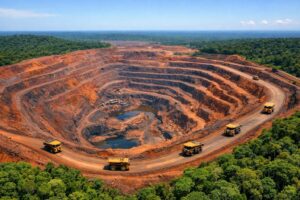
- Codelco – implementing delayed structural upgrades at Chuquicamata and Teniente, essential multi-billion-dollar projects that will convert aging open pits to underground operations.
Lithium also remains a strategic pillar. As the world’s second-largest lithium producer, Chile is refining national lithium policies to strengthen participation in the global battery supply chain. This policy clarity has contributed to increased investment commitments.

However, challenges remain. Environmental approvals, community expectations, and water scarcity in northern Chile continue to affect project timelines. To address this, mining companies are expanding desalination infrastructure and building long-distance water transport systems—capital-intensive but necessary for sustaining long-term output.
Impact of the Chile Mining Investment Forecast on Global Markets
The Chile mining investment forecast is closely monitored by global commodity markets. Chile accounts for roughly 25 percent of global copper supply, meaning production prospects in the country can influence international price trends. In previous years, supply deficits have contributed to record-high copper prices. As renewable energy and electrification accelerate, the market is again anticipating potential gaps between supply and demand.
More Read

Chile’s updated investment outlook helps ease concerns around future supply constraints, although actual outcomes will depend on permitting efficiency, operational performance, and macroeconomic conditions.
In the lithium sector, increased investment in Chile could diversify global supply chains currently strained by rapid EV adoption. Chile’s willingness to welcome foreign partners—while retaining state involvement—provides a more predictable environment for developers previously cautious due to regulatory ambiguity.
Overall, the Chile mining investment forecast marks a pivotal moment for the nation and the global mining industry. With significant investment directed toward modernizing aging infrastructure, exploring new deposits, and expanding processing capacity, Chile is positioning itself to stabilize output after recent years of production declines. If investment plans progress as intended, Chile stands to solidify its position as a leading global supplier of copper and lithium—essential materials for the low-carbon transition.
Despite challenges ranging from water constraints to environmental scrutiny, Chile is demonstrating a clear strategic vision for its mining future. Investors view this as a sign of long-term stability and opportunity. As the world accelerates toward electrification, Chile’s mining sector will remain a central pillar in supplying the minerals that power the transition.