By Charles Pitts and Mo Shine

The standoff between one of the world’s largest gold producers and a military-led West African government has drawn to a close: but not before reshaping the conversation about resource nationalism, taxation, and the risks of operating in frontier mining jurisdictions. Barrick Gold’s nearly two-year dispute with Mali culminated in a $430 million settlement in November 2025, ending a saga that saw gold physically seized by military helicopter, employees detained, and production at one of Africa’s most prolific mines ground to a halt.
This isn’t just a story about one company and one country. It’s a bellwether for how mining giants and resource-rich nations will negotiate power, profit, and sovereignty in the years ahead.
The Breaking Point: Mali’s 2023 Mining Code
The friction traces back to Mali’s overhaul of its mining legislation in 2023. The new code significantly increased the government’s take from mining revenues and imposed steeper taxation requirements on foreign operators. For the military junta that seized power in 2020, the message was clear: Mali intended to capture more value from its mineral wealth.
Barrick, which operates the Loulo-Gounkoto gold complex: Mali’s largest mine: found itself squarely in the crosshairs. Malian authorities claimed the company owed nearly $500 million in overdue taxes. Barrick pushed back, maintaining it had operated lawfully and pointing to an $85 million payment made to the government in October 2024.
More Read
Neither side blinked. The dispute escalated.


Gold Seized at Gunpoint
In January 2025, the situation took a dramatic turn. Malian officials, acting under a judicial confiscation order, dispatched a military helicopter to seize three metric tons of gold from Barrick’s operations. The haul was valued at approximately $400 million.
More Read

The company had no choice but to suspend operations at Loulo-Gounkoto. Four Barrick employees had already been detained since November 2024, adding a human dimension to what was rapidly becoming one of the most consequential resource disputes in recent memory.
For Barrick, the stakes were enormous. The Loulo-Gounkoto complex accounted for roughly 15% of the company’s attributable gold output in 2024. Losing access to that production: even temporarily: sent ripples through the company’s global portfolio.
For Mali, the calculus was different but equally significant. The country’s gold output plummeted 23% year-on-year in 2025, a direct consequence of the standoff. The mine that the government was fighting to control more tightly was now producing nothing at all.
Settlement: Who Blinked First?
By November 2025, both parties had apparently had enough. Barrick agreed to pay between 244 and 430 billion CFA francs: roughly $430 to $436 million: to resolve Mali’s outstanding claims.
In exchange, Mali committed to:
- Drop all legal proceedings against Barrick’s subsidiaries
- Release the four detained employees
- End the provisional administration imposed on the mining complex
- Return operational control of Loulo-Gounkoto to Barrick
Barrick, for its part, withdrew international arbitration cases it had filed against Mali through the World Bank-affiliated International Centre for Settlement of Investment Disputes (ICSID).

The settlement amounts to a significant payout for Mali, but it also represents a pragmatic retreat from the brink for both sides. Barrick gets its mine back. Mali gets a substantial cash injection and a signal to other operators that the government is willing to negotiate: eventually.
Production Restarts, Slowly
With the legal cloud lifted, Barrick has begun the painstaking process of restarting operations at Loulo-Gounkoto. The company initiated mandatory training programs for employees and contractors as a first step toward resuming production.
Barrick plans to reintegrate the mine into its 2026 production guidance, though the timeline for reaching full output remains uncertain. Mines don’t simply flip back on after months of inactivity. Equipment needs inspection, supply chains need re-establishing, and workforces need retraining.
The 23% drop in Mali’s gold production during 2025 underscores just how central Loulo-Gounkoto is to the country’s mining sector. Getting the complex back online is as much a priority for the Malian government as it is for Barrick’s shareholders.
Mali Tightens Its Grip
Perhaps the most intriguing development to emerge from the settlement is the appointment of Hilaire Bebian Diarra as a new ministerial-level mining supervisor. Diarra is a former Barrick executive who, in a twist, negotiated on behalf of the company during the dispute.
His appointment signals Mali’s intent to strengthen direct government oversight of the mining sector. It also raises questions about the blurring lines between corporate expertise and state control in resource-rich nations.
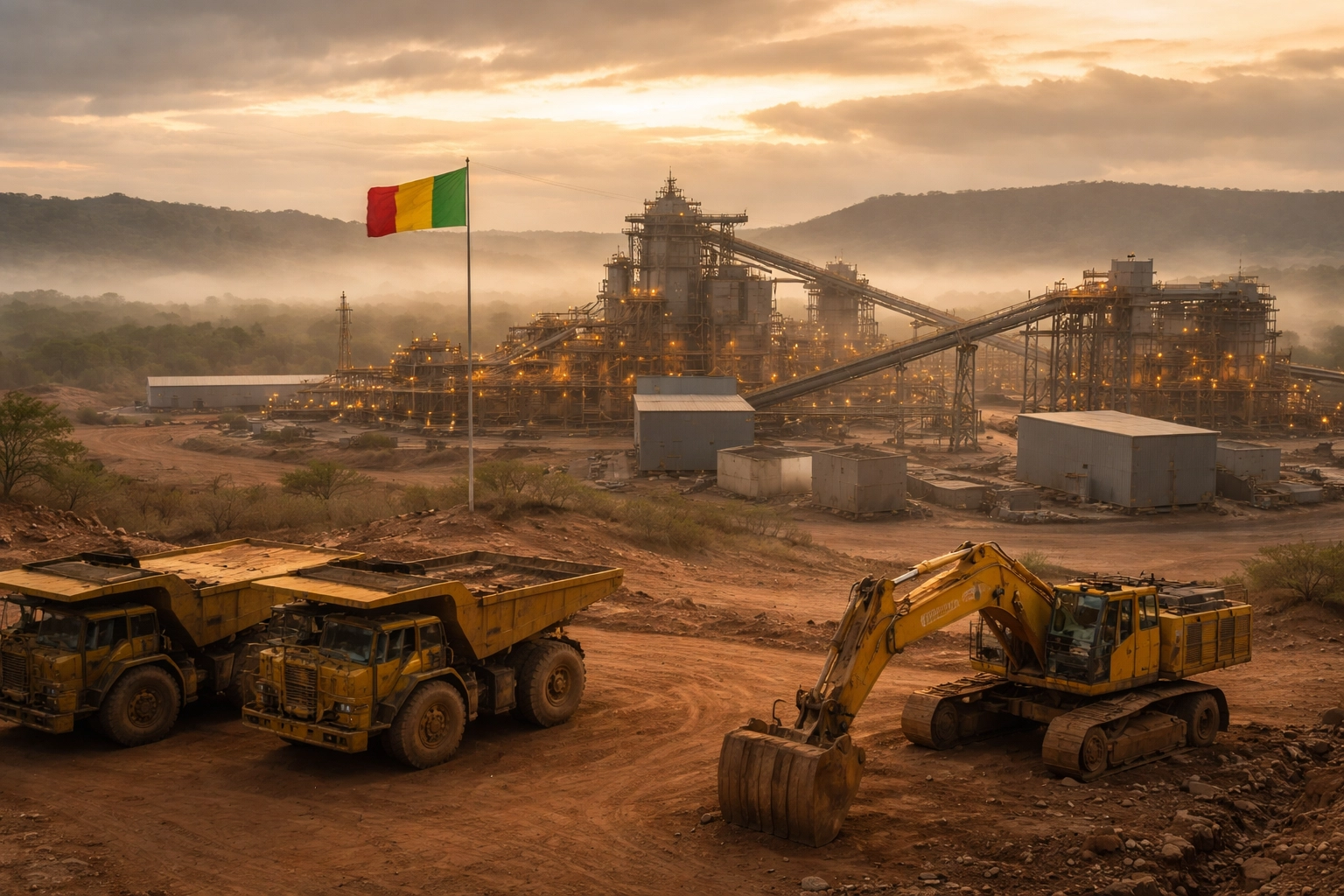
Under the 2023 mining legislation, Mali claims to have recovered 761 billion CFA francs: approximately $1.2 billion: in previously uncollected taxes and fees by December 2025. That figure, if accurate, represents a substantial recalibration of the financial relationship between the government and foreign mining operators.
The Permit Problem
One wrinkle remains unresolved. Loulo’s mining permit is set to expire in February 2026. The terms of any renewal will likely reflect Mali’s new regulatory posture, and Barrick will be negotiating from a position of reduced leverage after the events of the past two years.
Full implementation of the 2023 Mining Code also remains uncertain. The legislation gives the government broad authority to renegotiate existing agreements and impose new fiscal terms, but the practical application of those powers is still being worked out.
For Barrick, the permit renewal represents the next chapter in what has become an ongoing negotiation with the Malian state. For other mining companies operating in West Africa, it offers a preview of the regulatory environment they may soon face.
Broader Implications for West Africa Mining
The Barrick-Mali dispute is not an isolated incident. Across West Africa, governments are reassessing their relationships with foreign mining companies. Resource nationalism: the drive to capture more domestic value from mineral extraction: is on the rise.
Mali’s success in extracting a substantial settlement from one of the world’s largest gold producers will not go unnoticed. Neighboring countries with significant mining sectors may see the playbook as a template for their own negotiations.
At the same time, the dispute has highlighted the risks associated with operating in jurisdictions where political instability and regulatory unpredictability are facts of life. The seizure of gold by military helicopter is an extreme example, but it underscores the vulnerability of mining assets in countries where the rule of law is subject to sudden revision.
What Comes Next
Barrick will spend much of 2026 rebuilding its operations in Mali and navigating permit renewals. The company’s experience will shape how other miners approach the region and how they structure their relationships with host governments.
Mali, meanwhile, has demonstrated that it is willing to play hardball with even the largest international operators. Whether that approach attracts or repels future investment remains to be seen. The $430 million settlement is a short-term win, but the long-term health of Mali’s mining sector depends on its ability to balance revenue extraction with the predictability that investors require.
The gold is still in the ground. The question is who gets to dig it up: and on what terms.
For more coverage of West African mining developments and global resource policy, visit Skillings Mining Review.