By Charles Pitts and Mo Shine

Fifteen years to permit a new mine. Fifteen. That’s the timeline greenfield developers are staring down in 2026: and frankly, most boards don’t have the patience or the capital runway to wait that long. The math has shifted. Brownfield expansion isn’t just the safer bet anymore; it’s becoming the only bet that pencils out for mid-tier producers chasing margin in a supply-constrained market.
Golden Goose Resources Corp. understands this better than most. The Vancouver-based gold producer quietly pivoted its entire 2025-2026 capital allocation strategy toward revamping legacy pits rather than chasing virgin ground. It’s not a retreat: it’s arithmetic.
The Numbers Don’t Lie
Here’s the reality check: brownfield restarts deliver production 50% to 70% faster than greenfield projects. That’s not marketing fluff: that’s what happens when you skip the permitting gauntlet and inherit decades of geological data, existing road access, power connections, and (crucially) community relationships that already exist.
Major mining companies have noticed. Exploration budgets allocated to existing mines hit 60% in 2024: more than double the share from 2016. That’s a seismic reallocation of capital away from frontier exploration and toward known deposits sitting underneath old headframes.
More Read


The capital efficiency argument is equally brutal. Brownfield infrastructure advantages reduce upfront costs by 30-50% compared to conventional greenfield developments. For a mid-cap producer like Golden Goose, that difference represents the gap between funding expansion from cash flow versus diluting shareholders into oblivion with another equity raise.
Operating margins for gold producers now exceed $3,000 per ounce at current spot prices. When you’re printing that kind of margin, the last thing you want is a 15-year development timeline eating into your window of opportunity.
More Read
Golden Goose’s Playbook
Golden Goose Resources Corp. isn’t reinventing the wheel here: they’re just executing the obvious strategy faster than competitors stuck in legacy exploration mindsets.
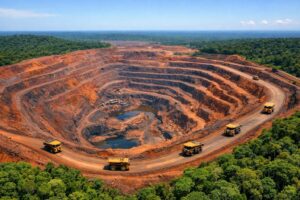
The company’s flagship move involves the reactivation and expansion of the historic Redemption pit complex in Nevada, a property that produced intermittently through the 1990s before ore grade depletion and weak gold prices mothballed operations. Today’s economics look completely different. Higher gold prices, improved heap leach recovery rates, and existing infrastructure (including a permitted tailings facility) compress the restart timeline to under 18 months.
Compare that to the company’s earlier greenfield ambitions in Alaska: a project now indefinitely shelved after regulatory delays pushed first production estimates past 2032.
“We’re not abandoning exploration,” Golden Goose CEO Margaret Telford stated in a recent investor call. “We’re just being honest about where capital generates returns fastest. The brownfield portfolio gets us to cash flow while greenfield assets remain optionality on the balance sheet.”
That’s the corporate-speak translation of “we stopped lighting money on fire.”
The Structural Supply Problem
The brownfield pivot makes even more sense when you zoom out to industry-wide supply dynamics.
Annual gold discoveries now range between 10-20 million ounces. Annual production runs 110-120 million ounces. Even accounting for recycling, the math creates a structural deficit that only accelerates as existing deposits deplete. The gold industry isn’t finding enough new metal to replace what it extracts: and hasn’t been for years.

This supply-demand imbalance creates urgency around faster development timelines. Every month of permitting delay represents lost revenue at historically elevated prices. Brownfield projects compress that timeline by leveraging existing regulatory frameworks rather than fighting through fresh environmental impact assessments.
Large-scale mining deals are projected to rise 45% through 2026 as major producers target assets with established infrastructure. The acquisition premium for brownfield assets now reflects this scarcity: buyers are willing to pay up for production certainty.
Why Greenfield Got Harder
It’s worth acknowledging that brownfield didn’t suddenly become attractive in a vacuum. Greenfield development actively deteriorated as a proposition over the past decade.
Environmental policies tightened globally. Permitting timelines stretched. Local opposition organized more effectively, armed with social media reach and legal resources that simply didn’t exist when most legacy mines were originally permitted. The regulatory landscape for new mine development in the United States, Canada, and Australia now resembles an obstacle course designed by people who don’t want you to finish.
None of this is necessarily wrong from a policy perspective: mining carries real environmental consequences that communities have every right to scrutinize. But the practical effect is that new mine development became so expensive and uncertain that rational capital fled toward existing assets.
Golden Goose’s Nevada restart benefits from permits originally issued in 1987. The regulatory baseline was established decades ago. Expansion activities fall under existing frameworks rather than triggering full re-permitting cycles. That’s not a loophole: it’s just how the law works. And sophisticated operators are structuring their portfolios accordingly.
The Limitations Are Real
Let’s not pretend brownfield expansion is a perfect strategy with zero trade-offs.

Cumulative impacts from multiple expansions can cause substantial long-lasting environmental and social damage if not carefully managed. A pit that’s been expanded three times over 40 years carries different community and environmental baggage than a well-planned single-phase development. Golden Goose’s Redemption restart includes a $12 million remediation commitment for legacy tailings issues: costs that wouldn’t exist at a clean-sheet greenfield site.
The other constraint: brownfield expansion potential is becoming limited. The easy restarts got restarted years ago. What remains tends to be marginal deposits, politically complicated jurisdictions, or assets with unresolved legacy liabilities. Miners are already pushing into increasingly remote projects with lower ore grades simply because the premium brownfield opportunities have been picked over.
This creates a long-term tension in the industry. Brownfield works great as a near-term capital allocation strategy: but someone still needs to find the next generation of deposits or the supply deficit becomes permanent.
What Happens Next
Golden Goose expects first gold pour from Redemption in Q3 2027, assuming current permitting modifications proceed on schedule. Full production ramp targets 85,000 ounces annually by 2028: a 40% increase to the company’s consolidated output at roughly half the capital intensity of their shelved Alaska project.
The market has noticed. Golden Goose shares traded up 23% since the brownfield pivot announcement in September 2025, outperforming the VanEck Gold Miners ETF by 11 percentage points over the same period.
More broadly, the brownfield preference reshapes how mining companies think about their asset portfolios. Legacy properties that sat as write-offs on balance sheets for decades now carry strategic value. Junior explorers with historic data packages: even without current resources: attract acquisition interest from mid-tiers looking to skip permitting risk.
The implication for capital markets: expect continued deal flow in brownfield-adjacent assets through 2026. Expect greenfield exploration budgets to remain constrained outside of Tier 1 discovery opportunities. And expect operators like Golden Goose to keep demonstrating that sometimes the best new mine is an old one with better economics.
The industry spent 20 years chasing the next great discovery. In 2026, the smart money is revamping what they already found.
For more coverage on mining sector capital allocation trends, visit Skillings Mining Review.