By Charles Pitts | January 30, 2026

Washington just put its money where its mouth has been for the better part of a decade. The U.S. Department of Commerce announced a $1.6 billion commitment to USA Rare Earth, Inc., marking the largest single federal investment in domestic rare-earth production to date. The deal includes a $1.3 billion senior secured loan and $277 million in direct federal funding: money that will flow into a mine southeast of El Paso, Texas, and a magnet processing facility in Oklahoma.
In exchange, the Commerce Department takes home 16.1 million shares and approximately 17.6 million warrants in the company. That’s roughly a 10% equity stake in a private rare-earths miner. The federal government, for all practical purposes, is now a shareholder in the critical minerals business.
This isn’t charity. It’s strategic necessity dressed up as industrial policy.
China Forced the Issue
The timing here matters. China slapped restrictions on rare-earth exports back in April, a move that sent tremors through every defense contractor, EV manufacturer, and electronics producer dependent on these obscure but indispensable elements. Neodymium, dysprosium, terbium: most Americans couldn’t spell them, but they’re in everything from F-35 fighter jets to the motor in your electric toothbrush.
More Read

For years, Beijing controlled somewhere between 60% and 70% of global rare-earth mining and an even more staggering 85% to 90% of processing capacity. When China decides to weaponize that dominance, as it did in April, the downstream effects hit fast. Defense Department officials have been warning about this vulnerability since the Obama administration. Now, finally, the checkbook is open.


USA Rare Earth, an Oklahoma-based outfit that’s been quietly developing its Round Top project in Hudspeth County, Texas, suddenly finds itself at the center of American industrial strategy. The company didn’t just take the government’s money and run: it went out and raised an additional $1.5 billion in private investment to complement the federal package. That’s $3.1 billion in total capital flowing into a single rare-earths project on American soil.
More Read

The Texas-Oklahoma Corridor Takes Shape
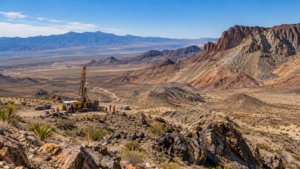
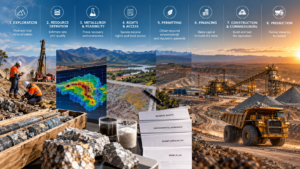
The Round Top deposit sits about 85 miles southeast of El Paso, in the kind of desolate West Texas terrain that makes you wonder why anyone bothered surveying it in the first place. But the geology there turned out to be more cooperative than anyone expected. The deposit contains not just rare earths but lithium, uranium, and beryllium: a polymetallic grab bag that makes the economics considerably more attractive than a single-commodity play.
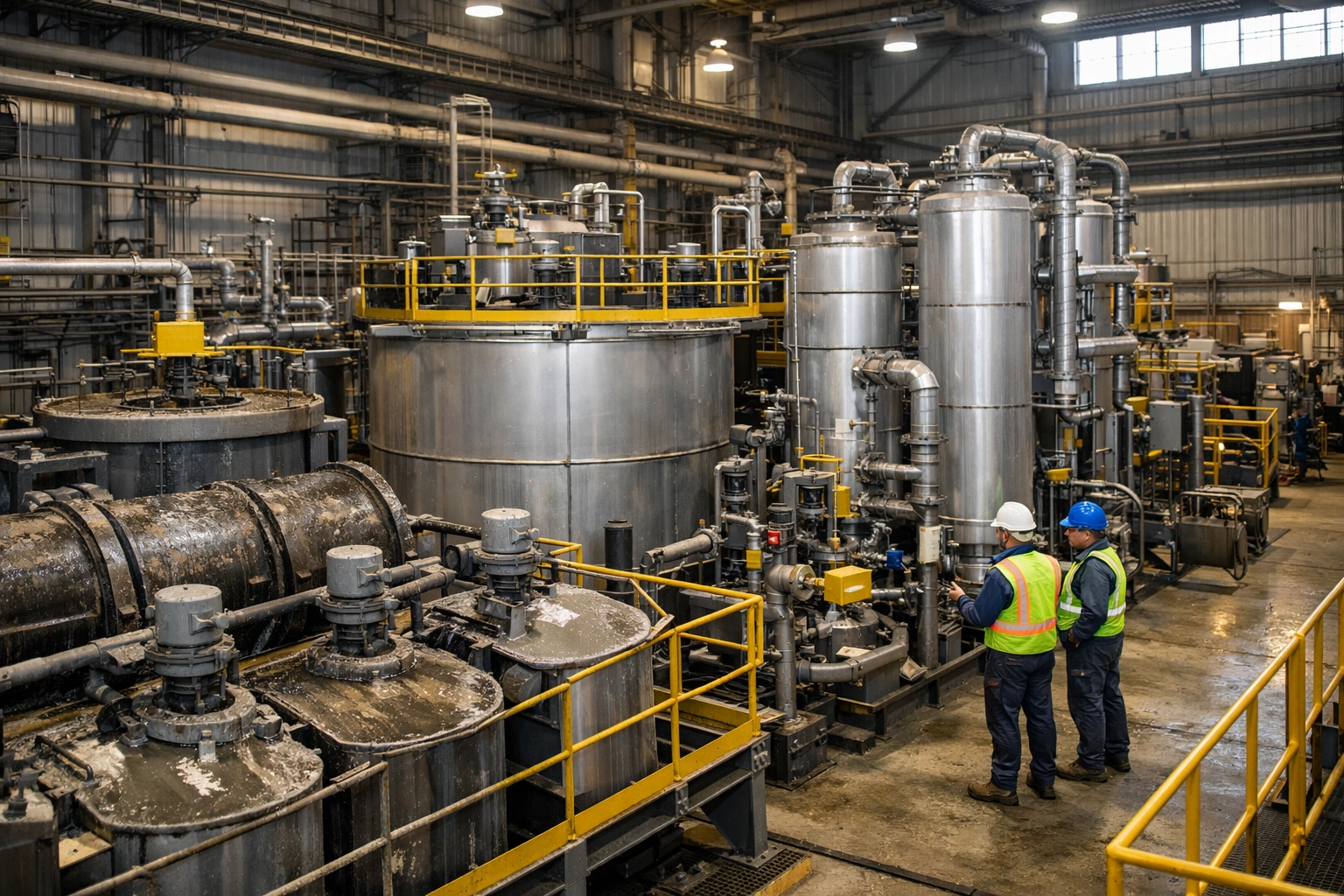
Mining the stuff is only half the battle, though. The real bottleneck in the rare-earths supply chain has always been processing: specifically, the separation of individual rare-earth elements from the mixed concentrates that come out of the ground. That’s where China built its stranglehold, investing decades and billions into refining technology that Western companies largely ignored.
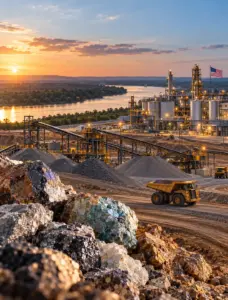
USA Rare Earth’s Oklahoma facility is designed to close that gap. The plant will produce rare-earth magnets: the end product that actually goes into motors, turbines, and weapons systems. Vertical integration from pit to permanent magnet, all within U.S. borders. That’s the pitch, anyway.
The company has also signed a letter of intent with the Energy Department’s National Energy Technology Laboratory to develop digital twin technology for its separation processes. Translation: they’re trying to use advanced simulation and AI to optimize the notoriously finicky chemistry involved in rare-earth refining. Whether that pans out remains to be seen, but at least someone’s throwing R&D money at the problem.
A Pattern Emerges
This deal doesn’t exist in isolation. The federal government has been on something of a spending spree in the critical minerals space. The Defense Department recently extended a $620 million loan to Vulcan Elements, another rare-earth magnets company, with the Commerce Department kicking in an additional $50 million. The government has also taken equity stakes in MP Materials, the operator of the Mountain Pass mine in California: currently the only producing rare-earths mine in the United States.
The White House’s critical minerals initiative has Commerce Secretary Howard Lutnick leading negotiations on strategic supply agreements with allied nations. But the domestic production push represents a parallel track: building redundancy and resilience into supply chains that have been dangerously concentrated in a single geopolitical rival.
Total federal commitments to rare-earths and critical minerals projects now exceed $4 billion across multiple agencies and programs. That’s still a fraction of what China has invested over the past two decades, but it’s a start.
The Economics Still Don’t Make Sense (Yet)
Here’s the uncomfortable truth that rarely makes it into the press releases: American rare-earth production, even with government support, will struggle to compete on cost with Chinese operations for years to come. Beijing’s dominance wasn’t just about geology or government subsidies: it was about building an entire ecosystem of expertise, supply chains, and downstream industries that don’t exist yet in the United States.
The Round Top project will produce rare earths at costs that would be uncompetitive in a purely free-market scenario. The government money is, in effect, a subsidy to bridge that gap while domestic capacity scales up and the learning curve flattens out. Whether private investors recoup their $1.5 billion bet depends heavily on continued policy support and, frankly, on China continuing to behave badly enough to justify the expense.
Defense procurement represents the most obvious guaranteed market. The Pentagon has been directed to prioritize domestically sourced rare earths for weapons systems, creating a captive buyer for at least a portion of USA Rare Earth’s output. Electric vehicle mandates and clean energy tax credits provide additional demand-side support, though those policies remain subject to political winds.
What 10% Equity Actually Means
The government’s equity stake raises interesting questions about the evolving relationship between Washington and the mining sector. This isn’t a nationalized industry: USA Rare Earth remains a private company with private shareholders making operational decisions. But the Commerce Department now has a seat at the table, warrants that could dilute other shareholders if exercised, and a vested financial interest in the company’s success.
That’s a significant shift from the hands-off approach that characterized American industrial policy for most of the post-Cold War era. Whether you call it strategic investment or creeping state capitalism depends largely on your political priors. Either way, it’s happening.
The structure also provides downside protection for taxpayers. If USA Rare Earth succeeds and the shares appreciate, the government participates in the upside. If the company fails, the senior secured loan puts federal creditors at the front of the line in any bankruptcy proceeding. It’s a more sophisticated approach than outright grants, though considerably more complex to administer.
The Decade Ahead
Building a domestic rare-earths industry from near-scratch will take time. The Texas mine won’t reach full production for several years. The Oklahoma processing facility faces its own construction and commissioning timeline. Training a workforce capable of operating these facilities adds another layer of delay.
Meanwhile, China isn’t standing still. Beijing continues to invest in rare-earth processing, battery materials, and downstream manufacturing. The technology gap that American companies are racing to close is a moving target.
But the $1.6 billion commitment to USA Rare Earth represents something that’s been missing from American critical minerals policy for decades: actual capital deployment at scale. The rhetoric about supply chain security has been around since rare earths first made headlines during the 2010 China-Japan dispute. The money is finally following.
Whether it’s enough, and whether it arrived in time, are questions that won’t be answered for years. For now, a patch of West Texas desert and a factory site in Oklahoma carry the weight of America’s rare-earth ambitions. The government is all in. The clock is running.