Wheaton Precious Metals Corp. has closed the largest precious metals streaming transaction in history: a $4.3 billion deal with BHP Group for future silver production from Peru’s Antamina copper-zinc mine.

The deal is massive. It’s clean. And it fundamentally reshapes the streaming sector’s competitive landscape heading into 2026.
The Transaction Structure
BHP receives $4.3 billion upfront in exchange for silver sourced from its 33.75% ownership stake in Antamina. That’s not a joint venture complexity or a three-way negotiation: this is BHP monetizing by-product silver from a tier-one copper asset while maintaining full exposure to the mine’s primary revenue drivers: copper, zinc, and lead.
The ongoing economics are straightforward. Wheaton pays BHP 20% of the spot silver price for each ounce delivered. That’s the production transfer payment, and it’s locked in for the life of mine.
The stream becomes effective April 1, 2026. Completion is expected around that date, contingent only on corporate matters and customary closing conditions. No regulatory approvals required. That’s unusual for a transaction of this size, and it compresses the execution timeline significantly.
More Read



Volume Thresholds and Mine Life Economics
Here’s where the deal gets interesting from a reserve-replacement perspective.
BHP will deliver silver equivalent to 33.75% of payable silver produced at Antamina until Wheaton receives 100 million ounces. After that threshold is hit, the stream steps down to 22.5% of payable silver for the remaining mine life.
More Read
Payable silver is calculated using a fixed payable factor of 90%. That’s the metallurgical recovery assumption baked into the contract, and it eliminates one variable from the valuation debate.
The first 100 million ounces is the high-margin phase. After that, Wheaton still captures 22.5%: enough to justify the upfront capital but structured to give BHP back some economics as the mine ages and grades potentially decline.
What Wheaton Gets
This deal doubles Wheaton’s silver exposure from Antamina. The company already holds a streaming agreement with Glencore, another partner in the mine. Combined, Wheaton now controls 67.5% of the silver coming out of one of the world’s largest copper-zinc operations.
On a pro-forma basis, the transaction increases Wheaton’s 2026 production by 11.3%. That’s material accretion for a company of Wheaton’s scale, and it’s coming from a single asset with decades of mine life remaining.
The reserve math is equally compelling. Wheaton adds an estimated 66 million ounces to its silver reserves and 38 million ounces to measured and indicated resources. That’s reserve replacement at a capital cost of roughly $65 per attributable reserve ounce, assuming current mine plans and silver prices hold.
The $4.3 billion investment represents only 6.5% of Wheaton’s market capitalization. For context, many streamers struggle to deploy capital at scale without diluting their per-share metrics. This is accretive from day one.

Why BHP Sold
BHP’s strategic calculus isn’t subtle. Silver is a by-product. It contributes margin, but it doesn’t drive investment decisions at Antamina. Copper does. Zinc does. Lead rounds out the revenue stack.
By monetizing 33.75% of future silver production, BHP unlocks $4.3 billion in capital without selling equity in the mine itself. That capital can be reallocated to higher-return growth projects: think copper expansions in Chile, potash in Canada, or nickel sulfate investments aligned with battery supply chains.
From a balance sheet perspective, streaming deals don’t increase reported debt. The $4.3 billion shows up as deferred revenue, which is favorable for credit metrics and financial flexibility. BHP maintains operational control and full exposure to copper price upside, which is where the real value creation happens in a decarbonization-driven demand environment.
And the 20% ongoing payment? That’s indexed to silver prices, so BHP retains some exposure if silver runs. It’s not a complete exit: it’s capital optimization.
The Streaming Sector Context
This transaction matters beyond the bilateral terms. It sets a new benchmark for streaming deal size and demonstrates that major miners are willing to monetize by-product metals to fund core commodity growth.
The streaming sector has been capital-constrained relative to deal flow opportunities. Royal Gold, Franco-Nevada, and Wheaton have historically competed for the same tier-one assets, driving up acquisition multiples. A $4.3 billion single-asset deal of this quality doesn’t come to market often.
For investors evaluating streaming deals versus royalty structures, this transaction underscores the value of production-linked exposure at large-scale operations. Wheaton pays 20% of spot, which means if silver price forecasts for 2026 and beyond materialize: driven by industrial demand, solar panel manufacturing, and monetary hedge flows: the economics improve in real time.

Antamina Mine Profile
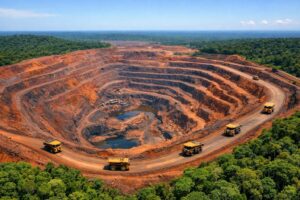
Antamina is a world-class asset. Located in Peru’s Ancash region, the open-pit mine produced approximately 400,000 metric tons of copper and 120,000 metric tons of zinc in 2024, along with by-product silver, lead, and molybdenum.
The mine is owned by a consortium: BHP (33.75%), Glencore (33.75%), Teck Resources (22.5%), and Mitsubishi Corporation (10%). That ownership structure explains why Wheaton now effectively controls two-thirds of the silver stream: Glencore’s existing deal plus this new BHP agreement.
Antamina has a mine life extending into the 2030s under current reserve assumptions, with potential extensions depending on exploration success and metal price environments. For Wheaton, that’s multi-decade production visibility from a single counterparty in a jurisdiction where both BHP and Glencore have deep operational experience.
Peru carries execution risk: community relations, permitting timelines, and political dynamics all factor into long-term mine performance. But Antamina has been operating since 2001, and the mine has demonstrated operational continuity through multiple political cycles.
Silver Price Implications
This deal doesn’t happen in a vacuum. Silver price forecasts for 2026 are increasingly bullish, driven by structural demand in photovoltaics, electronics, and EV infrastructure, combined with supply-side constraints as primary silver mines struggle with grade decline and majors prioritize copper over precious metals.
Wheaton is effectively making a leveraged bet on silver outperformance. At $30 per ounce silver, the economics are solid. At $40, they’re exceptional. At $25, the deal still works but with tighter margins.
The 20% production payment means Wheaton’s cost basis floats with silver prices, which provides some downside protection compared to fixed-cost streaming deals. But the upfront $4.3 billion is capital at risk, and it assumes Antamina delivers on reserve estimates and production guidance over the next two decades.
Closing Conditions and Timeline
The deal is expected to close around April 1, 2026, with no regulatory approvals required. That’s faster than typical mining M&A, where antitrust reviews and foreign investment screenings can drag timelines out by six to twelve months.
Wheaton likely financed the transaction through a combination of cash on hand, credit facility drawdowns, and potentially new debt issuance. The company will disclose the capital structure in subsequent filings, but the lack of equity dilution suggests debt markets remain accessible for investment-grade streaming credits.
What This Means for Mining Finance
The Wheaton-BHP deal validates the streaming model at scale. Major miners are increasingly willing to monetize by-product metals to fund copper, nickel, and lithium growth: the commodities aligned with electrification and decarbonization.
For investors, this shifts the valuation framework for streaming companies. Wheaton just added 11.3% production growth and 66 million ounces of reserves in a single transaction. That’s the kind of capital deployment efficiency that equity markets reward, assuming operational execution follows.
For other miners holding silver by-product streams: particularly in copper-dominant operations: this sets the pricing benchmark. If BHP accepted 20% of spot on an ongoing basis for $4.3 billion upfront, other operators now have a reference point for their own monetization strategies.
The deal also highlights Peru’s role in global silver supply. With Antamina, Cerro Verde, and Las Bambas all producing material silver volumes as by-products, the country remains central to both copper and silver markets heading into the next decade.
This transaction is a signal. Capital is moving toward long-life, low-cost production with geographic and operational track records. Wheaton just locked in two decades of exposure to one of the best copper-zinc mines in the world. The silver is the vehicle. The real story is what that capital deployment means for competitive positioning in a sector where scale and asset quality define the winners.