The global aluminum supply chain is currently undergoing a violent reconfiguration. While most of the market has spent the last decade staring fixedly at Guinea’s massive export volumes, a strategic pivot is happening right next door. Ghana, long the sleeping giant of the sector, is finally waking up: and it’s doing so with the backing of one of the world’s largest “premium” aluminum producers.

The reality that many analysts missed is that the memorandum of understanding signed between Emirates Global Aluminium (EGA) and the Ghana Integrated Aluminium Development Corporation (GIADEC) isn’t just another ceremonial handshake. It is a calculated move to hedge against the increasing volatility of West African mining jurisdictions. For EGA, securing a long-term bauxite corridor in Ghana is no longer a luxury; it’s a survival tactic.
The Strategic Calculus: Why Ghana, Why Now?
Ghana sits on more than 900 million tonnes of bauxite reserves. That is not a typo. Despite this massive geological endowment, the country has been punching significantly below its weight, scraping together a measly 1.5 million to 1.7 million tonnes in annual production. Most of this comes from a single source: the Awaso project.
The gap between what is in the ground and what gets onto a ship is, frankly, embarrassing. But for EGA, that gap represents an opportunity to build a supply chain from the ground up, tailored to their specific refining requirements.

More Read

The timing here is critical. As we move through 2026, the Critical minerals geopolitics 2026 landscape has become increasingly fractured. EGA’s heavy reliance on its Guinea Alumina Corporation (GAC) operations has become a point of structural vulnerability. With the Guinean government tightening the screws on domestic processing requirements and threatening license revocations for companies that don’t build refineries, EGA needs a hedge. Ghana is that hedge.

Breaking Down the EGA-GIADEC Accord
The strategic accord focuses on three distinct pillars: upstream mining development, rail-to-port infrastructure, and long-term offtake.
- Upstream Expansion: The partnership aims to move beyond the stagnation of the Awaso mine. While the Ghana Bauxite Company has kept the lights on, the EGA-GIADEC roadmap envisions a jump to 5 million tonnes of annual production from Awaso alone.
- The Infrastructure Lock: You cannot export bauxite without a heavy-haul rail network and a deep-water port. The accord explicitly targets the development of the Western Rail Line and the expansion of the Takoradi port. Without these, the bauxite stays in the red dirt of the Ashanti region.
- Supply Security: EGA is looking to double its bauxite production in the coming years. By locking in GIADEC as a partner, they gain a stable, state-backed entry point into new concessions in the Nyinahin-Mpasaaso and Kyebi regions.
The Infrastructure Bottleneck: Rail or Bust
In mining, geology is a given, but logistics are a choice. Ghana’s failure to capitalize on its bauxite reserves for the last half-century has been almost entirely a failure of logistics. The current reliance on trucking ore over dilapidated roads is expensive, dangerous, and environmentally disastrous.
More Read
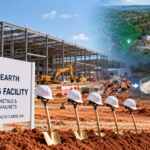
The “Strategic Accord” identifies the Takoradi port as the primary export hub. However, the Western Rail Line remains the “elephant in the room.” To move 5 million tonnes of ore annually, the rail capacity needs a complete overhaul. This isn’t just about laying tracks; it’s about signal systems, rolling stock, and maintenance facilities that can handle the brutal wear and tear of heavy mineral transport.

The capital expenditure required for this infrastructure is massive. This is where the M&A and financing expertise of a giant like EGA becomes indispensable. By tying infrastructure development to long-term supply contracts, the project becomes bankable in a way that state-funded projects rarely are. This trend of “infrastructure-for-minerals” is a hallmark of the 2026 Mining M&A Trends.
Project Timeline and Key Milestones
To understand the trajectory of the Ghana bauxite boom, one must look at the specific project phases currently under discussion:
| Project Phase | Location | Status | Target Capacity (MTPA) |
|---|---|---|---|
| Awaso Expansion | Western Region | Operational/Expansion | 5.0 |
| Nyinahin Project 1 | Ashanti Region | Exploration/Licensing | 4.0 |
| Nyinahin Project 2 | Ashanti Region | Pre-Feasibility | 3.5 |
| Kyebi Development | Eastern Region | Scouting | 2.5 |
| Takoradi Port Hub | Coastal | Construction | 15.0 (Total Bulk) |
Data source: GIADEC Strategic Roadmap 2025-2028.
The immediate focus for the remainder of 2026 will be the finalization of the rail concessions. If the Western Rail Line doesn’t see significant track-laying by Q4, the 2028 production targets will start to slip.
Geopolitical Risks: The Guinea Factor
We cannot talk about Ghana without talking about Guinea. Guinea is the world’s leading bauxite exporter, but it is currently a geopolitical minefield. The ruling junta in Conakry has been increasingly aggressive toward international miners, demanding “value addition”: which is industry-speak for “build a multi-billion dollar alumina refinery here or lose your mine.”
EGA’s GAC operation in Guinea is a jewel in their crown, but it is a jewel under pressure. By diversifying into Ghana, EGA is sending a clear message to Conakry: we have options.
However, Ghana presents its own set of risks. While more stable than Guinea, Ghana is currently navigating a complex debt restructuring environment. The government’s ability to provide sovereign guarantees for infrastructure projects is limited. This means the EGA-GIADEC partnership must rely on “project-finance-lite” models or direct corporate balance sheet funding.

The Environmental and ESG Trap
In 2026, you don’t just dig a hole and sell the dirt. The “green aluminum” narrative is driving procurement decisions across the automotive and aerospace sectors. Bauxite mining in Ghana: particularly in the Atewa Forest region (near Kyebi): is a lightning rod for environmental activism.
GIADEC has been vocal about its commitment to “responsible mining,” but the optics of clearing forest land for bauxite are challenging. Investors are watching closely to see if the EGA partnership will bring the high ESG standards practiced in their UAE smelters to the Ghanaian bush. As we’ve noted in our analysis of why mining ESG reporting will change the way you access capital in 2026, failure to manage these optics can kill a project’s valuation before the first shovel hits the ground.
Integration: From Ore to Alumina
The “Holy Grail” for GIADEC is not just exporting raw bauxite; it’s the development of a domestic alumina refinery. For decades, Ghana has exported raw ore and imported expensive finished aluminum products. It’s a classic value-drain.
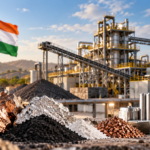
EGA is an aluminum company, not just a mining company. Their expertise lies in the smelting and refining process. While the current accord focuses heavily on the upstream (mining) and midstream (logistics), the long-term play involves an integrated “Bauxite-to-Aluminium” value chain within Ghana.
But building a refinery requires two things Ghana currently lacks in abundance: reliable, cheap baseload power and massive amounts of caustic soda. Until the energy infrastructure catches up with the mining ambitions, the dream of a fully integrated industry remains a PowerPoint slide rather than a reality.
Market Impact: What This Means for Global Bauxite Prices
As Ghana scales up, it introduces a new supply variable into a market dominated by Chinese demand. Currently, China’s appetite for bauxite is insatiable as its domestic reserves dwindle in quality.
If EGA successfully ramps up Ghanaian production to the 10-15 million tonne range (across all projects), it provides a non-Chinese controlled supply alternative for international markets. This could alleviate some of the price volatility seen in 2025, but only if the infrastructure can handle the volume. For a deeper look at how these dynamics play out across other commodities, see our copper forecast 2026.

Conclusion: A High-Stakes Game of Logistics
The EGA-GIADEC accord is a recognition that the old way of doing business in West Africa: extracting ore and ignoring the host nation’s infrastructure: is dead. To secure the bauxite needed for the next decade of aluminum production, companies must become infrastructure developers and strategic partners.
Ghana has the reserves. EGA has the capital and the need. The only question left is whether they can lay the tracks fast enough to beat the next cycle of commodity volatility. The clock is ticking, and the red dust of Ashanti is waiting.
For operators and investors, the 2026 outlook for Ghana’s bauxite sector is one of “cautious acceleration.” The geology is proven; the politics are stable-ish; but the logistics remain the primary risk factor that could derail the entire “Boom.” Keep a close eye on the Takoradi port data in the coming months( it’s the only metric that truly matters.)