When a junior miner pushes back a Preliminary Economic Assessment (PEA), the market usually flinches. It’s a Pavlovian response. Investors see “extension” and they think “trouble.” They think “delay,” “dilution,” or “technical hurdles.”

But here is the reality nobody wants to admit: speed is often the enemy of value.
DLP Resources recently announced it is extending the timeline for its Aurora PEA to Q2 2026. On the surface, it looks like a pause. In reality, it’s a tactical pivot that transforms the project from a standard open-pit copper play into a sophisticated, multi-commodity powerhouse. By shifting the focus from a simple “dig a hole” approach to an integrated open-pit and underground model, DLP is chasing the math that actually matters in 2026.
The strategic calculus here isn’t subtle: they aren’t just looking for copper; they are optimizing for the highest-grade molybdenum on the planet while the rest of the world is screaming for critical minerals.
The Open-Pit Trap vs. Integrated Reality
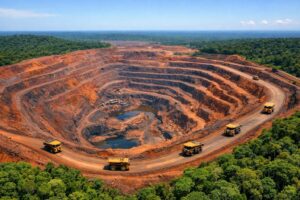
The “standard” way to develop a porphyry deposit is predictable. You model an open pit, you calculate the strip ratio, and you pray the copper price stays high enough to move all that waste rock. It’s a brute-force method.
More Read

Aurora is different. The deposit hosts an inferred mineral resource of over 1 billion tonnes. That includes 4.65 billion pounds of copper and 1.11 billion pounds of molybdenum. That isn’t a rounding error. That is a massive, multi-generational asset.

Global Resource Engineering (GRE), the firm handling the PEA, realized that sticking to a pure open-pit model was leaving money on the table. The geometry of the Aurora deposit allows for something rare: horizontal drifting. Instead of sinking an expensive vertical shaft: a CapEx nightmare that kills project IRRs: DLP can drive tunnels horizontally into the high-grade zones.
This allows the company to mine the high-grade underground copper and molybdenum zones simultaneously with the large-scale open-pit resources.
More Read


Why Molybdenum is the Secret Weapon
Everyone talks about copper. We know the story: EVs, the grid, the green transition. It’s all true. But Molybdenum is the “dark horse” of the critical minerals race. It’s essential for high-strength steel alloys used in wind turbines, nuclear reactors, and specialized military hardware.
And here is the kicker: China currently dominates the molybdenum supply chain.
DLP Resources isn’t just sitting on a copper mine with some moly as a “byproduct.” Aurora contains some of the highest-grade molybdenum resources in the world. By extending the PEA to Q2 2026, the company is re-modeling the mine plan to extract this high-grade moly in the early years of the mine life.
This isn’t just about geology; it’s about economics. High-grade molybdenum credits can drive the “all-in sustaining cost” (AISC) of copper production down to levels that make the project resilient even if copper prices take a temporary hit. You can’t disrupt geology, but you can certainly optimize how you harvest it.
For a deeper look at how these types of supply chain shifts are affecting the market, check out our analysis on the rare earth supply and why it matters for the 2026 outlook.
The Metallurgy: Numbers Don’t Lie
Optimized mine plans are useless if you can’t get the metal out of the rock. This is where most junior miners fail. They have the grade, but the metallurgy is a nightmare.
Aurora doesn’t have that problem. Initial metallurgical testing has already confirmed:
- Copper recovery: 95.8%
- Molybdenum recovery: 86.4%
- Silver recovery: 89.3%
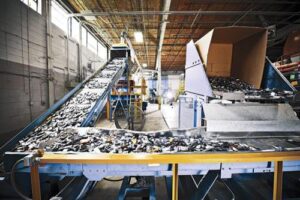
These aren’t just “good” numbers. They are elite. They suggest that Aurora can use standard flotation methods: the most reliable, well-understood processing tech in the industry: to achieve high-quality concentrates. There’s no need for exotic, unproven leaching technologies that blow up capital budgets.

The 2026 Inflection Point: Timing the Deficit
There is a certain irony in investors complaining about a 2026 delivery date. Most analysts agree that 2026–2027 will be the “chickens-coming-home-to-roost” moment for copper supply.
The industry has underinvested in new supply for a decade. Major mines in Chile and Peru are facing declining grades and water scarcity. While Chile is trying to reclaim its global crown in other sectors, the copper pipeline is looking increasingly thin.
DLP Resources timing the PEA for Q2 2026 aligns the project perfectly with the peak of the projected supply crunch. If they had rushed a “sub-optimal” PEA in 2024, they would be trying to raise capital in a market that didn’t fully appreciate the underground potential or the molybdenum value.
By 2026, the market won’t just be looking for copper: it will be desperate for it. And it will be looking for projects that have been de-risked and optimized for low-cost production.
Geography as Destiny: The Peru Factor
Operating in Peru isn’t for the faint of heart. It’s a complex jurisdiction with high rewards for those who know how to navigate it. However, Aurora’s location and its specific geometry: allowing for that low waste-to-ore ratio: give it a massive head start.
When you compare Aurora to other massive porphyries, the CapEx-to-Output ratio starts to look very attractive. Most “mega-projects” require billions in upfront infrastructure before a single ounce of metal is sold. The ability to utilize horizontal drifting and simultaneous extraction means DLP can potentially scale production in a more modular, capital-efficient way.
This is the same kind of strategic thinking we’re seeing in other jurisdictions. For instance, Nevada reclaiming its crown as a top mining jurisdiction shows that investors are fleeing to quality and efficiency.
The Strategic Win: A Clearer Picture
So, why is this extension a win?
- Grade Optimization: It allows for a mine plan that targets the high-grade molybdenum “sweet spots” early. That means faster payback of capital.
- CapEx Efficiency: The integrated open-pit/underground model reduces the need for massive, unnecessary waste movement.
- Critical Mineral Status: It repositions Aurora as a key Western source of Molybdenum, a mineral that is becoming a matter of national security for many G7 nations.
- Market Timing: It launches the economic case for the mine exactly when the global copper deficit is expected to hit its most critical phase.

The Bottom Line
Let’s be blunt: 2025 will be a year of noise. We’ll see industry conferences flagging critical moments for mining’s transformation, and we’ll see plenty of volatility in commodity prices.
But you can’t ignore a billion-tonne resource with 95% copper recovery.
DLP Resources is playing the long game. They are choosing to do the hard engineering work now so that the PEA reflects a Tier-1 asset rather than just another “maybe” project. For the casual observer, the delay is a nuisance. For the strategic investor, the 2026 extension is the moment the Aurora project actually became real.
The copper is there. The molybdenum is there. The tech is standard. Now, they are just making sure the math is bulletproof.
As we move toward a global economy defined by electrification and resource scarcity, the “optimized” projects will be the ones that survive the transition. Aurora is now firmly in that category.
Welcome to the new reality of mining: it’s not just about what you have in the ground, it’s about how smart you are at getting it out.