Orion Resource Partners Fund IV is not just another pool of private capital. It is a $2.2 billion statement of intent in a market that has been starved of traditional liquidity for a decade. While mainstream commercial banks retreat into the safety of ESG-driven divestment and "low-risk" portfolios, Orion has built a $9 billion empire by leaning into the complexity of the dirt.

The reality is uncomfortable for those still waiting for a banking sector pivot: traditional project finance is broken. The gap between the metal we need for the energy transition and the capital available to dig it out is widening. Orion is no longer just a participant in this market; it is increasingly the market.
With $9 billion in assets under management (AUM), this specialist financier has positioned itself as the lender of last: and often first: resort for the critical minerals sector.
The Death of Traditional Mine Finance
For years, the mining industry relied on a predictable, if slow, conveyor belt of capital. Juniors explored, mid-tiers developed, and commercial banks provided the debt for construction. That conveyor belt has stalled.
Commercial banks now face mounting pressure to distance themselves from extractive industries. Even "green" metals like copper and lithium are often lumped into broad exclusion policies due to the inherent carbon footprint of moving millions of tonnes of rock.
More Read

This is where Orion thrives. By operating as a specialist, they aren't bound by the same bureaucratic inertia that plagues Tier-1 banks. They understand the geology. They understand the engineering. Most importantly, they understand that in a world of Copper’s $13,000 reset, being timid is the greatest risk of all.

Fund IV: A Sprint, Not a Marathon
The close of Mine Finance Fund IV at $2.2 billion marks a significant escalation in scale. This isn't a fund that’s sitting on its hands waiting for the "perfect" macro environment. As of early 2026, Fund IV has already deployed 61% of its capital.
That is a blistering pace.
More Read

Deployment has spanned North and South America, Europe, Africa, and Australasia. This geographic spread isn't accidental. It’s a hedge against the rising resource nationalism we’re seeing in traditional mining jurisdictions. By diversifying across the globe, Orion is insulating its investors from the specific political whims of any single administration.

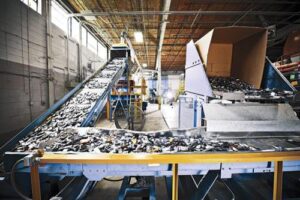
(Alt: Modern mineral processing plant at sunrise, showing modular units and industrial piping, reflecting efficient mining technology and innovation.)
The structure of these investments is also evolving. We aren't just talking about simple equity stakes. Orion utilizes a sophisticated mix of:
- Mine construction loans: Filling the gap left by commercial banks.
- Royalties and streams: Providing long-term upside without the operational headaches.
- Structured capital: Tailored solutions that junior miners simply cannot find elsewhere.
The Geopolitical Power Play
The most fascinating aspect of Orion’s recent growth isn't just the AUM: it’s the company they keep. In October 2025, Orion established the $1.8 billion Orion Critical Mineral Consortium in partnership with the U.S. government.
This is a seismic shift.
It marks the formal recognition by Washington that private capital is the only way to break the Chinese stranglehold on mineral supply chains. The consortium is designed to channel investment into strategic mining and refining operations that are essential for national security.
But they aren't stopping at the U.S. border. Orion’s $1.2 billion joint venture with Abu Dhabi’s ADQ and its recent partnership with SNB Capital in Saudi Arabia demonstrate a clear strategy: align with sovereign wealth.
These aren't just financial partnerships; they are geopolitical anchors. By partnering with states that have a multi-decade horizon, Orion is de-risking projects that would otherwise be deemed too capital-intensive or politically sensitive for Western markets.
Copper, Lithium, and the Infrastructure Race
The investment thesis remains laser-focused on the metals that drive modern civilization. Copper is the undisputed king of this portfolio. As we detailed in our March 16 intelligence report, the "Critical Minerals Corridor" is becoming the most contested economic zone on the planet.
Orion is placing massive bets on the idea that the "shiny AI revolution" is actually a story about wires and batteries. Without the copper for data centers and the lithium for grid-scale storage, the digital economy grinds to a halt.
The strategy is simple: find projects with high margins and clear paths to production, then provide the capital to bypass the years of "study-phase" purgatory. In many cases, Orion is the catalyst that turns a "project on paper" into a "hole in the ground."
Platform Diversification: More Than Just Mines
Orion is also quietly building a vertical stack. It’s no longer just about the ore in the ground.
- Orion Industrial Ventures: A $43 million fund targeting mining tech. This is about efficiency: finding the software and automation that can shave 5% off an AISC (All-In Sustaining Cost).
- Liquid Strategies: With over $750 million in AUM, this allows Orion to play in the public markets, providing a liquidity bridge for companies that aren't yet ready for full project financing.
This integrated platform allows them to see the entire lifecycle of a mine. They aren't just looking at the balance sheet; they are looking at the drill cores and the processing flowsheets.

The 2026 Outlook: Why Scale Matters Now
As we move through 2026, the cost of capital remains the single biggest hurdle for the mining industry. Inflation has hammered CAPEX estimates. A project that cost $400 million to build in 2022 might now carry a $600 million price tag.
For a junior miner, that $200 million delta is an existential threat. For Orion, it’s an opportunity.
With $9 billion under management, Orion has the "dry powder" to absorb these cost overruns and keep projects moving. This scale creates a self-reinforcing cycle: the more successful projects they fund, the more sovereign wealth they attract, and the more dominant they become.
But there is a darker side to this dominance. As specialist financiers like Orion grow, the "cost" of capital for miners is effectively rising. Traditional bank debt was cheap. Private capital, royalties, and streams are expensive. Miners are trading away more of their future upside just to get their projects built today.
It's a brutal trade-off. But in a world where the alternatives are "dilute to zero" or "let the project die," Orion is the only viable path forward for many.
The Verdict
Orion Resource Partners has correctly identified the great irony of the 21st century: the more the world tries to move away from "old" industry, the more it relies on the specific products of that industry.
Fund IV is a $2.2 billion bet that the physical world still matters. It’s a bet that geology is more important than ideology. And given their 61% deployment rate and the backing of global superpowers, it’s a bet they are currently winning.
The mining industry doesn't need more "pledges" or "memorandums of understanding" from the World Economic Forum. It needs cash, it needs technical expertise, and it needs the stomach for risk.
Orion has all three. Per project. That's not a typo: it's a transformation of the sector.
Social Media Snippet:
Orion Resource Partners is rewriting the rules of mine finance. With a $9B AUM and a $2.2B Fund IV already 61% deployed, they are filling the massive void left by traditional banks. From US Gov partnerships to Saudi ventures, Orion is the new gatekeeper of critical minerals. #MiningFinance #CriticalMinerals #Copper #OrionResourcePartners #Investment

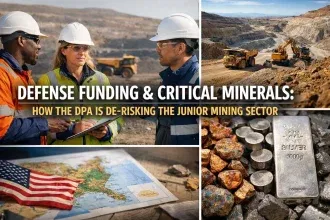
(Alt: Mining engineers and global map illustrating strategic interests and mineral supply chains.)
For more deep dives into the capital shifts defining the 2026 market, visit our full archive or check our latest analysis on the geopolitical surge in Latin American minerals.