Mining M&A strategies are undergoing a fundamental, structural shift that the broader market hasn’t fully priced in yet. The old playbook: valuing a project strictly on its contained metal and a standard discount rate: is dead. In its place, a new metric has emerged: the scale premium.

We are seeing a market where majors and mid-tiers are no longer just buying ounces or pounds. They are buying time, permitting certainty, and regional dominance. The recent wave of activity involving giants like BHP, Rio Tinto, and Hudbay Minerals isn’t just a streak of opportunism. It is a calculated response to the reality that building a greenfield mine in 2026 is becoming an exercise in futility.
The Death of the Greenfield Dream
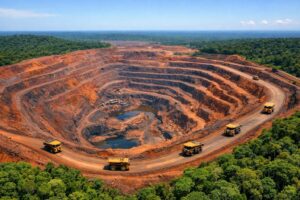
For decades, the industry relied on a steady pipeline of discovery to production. You found it, you banked it, you built it. Not anymore. The capital requirements for new mines have reached a breaking point. Inflation in energy costs, labor shortages, and the “nasty” reality of permitting timelines that now stretch toward 15 years have made acquisitions the only viable path for growth.
Acquirers are now paying massive premiums for existing production or “shovel-ready” projects. Why? Because a bird in the hand is worth four in the bush when the bush is tied up in environmental litigation for a decade. This is particularly evident in the copper space, where the Freeport-McMoRan expansion at El Abra highlights the preference for brownfield expansion over new frontier exploration.
The 50% Premium Anomaly
The data coming out of the Australian markets is particularly jarring. Take-private transactions for ASX-listed mining companies are now commanding premiums exceeding 50%. This isn’t a rounding error. It’s a crisis for anyone trying to enter the market late.
More Read
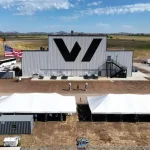
When Northern Star Resources dropped $3.3 billion for De Grey Mining, or Gold Fields moved on Gold Road Resources for $2.4 billion, they weren’t just looking at the current spot price of gold. They were looking at the impossibility of replicating those assets. In a world where the 2026 outlook for critical minerals suggests a structural deficit, “scale” is the only shield against volatility.


P/NAV and the Scale Multiplier
The technical shift in how these deals are being structured revolves around P/NAV (Price to Net Asset Value) re-ratings. Historically, a project was valued at its NPV (Net Present Value). Today, if a project offers “scale”: defined as long-life production that can anchor a region: it receives a multiplier.
More Read
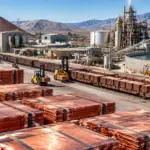
Major producers are trading at higher P/NAV multiples than developers. By acquiring a developer, a major can instantly “re-rate” those assets to their own higher multiple. It’s a valuation arbitrage that makes even a 40% or 50% premium look cheap on the back end.
Hudbay Minerals’ $1.48 billion acquisition of Arizona Sonoran is the perfect case study. It wasn’t just about adding copper tons; it was about dominating the North American copper narrative. By consolidating these assets, they create a “scale premium” that individual junior miners simply cannot access on their own.

Regional Hubs: The Evolution Strategy
One of the most effective strategies we’ve seen recently involves the development of regional long-life hubs. Evolution Mining has mastered this. They don’t just buy isolated mines; they buy assets that can share infrastructure, mining methods, and technical know-how.
By building these clusters, they achieve operational leverage that lowers the per-unit cost across the entire portfolio. Their 2023 acquisition of Northparkes, which boosted copper exposure to 30% of revenue, was a strategic pivot toward resilience. They are preparing for a cycle where commodity prices might swing, but scale-driven efficiency remains constant.
This regional approach is also visible in the Vicuña District, where massive cross-border projects are being treated as a single strategic unit rather than disparate pits.
The Energy Shock Factor
Let’s talk about the uncomfortable truth regarding costs. With oil hitting $100/bbl, the operating expense for iron ore and copper production is facing a 20% hike. For a junior developer, this is a death sentence for their feasibility studies. For a major with a massive balance sheet and diversified energy sourcing, it’s a hurdle, not a wall.
This cost disparity is fueling the M&A fire. Small players are getting squeezed by the “energy nexus,” forcing them into the arms of larger entities that can absorb the shock. We see this play out in the battery metal space as well, where companies are pivoting toward black mass recycling and other integrated solutions to bypass traditional extraction costs.

Supply Deficits: The 2035 Countdown
By 2035, the industry is staring down a 15% deficit in copper, 10% in lithium, and 5% in nickel. Those numbers are grim. The “green transition” is effectively a massive short squeeze on the periodic table.
Acquirers know that they cannot wait for the 2030s to secure supply. The M&A wave of 2025 and 2026 is a land grab for the few remaining high-quality, large-scale assets left on the board. Whether it’s Nouveau Monde Graphite’s financing struggles or Rio Tinto’s aggressive lithium pursuits, the message is the same: scale is the only currency that matters.
The Strategic Calculus for 2026
If you are an investor or an operator, you need to understand that the “discovery” phase of the cycle has been superseded by the “consolidation” phase. We are no longer looking for the next big hit; we are looking for who owns the infrastructure to process it.
The scale premium is not a temporary trend. It is a permanent re-valuation of the mining sector. Companies that lack the scale to absorb carbon taxes, energy spikes, and permitting delays will continue to be swallowed by those that do.
The strategic calculus here isn’t subtle:
- Infrastructure is King: Mines near existing mills are worth 2x those in greenfield areas.
- Jurisdictional Scale: Regional dominance allows for better government relations and permitting leverage.
- P/NAV Arbitrage: The gap between junior and major valuations is the “profit” that justifies the premium.
2026 marks the inflection point where the industry stops pretending that small-scale mining is a sustainable model for the critical mineral age. It’s grow or go.
Analysis by Charles Pitts, CEO, SMR OPS 100K. For more deep dives into the 2026 commodity outlook, visit our latest market reviews.