By Penny Laneford

The lithium market of early 2026 is no longer defined by the erratic “white gold” rush of the early 2020s, nor the crushing oversupply fears of 2024. Instead, a sophisticated restructuring is underway. As battery-grade lithium carbonate spot prices stabilize around $24,086 per metric ton this quarter, the industry is witnessing a “Great Unbundling.”
For years, diversified miners held lithium assets as secondary speculative bets. Now, strategic spinoffs: most notably Frontier Nuclear’s decision to carve out its lithium holdings to double down on uranium: are creating a new class of pure-play entities. For investors, the “alpha” no longer lies simply in finding a deposit; it lies in the separation of assets and the localization of the midstream.
The Rise of the Pure-Play: Why Spinoffs are Dominating 2026
In the current capital environment, “conglomerate discounts” are hitting mining majors hard. Investors are demanding clarity. When a company manages both a Tier-1 uranium play and a burgeoning lithium project, the market often struggles to value the disparate risk profiles.
Frontier Nuclear’s recent pivot is a textbook example. By spinning off its lithium assets, the company allows the market to value its uranium core on its own merits while giving the new lithium entity the agility to seek partnerships without the baggage of a nuclear-focused balance sheet. This trend reflects a broader industry realization: lithium is no longer a “by-product” or a “side-hustle.” It requires a dedicated technical team and a unique capital expenditure cycle.
More Read

However, this isn’t a one-way street. While some are spinning off, others are consolidating to secure supply. We recently saw Rio Tinto expand its lithium production with the $8.6 billion Arcadium Lithium acquisition, proving that while mid-caps find value in purity, the majors are still hungry for scale.

The Midstream Moat: Domestic Processing as “Project Vault”
If the first half of the decade was about securing the mine, the second half is about securing the refinery. China currently processes over 75% of the world’s lithium into battery chemicals: a concentration risk that Western automakers and governments are no longer willing to tolerate.
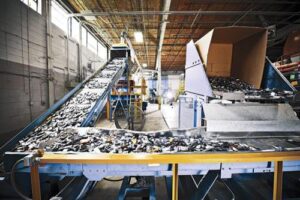
Enter “Project Vault” and the surge in domestic processing. In early 2026, the first major lithium refinery in Texas became fully operational, signaling a shift in where the value is captured.
More Read


For an investor, a mining company with a resource is a commodity play. A mining company with integrated, domestic refining capacity: or a strategic partnership with a regional hub: is a geopolitical play. Domestic processing allows companies to bypass the “China bottleneck,” qualifying their end-product for domestic subsidies and reducing the carbon footprint of the supply chain.
The Geopolitical Shield: Strategic Pacts and Supply Security
The hunt for alpha is increasingly tied to the legal and diplomatic architecture of the mining world. The era of “go it alone” is over. We are seeing a flurry of bilateral agreements designed to de-risk the flow of critical minerals.
One of the most significant developments in this space was when Washington and Santiago signed a strategic pact to secure global copper and lithium supply chains. Chile remains a powerhouse, but the new framework ensures that Chilean lithium has a fast-track into the North American EV ecosystem. This “friend-shoring” provides a pricing floor and a level of regulatory certainty that didn’t exist three years ago.

Market Data: Identifying the 2026 Floor
Current market dynamics suggest that the floor for lithium is much higher than skeptics predicted during the 2024 slump. Demand is being bolstered by a 50% year-over-year growth in Energy Storage Systems (ESS) and the continued, albeit steadier, rise of the global battery revolution.
According to recent data, the supply-demand balance for 2026 looks increasingly tight:
| Metric | 2025 (Actual/Est) | 2026 (Forecast) | % Change |
|---|---|---|---|
| ESS Production (GWh) | 320 | 480 | +50% |
| Lithium Carbonate Spot Price ($/mt) | $19,500 | $24,086 | +23% |
| Global Deficit (Metric Tons) | (12,000) | (55,000) | +358% |
| Chinese Processing Share | 81% | 74% | -7% |
Data source: Industry aggregate and Morgan Stanley Research (Dec 2025).
The forecasted deficit of 55,000 metric tons in 2026 is a primary driver for the strategic shifts we are seeing. When supply is tight, those who control the refined product: not just the raw ore: hold the most leverage in contract negotiations.

The Integrated vs. Pure-Play Debate
The “New Alpha” is found by choosing the right horse for the right race.
- The Pure-Play Spinoff: These entities are the primary targets for M&A. As seen in the PDAC 2025 conferences, junior and mid-tier explorers that focus solely on lithium are easier for battery manufacturers to partner with directly.
- The Integrated Domestic Processor: This is the “infrastructure” of the lithium world. These companies are less exposed to the volatility of raw ore prices because they capture the value-added margin of turning spodumene or brine into battery-grade chemicals.
Companies that are successfully navigating this pivot are those that recognized the critical moment for mining’s transformation and acted early to secure domestic refining capacity.
Risk Factors: The 2026 Reality Check
While the outlook is bullish, risks remain. The “Lepidolite Risk” in China: where higher-cost mines in Yichun could restart if prices climb too high: acts as a ceiling on the market. Furthermore, technological shifts toward sodium-ion batteries for low-end ESS could eat into lithium’s market share by late 2027.
However, for the 2026 investment horizon, the primary risk is operational: can these new spinoffs and domestic refineries actually hit their nameplate capacity? Building a mine is hard; building a chemical refinery that meets the exacting standards of cathode manufacturers is harder.

Conclusion: Positioning for the Rebound
The lithium market has matured. The pivot toward spinoffs like Frontier Nuclear’s lithium arm and the intense focus on domestic processing are signs of a sector that is professionalizing. For the savvy investor, the “alpha” is no longer about predicting if the world needs lithium: that question has been answered. It’s about predicting which companies will control the domestic supply chain and which spinoffs will become the next acquisition targets for the hungry majors.
As we move through 2026, keep a close eye on “Project Vault” style developments and any company announcing a midstream JV. In the new lithium economy, the refinery is the new gold mine.