China Northern Rare Earth Group significantly hiked prices for the second quarter of 2026. (Bottom 10% alignment).

**BEIJING : ** China’s dominant rare earth producer has signaled a sharp tightening of the global market, raising transaction prices for the second quarter of 2026 by nearly 45%. The move by China Northern Rare Earth Group comes as the industry faces a perfect storm of logistical disruptions, reagent shortages stemming from Middle East instability, and a calculated move by Beijing to leverage its mineral dominance against Western trade barriers.
China Northern Rare Earth Group, the world’s largest producer of the minerals essential for high-tech electronics, electric vehicle (EV) motors, and defense systems, announced its second-quarter transaction price for rare earth concentrate at 38,804 yuan (approximately $5,390) per tonne. The 44.6% increase from the first quarter marks the seventh consecutive quarterly rise, representing a cumulative price surge of over 130% since mid-2024.
The price hike arrives at a critical juncture for the global critical minerals guide, as Western manufacturers struggle to diversify supply chains away from Chinese processing hubs.
The Catalyst: Sulphuric Acid and Geopolitical Friction
Market analysts point to a secondary, yet vital, supply chain crisis driving the current price spike: a global shortage of sulphuric acid. The chemical is the primary reagent used in the leaching and separation process required to turn raw ore into usable rare earth oxides.
More Read

Ongoing conflict in the Middle East has disrupted major shipping routes and energy-intensive chemical production, leading to a global deficit. In a strategic maneuver that has sent shockwaves through the mining industry, Beijing announced it will block its own exports of sulphuric acid starting in May 2026. By prioritizing domestic refining while restricting the chemicals needed for overseas processing, China is effectively tightening its “chokepoint” on the global supply.

This move is widely viewed by trade experts as a direct retaliation against recently expanded U.S. tariffs on Chinese green technologies. With China controlling over 90% of global smelting and separation capacity, the restriction of reagents makes it nearly impossible for junior miners in other regions to ramp up production without Chinese assistance.
Market Snapshot: Rare Earth Price Evolution
The following table tracks the rapid escalation of rare earth concentrate prices set by China Northern Rare Earth Group over the last two years.
More Read

| Period | Price (Yuan/Tonne) | Percentage Change (QoQ) |
|---|---|---|
| Q3 2024 | 16,741 | : |
| Q4 2024 | 17,578 | +5.0% |
| Q1 2025 | 18,457 | +5.0% |
| Q2 2025 | 19,380 | +5.0% |
| Q3 2025 | 20,349 | +5.0% |
| Q4 2025 | 27,904 | +37.1% |
| Q1 2026 | 26,835 | -3.8% (Adjustment) |
| Q2 2026 | 38,804 | +44.6% |
Supply Constraints and Quota Stagnation
The dramatic price acceleration reflects a fundamental shift from a relatively balanced market to one of acute shortage. For much of 2024 and early 2025, price increases were modest, averaging roughly 5% per quarter. However, the surge seen in late 2025 and now into Q2 2026 indicates that downstream industrial restocking is colliding with rigid, government-mandated supply constraints.
Beijing has significantly slowed the growth of its official mining quotas. In 2024, China’s mining quota grew by only 5.9% year-on-year, a sharp decline from the 16% growth seen in 2023. More critically, the quotas for medium and heavy rare earths: such as dysprosium and terbium, which are vital for high-performance magnets: have remained frozen with zero growth.

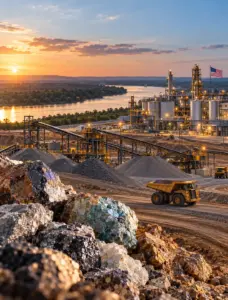
Caption: Modern mineral processing facilities are facing rising operational costs and reagent shortages as global supply chains tighten.
Internal policy shifts within China have also contributed to the squeeze. A nationwide crackdown on illegal mining operations and the implementation of strict new environmental compliance standards have effectively blocked supply expansion from smaller, unregulated players. These measures, while improving the sustainability of the domestic sector, have removed the “swing supply” that historically dampened price volatility.
Impact on Global Manufacturing
The 44% price hike poses an immediate challenge to the automotive and renewable energy sectors. Rare earth magnets are essential for the permanent magnet motors used in the vast majority of electric vehicles and wind turbines.
Manufacturers are already grappling with fluctuating costs for other battery metals. As detailed in the global battery revolution, the cost of raw materials remains the single largest hurdle to achieving price parity between EVs and internal combustion engines. This latest surge in rare earth pricing threatens to offset recent gains made in lithium and nickel processing efficiencies.
For the defense sector, the implications are equally severe. Rare earths are used in guidance systems, radar, and jet engines. The U.S. and its allies have accelerated efforts to de-risk these supply chains, but as the Per Geijer rare earths project in Sweden and various North American initiatives demonstrate, bringing new mines and: more importantly: new refineries online is a decade-long endeavor.
Geopolitical Leverage and the “Refining Gap”
The pricing formula used by China Northern Rare Earth Group is determined through a standing arrangement with its supplier, Inner Mongolia Baotou Steel Union Co. This internal pricing mechanism allows China to adjust the global market floor with surgical precision.
While Western nations have made progress in identifying new deposits, the “refining gap” remains the West’s greatest vulnerability. Most overseas mines currently handle only the extraction of ore, which must then be shipped to China for smelting and separation.
“The world has ore, but it struggles to refine it,” says a senior mining analyst at Skillings. “By hiking concentrate prices while simultaneously restricting the export of processing reagents like sulphuric acid, Beijing is sending a clear message: the transition to a green economy still runs through China.”
Some domestic players are attempting to bridge this gap. Companies like Energy Fuels have reached significant milestones in processing heavy rare earths in Utah, as noted in our report on breaking the monopoly. However, these projects are currently small-scale compared to the massive throughput of Chinese state-owned enterprises.
The 2026 Outlook: Persistent Volatility
Looking ahead, the rare earth market is expected to remain in a state of high volatility throughout the remainder of 2026. The planned block of sulphuric acid exports in May will likely serve as the next major catalyst for price movement. If China continues to prioritize its domestic high-tech manufacturing sector over raw material exports, international prices for processed rare earth oxides could decouple even further from domestic Chinese prices.
Furthermore, the intersection of energy policy and mineral security is becoming increasingly complex. Some mining operators are looking toward small modular reactors to provide the stable, carbon-free power required for intensive chemical refining processes, but these solutions remain several years away from widespread deployment.

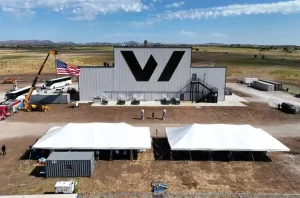
Caption: Advanced mining technology and modular processing units are being developed to reduce reliance on centralized refining hubs.
As the second quarter begins, industrial buyers are left with few options but to absorb the higher costs or seek long-term supply agreements that bypass the spot market: a difficult task given China’s overarching influence on global pricing.
Strategic Implications for Investors and Operators
For mining operators, the price hike highlights the urgent need for vertical integration. Projects that include on-site separation and refining capabilities are likely to command a significant premium and attract government support under various national security mandates.
For investors, the surge reinforces the importance of the resource nationalism trend. As major powers treat critical minerals as strategic assets rather than mere commodities, the “rules” of mining investment are being rewritten.
The Q2 price hike by China Northern Rare Earth Group is more than a market fluctuation; it is a demonstration of structural dominance. As the sulphuric acid export ban nears and geopolitical tensions remain high, the global mining community must prepare for a prolonged era of high costs and restricted supply.
Skillings Mining Intelligence – April 12th, 2026
Stay ahead of the market with our daily deep dives into the commodities shaping the global economy. From the U.S. Steel future to the autonomous haulage revolution, Skillings provides the data mining professionals need.
Featured Campaign:
Pre-sale open now: The 2026 Lithium Power Map. Comprehensive data on every active and planned lithium project globally. Secure your copy today.