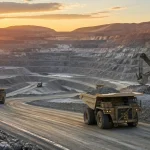
The Record Ridge project site near Rossland, British Columbia, faces a construction halt.

By Charles Pitts
The Record Ridge magnesium project in southeastern British Columbia remains in a legal holding pattern after a BC Supreme Court judicial review was heard on May 5–7, 2026, with the judge reserving his decision until approximately mid-June. A temporary interim injunction continues to bar ground-disturbing work while the court considers a challenge brought by the Sinixt Confederacy and local community groups.
The dispute centers on how the project should be classified under provincial rules and whether it can proceed without a full environmental assessment. West High Yield Resources says the project fits within the applicable legal threshold. Opponents argue the project should face deeper review because of disputed environmental concerns, Indigenous consultation issues, and the province’s decision to permit it under the Mines Act.
Record Ridge project and why it matters
The Record Ridge Industrial Mineral Mine Project is about 10 kilometers southwest of Rossland, British Columbia. Calgary-based West High Yield Resources owns the project. It targets a large magnesium-bearing serpentinite deposit.
Magnesium is on the critical minerals lists of both Canada and the United States because it is used in aluminum alloys, die-casting, and energy transition supply chains. That gives the project importance beyond British Columbia.

Record Ridge hosts a measured and indicated resource of about 43 million tonnes grading 24.6% magnesium. The project is currently permitted under the Mines Act for 65,000 tonnes per year, including a pilot project phase, and the company’s proposed production rate has been framed at approximately 63,500 tonnes per year in the current dispute.
The project had attracted attention as a potential low-cost, high-purity source of magnesium outside China. It has also been under regulatory review since 2016. However, the shift from exploration to operations has run into a legal and regulatory barrier. That reflects the broader challenge of modern open-pit mining in environmentally and culturally sensitive regions.

Mining trucks operate in an open-pit setting; such operations at Record Ridge are now paused.
Why the regulatory threshold is under scrutiny
A central issue in the case is how the project should be classified under British Columbia’s Environmental Assessment Act. The core dispute is whether Record Ridge should be treated as an industrial mineral quarry, which carries a 250,000-tonne annual threshold for a mandatory environmental assessment, or a mineral mine, where the threshold is 75,000 tonnes a year.
Opponents argue the province used the wrong classification and that the lower 75,000-tonne trigger should apply. West High Yield has reduced its planned output to about 63,500 tonnes per year, a level that would remain below that 75,000-tonne mineral mine threshold.
In August 2025, the Chief Environmental Assessment Officer ruled that a full provincial assessment was not required, allowing the project to proceed under a Mines Act permit instead of the more extensive Environmental Assessment Office process. Opponents, however, say that approach understates the project’s overall footprint and regulatory significance.
Indigenous consultation is at the center of the case
The legal fight is also about consultation and Indigenous rights. The Sinixt Confederacy, whose traditional territory covers the Columbia River basin in southeastern British Columbia and Washington State, has strongly opposed the project.
The Sinixt say the province did not meet its duty to consult before issuing the permit in October 2025. That claim carries added legal weight because of the Supreme Court of Canada’s 2021 decision in R. v. Desautel. The ruling confirmed that the Sinixt hold constitutionally protected rights in Canada, even though many members are based in the United States.
The Confederacy says the project sits on culturally significant land. It has also argued in court that potential effects on local water systems that feed the Columbia River could affect traditional land use. Because of that, the injunction acts as a temporary safeguard until the courts decide whether the province met its constitutional obligations.

The BC Court of Appeal’s decision hinges on whether the project requires a more robust environmental review.
Environmental concerns extend beyond permitting
Environmental concerns have also sharpened opposition in Rossland and the surrounding region. The Record Ridge deposit is hosted in serpentinite rock, which can contain asbestos minerals, including chrysotile.
Opponents have argued that blasting, crushing, and hauling rock at the site could release harmful dust. West High Yield says its dust controls meet provincial standards. However, critics argue those plans have not faced the level of public and scientific review that would come with a full environmental assessment.
The site also lies near riparian areas. Because of that, local groups have raised concerns about runoff, sediment, and possible heavy metal impacts on nearby watersheds. Those claims remain disputed allegations rather than established findings, and they were part of the arguments presented during the judicial review. The court will consider whether the Chief Environmental Assessment Officer should have used discretionary powers to order a full assessment anyway.
Magnesium supply risks give the case wider relevance
The injunction comes as the global magnesium market remains highly concentrated. China produces nearly 90% of global supply, which leaves Western automotive and aerospace manufacturers exposed to disruption.
Canada has promoted itself as a reliable supplier of critical minerals with strong ESG standards. However, the Record Ridge case shows how difficult that strategy can be to execute. Governments want more domestic supply because of geopolitical risk, but projects still face local opposition, environmental review, and legal duties to consult Indigenous groups.
For investors, the delay adds another risk factor to mining investments and valuation metrics. West High Yield announced a definitive offtake agreement on March 12, 2026, to support the project’s financing outlook. However, the injunction and the $162,500 security bond requirement, which the company is challenging as insufficient, have increased uncertainty around timing and capital needs.

Advanced processing plants like this one are dependent on a steady supply of critical minerals like magnesium.
What happened at the May 5 judicial review
The injunction is temporary, not final. The BC Supreme Court judicial review was heard on May 5–7, 2026, after originally being set for August. The hearing has now concluded, but the judge reserved his decision until approximately mid-June. Until then, the interim injunction remains in place and ground-disturbing activity stays paused.
The court focused on three main questions:
- The project classification: Should Record Ridge be treated as an industrial mineral quarry with a 250,000-tonne threshold, or as a mineral mine with a 75,000-tonne threshold?
- The duty to consult: Did the BC Ministry of Mining meet its constitutional obligations to the Sinixt Confederacy?
- The CEAO’s discretion: Should the disputed environmental concerns raised in court have prompted the Chief Environmental Assessment Officer to require a full assessment anyway?
West High Yield says it has followed all applicable provincial rules. The company also says Record Ridge is an important part of Canada’s critical minerals strategy.

Development at the site, including drilling and ground clearing, is paused until the court issues its reserved decision.
Why the ruling could shape future BC mine permitting
The Record Ridge review could set an important precedent for industrial mineral projects in British Columbia. If the court sides with the Sinixt Confederacy and the Save Record Ridge Action Committee, it could narrow the use of threshold-based permitting strategies. If the court sides with West High Yield, however, it would reinforce the current Mines Act pathway for projects that remain below the environmental assessment trigger.
For the mining sector, the case underlines a familiar reality. Resource quality and project economics matter, but they are not enough on their own. In 2026, social license, environmental scrutiny, and Indigenous consultation remain central to mine development in Canada. Because of that, the court’s reserved decision will be closely watched by operators, investors, and policymakers alike.