By Penny Langford
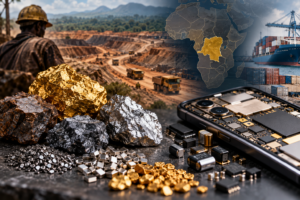
The year 2026 has solidified a tectonic shift in the global commodities market: the formal merger of Silicon Valley’s balance sheets with the extraction industries of the American West, Australia, and Africa. What was once a relationship of convenience: Big Tech buying green energy credits to offset carbon footprints: has evolved into a direct, multi-billion-dollar financing model for the mining and nuclear sectors.
The driver is simple: Artificial Intelligence. The generative AI boom has moved beyond the software phase into a hardware and energy crisis. As of May 2026, the power requirements for global data centers have surged, forcing hyperscalers like Microsoft, Amazon, Google, and Meta to abandon the grid in favor of "behind-the-meter" power generation. This shift, known as the AI energy nexus mining trend, is characterized by tech giants directly financing the uranium and copper mines required to fuel and wire their digital empires.
The Nuclear Pivot: Uranium as the AI Backbone
For over a decade, Big Tech companies relied on wind and solar to reach sustainability goals. However, the intermittent nature of renewables is incompatible with the 24/7 uptime required by AI clusters. In late 2025 and early 2026, the strategy shifted toward baseload nuclear power.
More Read
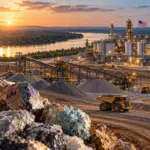
The most prominent example of this silicon-nuclear nexus is Microsoft’s $16 billion, 20-year Power Purchase Agreement (PPA) with Constellation Energy to restart Unit 1 of the Three Mile Island nuclear facility. By securing nearly 835 MW of dedicated power, Microsoft is effectively insulating itself from grid volatility. This was followed closely by Amazon’s $20 billion conversion of the Susquehanna nuclear campus in Pennsylvania into a dedicated AI hub.

However, the 2026 outlook for uranium suggests that simply signing PPAs is no longer enough. The uranium market outlook shows a tightening supply-demand balance that has pushed spot prices above $100/lb. Consequently, we are seeing the first instances of tech companies providing direct capital to uranium exploration and development firms to ensure their reactors have a guaranteed fuel supply for the 2030s.

More Read
Copper: The Red Metal Security Blanket
While uranium provides the power, copper provides the path. The electrical infrastructure required for a modern AI data center is roughly three to five times more copper-intensive than a traditional cloud facility. With the global copper market already facing a structural deficit, tech companies are moving to lock in supply before industrial rivals and the automotive sector can deplete the available stock.
In early 2026, Google and Amazon reportedly explored "streaming" agreements with copper producers: a financing mechanism traditionally reserved for precious metals. Under these deals, the tech company provides upfront capital for mine expansion in exchange for a percentage of the future copper production at a fixed, below-market price.
This direct financing of mining projects represents a significant departure from the Venture Capital (VC) model. Tech giants are no longer just investing in software startups; they are becoming major stakeholders in the physical world. This shift is critical for miners to understand when assessing mining investments and valuation metrics, as the cost of capital for projects backed by trillion-dollar tech firms is significantly lower than for those relying on traditional project finance.

The Rise of the SMR: Meta and the Next Generation
Small Modular Reactors (SMRs) have become the bridge between the digital and physical worlds. In January 2026, Meta announced a groundbreaking partnership with Oklo Inc. to develop a 1.2 GW nuclear power campus specifically for its Llama 4 and 5 training clusters. Unlike traditional large-scale reactors, SMRs can be deployed closer to data centers, reducing the reliance on a congested national grid.
Google’s agreement with Kairos Power for approximately 500 MW across 6-7 reactors by 2035 further underscores this trend. These are not just energy deals; they are capital infusions that allow SMR developers to move from the pilot phase into commercial manufacturing. For the mining industry, this creates a long-term, predictable demand for high-assay low-enriched uranium (HALEU), which is currently in short supply.
Why 2026 is the Turning Point
The transition from "customer" to "financier" is driven by three main factors:
- Supply Chain De-risking: Global geopolitical tensions have made the supply of critical minerals and energy fuels unpredictable. By financing mines in stable jurisdictions like Canada, the U.S., and Australia, Big Tech is securing its long-term operational viability.
- Sustainability Mandates: While nuclear is carbon-free, mining is traditionally carbon-intensive. Tech companies are leveraging their capital to demand "Green Mining" practices, financing the electrification of haulage fleets and the implementation of carbon-capture technologies on-site.
- Capital Scarcity in Mining: Traditional mining finance has been sluggish over the last decade. The entry of Big Tech provides a much-needed liquidity injection for capital-intensive projects that would otherwise struggle to find funding in a high-interest-rate environment.

Data Insight: The AI Energy Demand Table
| Technology Type | Estimated Power Consumption (MW) | Estimated Copper Requirement (Metric Tons) | Preferred Energy Source |
|---|---|---|---|
| Standard Data Center | 10 – 50 | 50 – 150 | Grid Mix / Solar |
| AI Training Cluster (2026) | 100 – 500 | 500 – 1,500 | Nuclear / Geothermal |
| Hyperscale AI Campus | 1,000+ | 3,000+ | SMR / Dedicated Hydro |
Risks and Operational Realities
Despite the influx of capital, the integration of Silicon Valley and the mining industry is not without friction. Tech companies are used to rapid development cycles, whereas a greenfield mine or a nuclear reactor can take over a decade to permit and build.
Furthermore, the environmental impact of increased mining is coming under scrutiny. Protests against uranium exploration in sensitive areas and the water consumption of copper leaching processes present significant reputational risks for tech brands that have long marketed themselves as clean and ethereal.
The industry is responding with advanced technology. Autonomous haulage and remote operation centers are becoming the norm. Digital twins of mine sites allow tech-backed miners to optimize every gram of ore moved, reducing the overall environmental footprint.

2026 Outlook: The Road Ahead
As we look toward the remainder of 2026, the "Silicon-Nuclear Nexus" is expected to broaden. Expect more offtake agreements for nickel and lithium as data center backup power shifts from lead-acid to high-capacity lithium-ion batteries. The mining companies that will succeed in this new environment are those that can provide the transparency, ESG credentials, and long-term supply security that Big Tech demands.
For investors, the signal is clear: the mining sector is no longer just a play on global growth or inflation. It is now a critical infrastructure component of the AI revolution. Those who ignore the convergence of the digital and physical will likely miss the most significant capital reallocation of the decade.
LinkedIn/X Shareable Snippet:
Big Tech is no longer just buying energy; they’re financing the mines. In 2026, the AI energy nexus has forced giants like Microsoft, Amazon, and Google to directly invest in uranium and copper to secure their data centers. From restarting nuclear plants to streaming copper, the digital world is finally grounding itself in heavy industry. #MiningNews #AI #EnergyTransition #Uranium #Copper