By Penny Langford
The global uranium market has entered a period of structural realignment in 2026, characterized by a decisive shift from short-term opportunism to long-term supply security. As of mid-May 2026, the industry is witnessing a "strategic pivot" where nuclear utilities: once comfortable relying on the spot market for marginal needs: are now aggressively pursuing term contracting to hedge against a tightening supply-demand gap that is projected to widen through the end of the decade.
This transition marks the end of a multi-year era of inventory drawdown. Today, the uranium market outlook 2026 is defined by high-stakes procurement strategies as the industry grapples with the fallout of geopolitical shifts, the rapid expansion of nuclear capacity in Asia, and the emergence of small modular reactors (SMRs) as a viable component of the Western energy mix.
The Decoupling of Spot and Term Prices
For much of the past decade, the spot price was the primary barometer for uranium market health. However, in 2026, the term contract price has emerged as the more critical indicator for the mining sector's long-term viability. While the spot price experienced significant volatility earlier this year: surpassing $100/lb U₃O₈ in January before moderating to approximately $86.35/lb in late April: the long-term contract price has remained remarkably resilient.
More Read

As of Q1 2026, the long-term contract price sits at $90/lb, its highest sustained level since 2008. This $3–$4 premium over the spot price reflects a "security of supply" tax that utilities are willing to pay. In a market where two producers: Kazatomprom and Cameco: control nearly 86% of the output, the risk of a spot-market squeeze has forced procurement officers to prioritize multi-year off-take agreements over the uncertainty of daily price fluctuations.


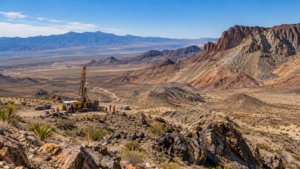
Precision drilling operations are essential as miners move toward more complex deposits to meet rising demand.
Supply-Side Realities: The Production Lag
The uranium price forecast 2026 is heavily influenced by the pace of the supply-side response. Despite the high price environment, bringing new production online has proven more difficult than many analysts anticipated in 2024.
More Read

Kazatomprom, the world’s largest producer, has announced a 9% production increase for 2026, aiming for a range of 71.5 to 75.4 million lbs of U₃O₈. However, operational challenges: including the scarcity of sulfuric acid required for in-situ recovery (ISR) mining and ongoing logistical bottlenecks in the Middle Corridor transport route: continue to haunt production targets. Similarly, Cameco’s ramp-up of its Tier-1 assets, including McArthur River and Key Lake, has reached its steady-state targets, but the company remains disciplined in its "market-to-demand" strategy.
The market remains in a state where brownfield restarts and ISR expansions are barely keeping pace with the retirement of secondary supply sources, such as underfeeding and government inventory sales. This thin margin for error means that any operational disruption at a major facility could trigger an immediate price spike.
2026 Uranium Market Data: Supply and Price Projections
The following table outlines the consensus estimates for the 2026–2027 market window, highlighting the tight balance between production and requirements.
| Metric | 2025 (Actual/Est.) | 2026 (Forecast) | 2027 (Forecast) |
|---|---|---|---|
| Global Demand (Tonnes U) | 68,920 | 71,200 | 74,500 |
| Primary Production (Tonnes U) | 58,400 | 63,100 | 66,800 |
| Supply-Demand Deficit (Tonnes U) | -10,520 | -8,100 | -7,700 |
| Long-Term Contract Price (Avg) | $82/lb | $92/lb | $95/lb |
| Spot Price (Base Case) | $88/lb | $90/lb | $93/lb |
Data compiled from World Nuclear Association (WNA) and Skillings Mining Intelligence internal research.
Geopolitical Drivers and the Energy Transition
The geopolitical landscape of 2026 has been fundamentally reshaped by the full implementation of the "Prohibiting Russian Uranium Imports Act" in the United States and similar diversification efforts in the European Union. By the beginning of this year, the Western nuclear fleet had largely successfully pivoted away from Russian enriched uranium product (EUP), but the transition has tightened the conversion and enrichment markets, creating a "pull" effect on raw U₃O₈ demand.
Furthermore, the integration of nuclear power into the decarbonization strategies of tech giants has provided a new, high-growth demand pillar. Companies like Microsoft and Amazon have entered into direct agreements for nuclear baseload power to support the massive energy requirements of AI data centers. This has shortened the development timeline for SMR projects, several of which are now entering the final stages of site preparation in North America.

Advanced telemetry and real-time monitoring are critical for managing the operational risks associated with ramping up production at scale.
Uranium Price Forecast 2026: Base, Bull, and Bear Cases
Looking ahead through the remainder of the year, the uranium price forecast 2026 remains skewed to the upside, though volatility is expected.
- Base Case ($90–$95/lb): Continued steady term contracting by U.S. and European utilities maintains a floor for prices. Production increases from Kazakhstan and Namibia meet the majority of new requirements without creating a surplus.
- Bull Case ($105–$120/lb): A significant operational failure at a Tier-1 mine or a sudden surge in financial accumulation by vehicles like the Sprott Physical Uranium Trust could thin spot liquidity to the point of a vertical price move.
- Bear Case ($75–$80/lb): A global economic slowdown that reduces industrial electricity demand, combined with a faster-than-expected supply response from junior miners, could lead to a temporary softening of prices as utilities pause their contracting cycles.
The prevailing sentiment among mining investment valuation experts is that the market is currently in a "healthy" consolidation phase, following the rapid price escalation of 2024-2025.

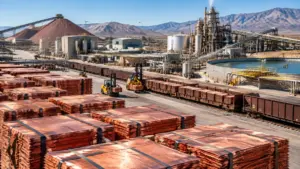
Large-scale logistical infrastructure remains the backbone of the global uranium supply chain.
Strategic Risks for 2026
Investors and operators must remain cognizant of several evolving risks:
- Regulatory Delays: While policy support for nuclear is high, the permitting process for new ISR projects in jurisdictions like Wyoming and South Australia remains a bottleneck.
- Financial Buyer Volatility: The presence of institutional investors holding physical uranium adds a layer of non-utility demand that can reverse quickly if sentiment shifts, leading to sudden spot-market sell-offs.
- Transport Logistics: As Western utilities seek to avoid Russian-controlled routes, the reliance on the Trans-Caspian International Transport Route (TITR) introduces seasonal and geopolitical vulnerabilities for Central Asian supply.

Securing inventory through term contracts has become the primary objective for utility procurement officers in 2026.
Conclusion
The uranium market in 2026 is no longer a cycle of boom and bust, but rather a complex industrial race to fill a structural deficit. The "strategic pivot" to term contracting reflects a deep-seated recognition that the era of cheap, abundant uranium inventory is over. For producers, the current price levels provide the incentive required for capital expenditure, but for utilities, the focus has moved beyond price: it is now entirely about availability.
As we look toward 2027, the success of the industry will be measured not by how high the spot price climbs, but by how many long-term contracts are signed and how reliably the supply chain can deliver on those promises.
Social Media Snippet
LinkedIn/X:
The uranium market has hit a critical inflection point in 2026. With term prices now trading at a premium to spot, nuclear utilities are prioritizing security of supply over short-term savings. Our latest analysis dives into the 2026 outlook, the Kazatomprom/Cameco supply dynamics, and why AI data centers are changing the demand game. #Uranium #MiningNews #EnergyTransition #NuclearPower #MarketOutlook2026