By Penny Langford
The race to secure carbon-free energy has placed the Athabasca Basin back at the center of global mineral exploration. However, the most significant shift in 2026 isn't just about discovery; it is about the transition from theoretical feasibility to concrete industrial reality. Denison Mines (TSX: DML; NYSE American: DNN) has emerged as the frontrunner in this transition, leveraging a mining method that could redefine the economics of uranium extraction in Canada.
Following a series of regulatory breakthroughs in early 2026, the Wheeler River project is no longer a "future project": it is a construction site. By bypassing the multi-billion dollar capital requirements and decade-long lead times associated with traditional deep-shaft mining, Denison is positioning the Phoenix deposit as the fastest route to new uranium production in North America.
The 2026 Regulatory Breakthrough
The first quarter of 2026 marked a historic turning point for the Canadian mining industry. In February, the Canadian Nuclear Safety Commission (CNSC) officially approved the Environmental Assessment (EA) and granted the License to Prepare Site and Construct for the Wheeler River project. This was the first time in over two decades that a large-scale "greenfield" uranium mine received such a permit in Canada.
More Read

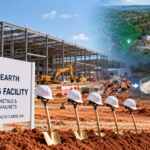
Within days of the CNSC decision, Denison’s Board of Directors approved the Final Investment Decision (FID) on February 24, 2026. This move triggered an immediate shift in operations. By March, site preparation and early-stage construction activities had commenced in the remote boreal forest of northern Saskatchewan.

The significance of this timeline cannot be overstated. While other major projects in the region continue to navigate the complexities of shaft sinking and underground development, Denison’s use of In-Situ Recovery (ISR) has allowed for a significantly compressed development window.
Why ISR is the "Fastest Route"
Traditional uranium mining in the Athabasca Basin typically involves either massive open pits or high-cost, deep-level underground shafts. These methods require immense energy, water management systems, and a massive physical footprint. ISR, by contrast, operates more like a water treatment facility than a traditional mine.
More Read
ISR involves circulating a solution (lixiviant) through the ore body via a series of injection wells. The solution dissolves the uranium into a liquid form, which is then pumped back to the surface through recovery wells for processing.

For Denison's Phoenix deposit, ISR offers three distinct advantages that contribute to its "fastest route" status:
- Reduced Construction Time: Because there is no need to sink a shaft or excavate millions of tonnes of waste rock, the build phase is approximately two years. Denison is targeting first production by mid-2028.
- Lower Initial CAPEX: While 2026 capex updates reflected inflationary pressures seen across the sector, the initial capital required for an ISR operation remains a fraction of what is required for a conventional mine of similar scale.
- Environmental Permitting: The minimal surface disturbance and lack of tailings facilities make ISR a more attractive option for regulators and local Indigenous communities, which helped Denison navigate the EA process faster than its peers.
Project Economics: The Phoenix and Gryphon Deposits
The Wheeler River project is a joint venture between Denison (90% and operator) and JCU (Canada) Exploration Company (10%). The project's strength lies in its dual-deposit strategy. The Phoenix deposit, characterized by its exceptionally high grades (averaging 46% U3O8 in the high-grade domain), will be the first to enter production using ISR.
Following Phoenix, the Gryphon deposit is slated for development as a conventional underground mine, providing a long-term production tail that complements the early, low-cost yields from Phoenix.
| Metric | Phoenix ISR (2023 Feasibility Study Basis) |
|---|---|
| After-Tax NPV (8% Discount) | $1.56 Billion (100% basis) |
| Internal Rate of Return (IRR) | 90.0% (After-tax) |
| Average Grade (High-Grade Zone) | 46.0% U3O8 |
| Life of Mine Production | 70.5 Million lbs U3O8 |
| Initial Capital Cost | (Updated Jan 2026 – Estimated $450M-$520M) |
| First Production Target | Mid-2028 |
Note: Financial metrics reflect base-case uranium prices. Current spot prices in 2026 provide significant upside to these figures.
The 90% after-tax IRR is one of the highest in the global mining sector, a result of the combination of "bonanza" grades and the operational efficiency of the ISR method.
Overcoming Technical Skeptics
When Denison first proposed ISR for the Phoenix deposit, there was industry skepticism. ISR has been used successfully in Wyoming and Kazakhstan, but never in the hard-rock, basement-hosted environment of the Athabasca Basin.
Denison spent years de-risking the project through field tests. A successful "Full Flow" test in 2022 and 2023 demonstrated that the lixiviant could be safely contained and that the uranium could be recovered at rates that met or exceeded feasibility expectations. The 2026 construction launch is the ultimate validation of those technical efforts.

Market Context: The 2026 Supply-Demand Gap
The timing of Wheeler River's construction coincides with a tightening global uranium market. As discussed in our 2026 supply roadmap analysis, several factors are driving demand:
- Nuclear Renaissance: The expansion of Small Modular Reactors (SMRs) and the extension of existing reactor lifespans in Europe and North America.
- Geopolitical Alignment: Western utilities are increasingly seeking "friendly" supply chains, moving away from Russian enrichment and Central Asian production.
- Inventory Depletion: Secondary supplies that previously capped prices have largely been exhausted.
For investors, the appeal of Denison is the lack of "execution lag." Many uranium developers are years away from even starting the permitting process. Denison, with its 2026 construction start, is one of the few players that can realistically contribute to the supply gap before the end of the decade.
Key Risks and 2026 Milestones
Despite the positive momentum, 2026 is not without its challenges. The primary risks for the remainder of the year include:
- Logistics in the North: Managing the supply chain for a major construction project in northern Saskatchewan requires precise coordination, especially during the spring thaw and winter freeze cycles.
- Labor Market: The demand for skilled mining professionals in Canada remains high, potentially impacting construction schedules.
- Inflationary Costs: While the 2026 Capex update accounted for higher material costs, any further escalation in global energy or steel prices will be closely monitored by the Board.
Looking ahead, the next 12 months will focus on the completion of early-works infrastructure, including road upgrades, camp expansion, and the beginning of wellfield drilling.
The Bottom Line for Operators and Investors
Denison Mines has successfully navigated the most difficult phase of the project lifecycle: the regulatory gauntlet. By securing the first new uranium construction license in a generation, the company has proven that the Athabasca Basin can still be a place for innovation and rapid development.
The Phoenix deposit is not just a high-grade curiosity; it is a test case for the future of the industry. If Denison can achieve its 2028 production target on schedule, it will likely trigger a wave of interest in ISR technology across other basement-hosted deposits in the region.
For those following the valuation metrics of mining investments, Denison’s progression to the construction phase represents a major de-risking event. As the wellfields begin to take shape throughout 2026, the market's focus will shift from "can it be done?" to "how fast can they scale?"
Social Media Snippet (LinkedIn/X):
? Breakthrough in the Athabasca: Denison Mines has officially moved into the construction phase at Wheeler River! Following CNSC approval in Feb 2026, the Phoenix deposit is now the fastest route to new uranium production in Canada. With a 90% IRR and ISR technology, this is a game-changer for the 2028 supply outlook. #Uranium #Mining #DenisonMines #EnergyTransition #Saskatchewan