By Charles Pitts

The global mining landscape in 2026 is no longer defined solely by the rush for lithium or copper. Instead, a once-obscure metalloid has moved to the center of the geopolitical board: antimony. Long prized as a lead hardener and flame retardant, antimony has transitioned into a “top-tier national security asset,” essential for both the munitions required in modern conflict and the high-efficiency glass required for the global solar transition.
As of June 1, 2026, the antimony market is grappling with a paradox of strategic scarcity. While the peak price spikes of 2025 have moderated, the structural deficit remains unresolved. China continues to hold a dominant hand, controlling nearly 50% of global mine production and a much higher share of refined processing capacity. For Western defense contractors and energy firms, the “antimony chokehold” is no longer a theoretical risk: it is a daily operational reality.
Slovakia’s Regulatory Shock: A Case Study in Resource Nationalism
The fragility of the Western antimony supply chain was laid bare on May 28, 2026, when Slovakia’s Ministry of the Environment revoked the exploration license for Military Metals Corp.’s flagship Trojarova project. The decision sent shockwaves through the junior mining sector, causing the company’s shares to plummet by 60% in a single trading session.
The Trojarova project, located just north of Bratislava, was widely considered one of Europe’s most promising near-term sources of antimony. It sat atop the historic Pezinok mine district, once a significant producer for the continent. Perhaps most significantly, Trojarova had been formally designated under the EU Critical Raw Materials (CRM) Act as a project of strategic importance.
More Read

The revocation illustrates a critical lesson for 2026: strategic status does not guarantee regulatory stability. Despite EU-level mandates to secure domestic supply, national ministries retain the ultimate “gatekeeper” power. Military Metals is currently appealing the decision, arguing it contradicts Slovakia’s own National Program for the Exploration of Critical Mineral Raw Materials. However, for investors scouting critical minerals stocks to buy 2026, the Slovakian incident serves as a stark reminder that geopolitical risk is not confined to emerging markets; it is increasingly present within the borders of the European Union itself.


The Dual-Use Battleground: Solar vs. Defense
The competition for antimony is intensifying because of its unique “dual-use” nature. In the defense sector, antimony is indispensable. It is used to harden lead in small arms ammunition and artillery shells, and it is a key component in infrared sensors, flares, and lead-acid batteries for military vehicles.
Simultaneously, the solar industry has become the fastest-growing consumer of the metal. Antimony, in the form of sodium antimonate, acts as a clarifier in photovoltaic (PV) glass. It removes bubbles and ensures maximum light transmission, which is vital for the efficiency of modern solar cells.
Market data for 2026 suggests that solar applications now account for nearly 40% of global antimony demand, up from just 11% at the start of the decade. With global solar installations continuing to break records: led by both China and the United States: the pressure on the limited antimony supply is relentless. While some research into “antimony-free” glass is underway, these technologies have yet to reach the scale needed to displace the current chemical standard.
Antimony Price Trend 2026: The New Floor
The antimony price trend 2026 is characterized by a “higher for longer” structural shift. After the frantic price rally of 2025, which saw benchmark prices touch $60,000 per tonne following Chinese export restrictions, the market has entered a period of volatile consolidation.
As of mid-2026, spot prices are hovering around $20.00 to $21.50 per pound ($44,000–$47,000 per tonne). While this is a significant correction from the 2025 peak, it remains more than double the historical averages seen in 2023.
Several factors are maintaining this elevated price floor:
- China’s Export Policy: While China suspended certain export bans to the U.S. in late 2025, that suspension is time-limited, with a “cliff” looming in November 2026. This creates a perpetual risk premium in the market.
- Strategic Stockpiling: The U.S. Defense Logistics Agency (DLA) has actively entered the market to build a national antimony reserve, providing a steady source of demand that prevents deep price collapses.
- Depleted Inventories: Global warehouse stocks remain at multi-year lows, leaving the market highly sensitive to any supply-side disruptions or geopolitical escalations in Eastern Europe or the Middle East.

Navigating the 2026 Supply Gap
For mining companies and investors, the challenge is that new antimony supply cannot be turned on overnight. Much like the rare earths supply chain dynamics we have covered previously, the barrier to entry for antimony is not just mining, but the high-purity refining required for defense and solar grades.
Outside of China, Russia, and Tajikistan, the supply options are limited. This has led to a renewed focus on “allied sourcing.” Projects in Australia, Canada, and the United States (such as the revitalized Stibnite project) are being fast-tracked, but most will not reach full commercial production before 2027 or 2028.
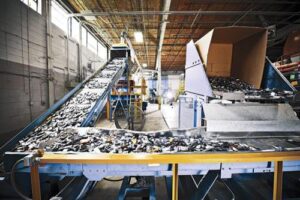
In the interim, the market is looking toward recycling. Lead-acid battery recycling currently provides roughly 12-15% of global supply, but this is largely secondary-grade material. The industry still lacks a robust circular economy for the high-purity antimony used in PV glass and specialized defense alloys.
Strategic Implications for Investors and Operators
As we move through the second half of 2026, the antimony market serves as a blueprint for the broader critical minerals landscape. The era of cheap, abundant minerals is over, replaced by a “security of supply” paradigm where geopolitical alignment is as important as ore grade.
For operators, the priority is securing long-term offtake agreements and diversifying processing routes. Relying on a single jurisdiction: as Military Metals learned in Slovakia: is a high-stakes gamble.
For investors, the antimony price trend 2026 suggests that the “easy money” from the 2024-2025 price spike has been made. However, the structural scarcity remains. The winners in the 2026-2030 window will be companies that can successfully navigate the permitting maze in Tier-1 jurisdictions and bring refining capacity online outside of the Chinese sphere of influence.
Antimony may be a small market by volume, but its role as the “geopolitical glue” of the defense and energy sectors ensures it will remain one of the most closely watched minerals of the decade.
Market Snapshot: Antimony Indicators (June 2026)
| Indicator | Value | Trend (QoQ) |
|---|---|---|
| Spot Price (US) | $20.80/lb | Flattening |
| China Export Volume | Moderate | Rising (Temporary) |
| Strategic Stockpile (DLA) | Increasing | Aggressive |
| Global Deficit Est. | 4,500 tonnes | Widening |