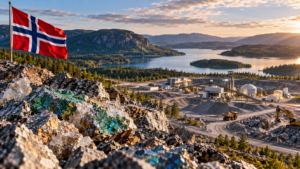
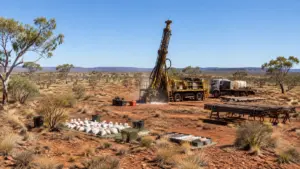
Tronox Holdings and Japan’s JX Advanced Metals are exploring a new route into rare-earth processing, using mineral-sands resources to support a proposed chain of facilities in Australia and the United States.

The companies signed a cooperation and investment agreement on September 29, 2026, committing US$32 million to feasibility studies and pilot work. They will split the study budget equally. Their plans cover a rare-earth cracking and leaching plant in Western Australia, a proposed rare-earth oxide refinery in the United States, and a US-based pilot facility.
The agreement marks a step towards evaluating an integrated processing route. It does not approve construction of the proposed facilities. The studies must establish whether the companies can process the feedstock reliably, recover rare earths efficiently and produce marketable materials at competitive cost.
Monazite: A New Opportunity in Mineral Sands
Tronox produces titanium dioxide feedstock and other mineral-sands products. Its operations also yield monazite, a mineral that contains rare earth elements.
The company has historically sold monazite in an unconcentrated form. Further processing could allow Tronox to capture more value from this material by converting it into rare-earth products.
More Read
The proposed studies will assess rare-earth minerals from Tronox’s own operations and potential third-party sources. A broader feedstock base could support the proposed facilities, but the companies must first establish the suitability of each source. Mineral composition, rare-earth content and processing requirements will all influence the results.

The central question extends beyond how much monazite the companies can access. They must determine how consistently they can process it, how much of its rare-earth content they can recover, and whether they can produce the required materials at a competitive cost.
Two Sites, Two Processing Stages
The proposed development connects facilities in Australia and the United States, with each location serving a distinct role.
More Read

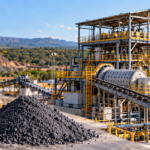
In Western Australia, Tronox and JX Advanced Metals will study a rare-earth cracking and leaching plant at the Rockingham Industrial Zone, near Tronox’s Kwinana titanium dioxide facility. Cracking and leaching break down mineral structures and bring target elements into solution, preparing them for further separation.
In the United States, the companies will assess a proposed rare-earth oxide refinery in Hamilton, Mississippi. The site sits on Tronox-owned land beside an existing titanium dioxide facility. The plan also includes a US-based pilot facility that could produce initial quantities of high-purity rare-earth oxides.
This arrangement would connect early-stage mineral processing in Australia with further refining in the United States. The studies must establish how the two stages can work together. That assessment will include intermediate-material specifications, transport requirements and the consistency of feedstock supplied to the refinery.
The Engineering Challenge: Recovery, Purity and Residue
Rare-earth processing involves more than extracting valuable elements from a mineral. Operators must recover the target elements efficiently, separate them from one another and produce materials that meet the required purity specifications.
Feedstock characteristics will shape the performance of the proposed processing chain. Variations in mineral composition can affect reagent consumption, recovery rates, processing conditions and the amount of material that requires further treatment.
The pilot facility will help the companies test the proposed processing route and generate data for the feasibility studies. However, the companies must assess pilot-scale results carefully before using them to forecast commercial-plant performance and costs.
Residue management presents another important engineering challenge. Monazite can contain naturally occurring radioactive elements, including thorium. The companies will need to account for the treatment, handling and disposal of process residues as they develop the project. They have not yet disclosed project-specific residue-management arrangements.
Water use, energy demand, reagent consumption, equipment reliability and product consistency will also influence the operating model. The studies must bring these factors together to establish whether the proposed facilities can operate efficiently at commercial scale.
What Could 10,000 Tonnes a Year Mean?
The companies are assessing the potential to produce up to approximately 10,000 tonnes of total rare-earth oxides annually. Neodymium and praseodymium could account for about 22% of that output.
These figures describe potential production, not confirmed capacity. The feasibility studies must determine whether the proposed processing route can achieve the necessary recovery rates, product quality and throughput.
Neodymium and praseodymium serve as important inputs for permanent magnets used in applications such as electric motors and wind turbines. Their potential share of the product mix could give the project a route into markets that require these materials.
The companies will also examine the potential to recover other critical minerals, including niobium, scandium, zirconium and hafnium. Their presence in the feedstock does not automatically make them commercially recoverable. The companies must establish whether their concentrations and processing requirements support viable extraction.
The Economics of Existing Infrastructure
Tronox plans to locate the proposed facilities at existing industrial sites. The companies expect this infrastructure to offer potential advantages, particularly in Mississippi, where the refinery would sit beside an established titanium dioxide operation.
Existing industrial land, utilities and site infrastructure can support the development of a processing project. However, these assets do not automatically guarantee lower overall costs.
The feasibility work must identify which facilities and services the companies can share, what additional infrastructure they need and how the proposed plants would fit into existing operations. Feedstock preparation, transport, reagents, energy, waste management and refining costs will all influence the project’s economics.
The US$32 million commitment covers studies and pilot development. It does not represent the construction cost of the proposed facilities.
The Next Milestone: Feasibility, Not Construction
The companies expect the first phase of work to take approximately nine to 12 months, with completion targeted during 2027. They plan to begin the study programme in October 2026.
The programme will include a definitive feasibility study for the proposed Australian cracking and leaching plant and a pre-feasibility study for the proposed US refinery. The pilot facility will support the development and evaluation of the processing route.
If the studies establish a viable technical and commercial case, the companies may consider forming a joint venture to advance the project. Any such decision will depend on the findings and subsequent investment approvals.
Several key details remain unresolved. The companies have not announced final capital requirements, operating costs, construction schedules or a potential production start date. Neither company has announced a final investment decision.
Building a Processing Business From an Existing Resource
The Tronox–JX Advanced Metals agreement explores whether a mineral-sands business can support a broader role in rare-earth processing. The companies bring complementary capabilities to the proposal: Tronox contributes mineral resources, separation experience and industrial sites, while JX Advanced Metals brings expertise in non-ferrous processing and high-purity materials.
The opportunity lies in moving monazite further along the value chain. The challenge is proving that the proposed processing chain can deliver reliable recovery, consistent product quality and competitive output while managing the technical and environmental demands of rare-earth production.
For now, the project remains at the study stage. Its significance will depend not on the proposed capacity alone, but on whether the feasibility work demonstrates a technically robust and economically viable route from mineral-sands feedstock to refined rare-earth products.