By Charles Pitts

The Idaho Silver Valley, a district that has historically produced over 1.2 billion ounces of silver, is entering a new era of industrial-scale redevelopment. Sunshine Silver Mining & Refining (NYSE: SSMR) successfully closed a $270 million initial public offering (IPO) this week, pricing 20 million shares at $13.50. The capital injection is earmarked for one of the most anticipated brownfield restarts in North America: the iconic Sunshine Mine.
With silver prices testing multi-year resistance levels and structural deficits mounting across global markets, the SSMR debut marks a significant milestone for U.S. domestic mineral security. Beyond its primary silver output, the company has detailed a strategic expansion into critical minerals that could position it as a lynchpin in the American supply chain.
The Sunshine Mine: A high-grade legacy returns
The Sunshine Mine is not a typical exploration play. It is a legendary asset that, at its peak, was the most productive silver mine in the United States. Following years of care and maintenance, the current restart plan focuses on high-grade zones that remain open at depth.
Sunshine Silver’s technical studies outline an initial production target of 6.7 million ounces of silver per year. This output would immediately place the company among the ranks of top-tier primary silver producers in North America. The restart involves extensive modernizing of the existing shaft infrastructure and the implementation of advanced underground mining technology to optimize ore recovery.
More Read
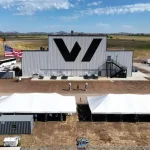


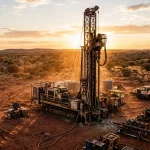
Advanced drilling systems like the one pictured above are central to the Sunshine Mine’s modernization strategy.
The Silver Valley’s geology is characterized by narrow-vein, high-grade mineralization. To handle the operational complexities, SSMR is deploying digitized fleet management and real-time geological modeling. Operators are moving away from legacy methods, focusing instead on high-efficiency, mechanized stoping that minimizes dilution and maximizes head grades: a critical factor for maintaining low all-in sustaining costs (AISC) in a volatile price environment.
More Read
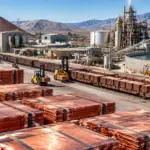
The Antimony factor: A strategic “bonus” for U.S. demand
While the “Idaho silver mine IPO” has captured headlines for its precious metal potential, the most significant long-term value driver may be the project’s secondary commodity: antimony.
As geopolitical tensions continue to disrupt global supply chains, the U.S. is facing a critical shortage of antimony: a mineral essential for flame retardants, lead-acid batteries, and defense applications. Currently, the U.S. has no domestic mine production of antimony, relying heavily on imports from China and Russia.
Sunshine Silver has announced plans for a dedicated antimony processing plant as part of its facility upgrade. Internal projections suggest that, at full capacity, this plant could meet up to 60% of total U.S. antimony demand. This development shifts the SSMR narrative from a pure-play silver miner to a strategic critical minerals supplier, potentially qualifying the project for federal support under the Defense Production Act or other energy security initiatives.

Silver price breakout 2026 factors: The macro tailwinds
The timing of the SSMR IPO coincides with a tightening physical market. Industry analysts have identified several silver price breakout 2026 factors that are providing a durable floor for the metal:
- Photovoltaic (PV) Demand: Solar energy capacity continues to expand globally. Modern N-type solar cells require significantly more silver per watt than previous generations. By 2026, the solar sector is expected to consume over 25% of the total annual silver supply.
- AI and Data Centers: The explosion of AI infrastructure has created a new, price-insensitive demand source. Silver’s superior conductivity makes it indispensable for the high-density servers and accelerators used in modern data centers.
- Industrial Deficits: The Silver Institute has reported consecutive years of supply deficits. With cumulative deficits since 2021 approaching nearly a billion ounces, above-ground inventories in London and New York are being drawn down to critical levels.
- Monetary Shifts: With central banks in major economies pivoting toward easing cycles, the opportunity cost of holding non-yielding assets like silver is decreasing, inviting a return of institutional investment flows.
Current market intelligence suggests that silver could average between $56 and $80 per ounce throughout 2026, depending on the severity of the industrial squeeze. For a re-developer like Sunshine Silver, these price levels radically transform the Net Present Value (NPV) of the Idaho assets compared to the $20-$25 environments of the previous decade.
Mining stocks to watch 2026: Positioning in the peer group
For investors, SSMR enters a landscape of mining stocks to watch 2026 that is increasingly bifurcated between established producers and high-potential developers.
| Company | Asset Focus | Jurisdiction | Status |
|---|---|---|---|
| Hecla Mining | Silver/Lead/Zinc | USA/Canada | Producing |
| Pan American Silver | Diversified Silver | Americas | Producing |
| Sunshine Silver (SSMR) | Silver/Antimony | Idaho, USA | Development/Restart |
| First Majestic | Primary Silver | Mexico/USA | Producing |
SSMR’s primary advantage in this group is its jurisdictional profile. At a time when mining operations in some Latin American jurisdictions face increasing regulatory and fiscal uncertainty, a large-scale project in Idaho offers a “safe-haven” premium. The company’s focus on the energy transition nexus through its antimony and silver exposure aligns it with the thematic ESG requirements of major institutional funds.

Roadmap to 2028: Timeline and execution risks
Despite the successful $270M raise, the road to “first silver” is not without obstacles. The IPO proceeds will fund the initial three-year redevelopment phase, with commercial production not expected until approximately 2028.
Key milestones to monitor include:
- Permitting Amendments: While the Sunshine Mine is a brownfield site with existing permits, the addition of the antimony plant and updated tailings management systems will require state and federal environmental reviews.
- Dewatering and Rehabilitation: Deep-level mines in the Silver Valley require significant water management. Rehabilitating the lower levels of the mine is a capital-intensive and technically demanding process.
- Labor Market: Idaho’s mining sector is competitive. Attracting the skilled underground workforce needed to scale to full production will be a primary operational focus for management over the next 24 months.
Investors should view SSMR as a long-dated call option on the silver and antimony markets. The $270 million raised provides a substantial runway, but the company may require further debt or equity financing as it moves toward the final construction phase in late 2027.
Conclusion
The Sunshine Silver IPO represents a bold bet on the revitalization of American mining. By combining a world-class silver deposit with a critical minerals hedge in antimony, the company is positioning itself at the center of the 2026 industrial metals breakout. For the Silver Valley, the return of the Sunshine Mine is more than just a restart: it is a signal that one of the world’s great mineral provinces is ready for its second act.