By Penny Langford

The U.S. Department of Energy (DOE) announced on June 6, 2026, a $100 million funding package aimed at accelerating domestic lithium extraction innovation. This allocation, distributed through the Office of Manufacturing and Energy Supply Chains (MESC), targets pilot-scale projects and advanced laboratory research designed to reduce the environmental footprint and operational costs of producing battery-grade lithium within the United States.
The funding arrives as the domestic battery supply chain faces increasing pressure to meet the requirements of the Inflation Reduction Act (IRA), which mandates specific percentages of critical minerals be sourced from North America or free-trade partners. By focusing on extraction innovation, the DOE aims to unlock vast untapped resources in domestic brines, claystones, and geothermal fluids that have previously been considered economically or technically challenging.
The pivot toward direct extraction and unconventional resources
The $100 million award represents a significant strategic shift toward Direct Lithium Extraction (DLE) and unconventional mineral processing. Historically, the global lithium market has relied on solar evaporation ponds in South America or hard-rock spodumene mining in Australia. However, domestic U.S. projects are increasingly turning toward technologies that can process lithium more efficiently than traditional methods.
Of the total funding, approximately $45 million has been earmarked for DLE pilot facilities. Unlike evaporation ponds, which can take up to 18 months to produce a finished product and are subject to weather variations, DLE technologies use selective membranes, ion exchange resins, or sorbents to pull lithium ions directly from brine in a matter of hours.
More Read



Industry analysts suggest this funding will be pivotal for projects in the Clayton Valley of Nevada and the Salton Sea in California. In these regions, the brine chemistry is complex, often containing high levels of impurities like magnesium and calcium that can interfere with standard recovery processes. The innovation grants are specifically designed to address these chemical hurdles, supporting the development of next-generation sorbents that offer higher selectivity and longer lifecycles.
Strategic context: The IRA and domestic security
The timing of the DOE announcement underscores the urgency of the 2026-2027 domestic production targets. Under current policy frameworks, federal tax credits for electric vehicles (EVs) are contingent on mineral provenance. As of 2026, the domestic content requirements have tightened, placing a premium on "Made in America" lithium.
More Read
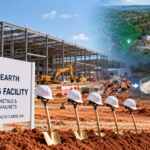
The $100 million injection is part of a broader multi-billion-dollar effort funded by the Bipartisan Infrastructure Law (BIL) and the IRA to end reliance on foreign processing hubs. While the U.S. has significant geological reserves, the "midstream" gap: the ability to turn raw ore or brine into high-purity lithium carbonate or hydroxide: remains a critical bottleneck.
Operators receiving these funds are expected to demonstrate not only technical viability but also a reduction in water intensity. In the arid West, water rights and consumption are often the primary barriers to permitting. Innovation in closed-loop DLE systems, which reinject spent brine back into the aquifer, is a core requirement for several of the grant recipients.
Technical breakdown: From lab to commercial scale
The DOE funding is split across three primary tiers of innovation:
- Fundamental Sorbent Research ($15M): Research and development into nanomaterials and metal-organic frameworks (MOFs) that can operate at higher temperatures and pressures, particularly for geothermal applications.
- Pilot Plant Demonstration ($60M): Scaling up bench-top successes to industrial environments. This includes the construction of modular extraction units that can be integrated into existing geothermal power plants.
- Purity and Refining Innovation ($25M): Technologies focused on the "polishing" phase of production, ensuring that extracted lithium reaches the 99.5% purity threshold required for high-performance EV batteries.

For many junior miners, the "Purity and Refining" tier is the most vital. Achieving battery-grade status often requires expensive and energy-intensive chemical reagents. Innovations in electrochemical refining, supported by this new funding, could potentially replace traditional chemical precipitation methods, lowering both the carbon intensity and the "all-in sustaining cost" (AISC) of domestic lithium.
Market snapshot: Domestic lithium funding and project status
The following table outlines the current landscape of major domestic lithium initiatives as of mid-2026, reflecting the impact of federal support and recent project milestones.
| Project/Region | Extraction Type | Funding Source | Status (June 2026) |
|---|---|---|---|
| Thacker Pass (NV) | Claystone/Acid Leach | LPO Loan/BIL | Construction Phase 1 |
| Salton Sea (CA) | Geothermal DLE | DOE Innovation Grant | Pilot Commissioning |
| Magnolia (AR) | Smackover Brine DLE | Private/DOE | Resource Delineation |
| Clayton Valley (NV) | Brine/DLE | BIL/Innovation Grant | Operational Testing |
| Kings Mountain (NC) | Hard Rock (Re-open) | LPO/Private | Permitting/Review |
This table highlights a diverse geographical and geological approach. For more detailed mapping of these assets, professionals can reference the 2026 Lithium Power Map, which tracks the intersection of federal funding and physical project development.
Environmental and social governance (ESG) implications
The DOE’s emphasis on "innovation" is inextricably linked to ESG standards. Traditional mining has faced significant pushback from local communities and environmental groups. By funding technologies that minimize land disturbance: such as geothermal extraction, which uses the same footprint as existing power plants: the federal government is attempting to streamline the social license to operate.
Geothermal lithium extraction, in particular, represents a "dual-use" energy nexus. In the Salton Sea region, the heat from the brine is used to generate baseload renewable electricity before the lithium is extracted. This synergy is a major focus of the 2026 funding, as it aligns with the administration’s broader decarbonization goals.

2026-2027 Outlook: Scaling for a tightening market
As we move into the second half of 2026, the impact of these $100 million awards will be measured by the speed at which pilot projects reach Final Investment Decisions (FID). The market is currently characterized by a "wait-and-see" approach toward DLE technology. While laboratory results have been promising for years, the industry requires consistent, commercial-scale production data to derisk the assets for private equity and institutional investors.
Furthermore, the domestic landscape is being influenced by international policy shifts. As seen in Peru’s strategic pivot, many nations are nationalizing or tightening control over their lithium resources. This global trend toward resource nationalism only heightens the importance of the DOE’s domestic innovation push. If the U.S. can master the technology to extract lithium from its own "difficult" ores and brines, it reduces the geopolitical risk associated with the energy transition.
The next 12 to 18 months will likely see a wave of technical reports from these DOE-funded projects. Success will be defined by three metrics: recovery rates (target >90%), water recycling efficiency (target >95%), and the ability to produce lithium hydroxide directly without an intermediate carbonate step.
Conclusion for decision-makers
For investors and operators, the DOE’s $100 million commitment is more than just a capital injection; it is a signal of which technologies the federal government views as the future of the industry. The focus is clearly moving away from simple extraction and toward complex, high-efficiency chemical engineering.
While the lithium market has seen volatility over the past three years, the underlying demand driven by the AI-energy nexus and global electrification remains robust. Similar to the trends noted in the silver price outlook for 2026, industrial demand for critical minerals is increasingly decoupling from broader speculative cycles, driven instead by hard-wired manufacturing requirements and national security mandates.
As domestic projects like Thacker Pass and the Salton Sea initiatives move toward full-scale production, the innovations funded today will determine the cost-competitiveness of American lithium on the global stage.
Social Media Snippet (LinkedIn/X):
? The U.S. DOE just announced a $100M funding surge for domestic lithium extraction innovation! As IRA mandates tighten, the race is on to unlock U.S. brines and claystones with DLE and geothermal tech. Who wins the midstream battle? Read our deep dive on the 2026 outlook. #Lithium #MiningNews #EnergyTransition #DOE #CriticalMinerals