By Charles pitts

The global mining sector has entered a defining era of consolidation. As we move through 2026, the industry is witnessing a strategic pivot away from the “mega-mergers” of the early 2000s toward surgical, high-value acquisitions of mid-tier energy metal producers. This shift is not merely a trend; it is a structural necessity driven by an impending supply gap in copper and nickel that the world’s largest miners can no longer ignore.
Diversified majors, once content with their existing tier-one assets, are now aggressively hunting for “bite-sized” platforms: mid-tier companies with established production, proven reserves, and operations in stable jurisdictions. The goal is simple: secure the future of the energy transition by locking down the critical minerals that underpin global electrification.
The Looming Supply Deficit: A Structural Catalyst
The primary driver for the current M&A surge is a fundamental imbalance in the supply-demand outlook for energy-transition metals. Recent data from Bain projects that by 2035, demand will outstrip committed supply for several key minerals, with an estimated 15% deficit in copper and a 5% deficit in nickel.
For the world’s largest mining houses, organic growth: building new mines from scratch: is no longer a sufficient strategy. Greenfield development is plagued by decade-long permitting timelines, rising capital expenditure, and increasing social license challenges. Consequently, acquisition has become the most efficient path to production. In 2025, M&A value for mining deals exceeding $500 million rose by 45% compared to the previous year, setting a high-velocity pace for 2026.
More Read

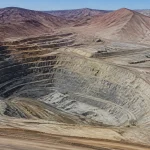
Open-pit mining operations scale up to meet rising global demand for base metals.

Why Mid-Tiers are the Primary Targets
In previous cycles, the “mid-tier” was often viewed as a precarious middle ground: too large to be flexible and too small to compete with the majors. In 2026, this position has become a strategic “sweet spot.”
Mid-tier producers offer something that junior explorers and diversified majors lack: operational cash flow combined with scalable assets. These companies typically operate one to three flagship mines, making them digestible for larger acquirers. For a major like Rio Tinto or BHP, acquiring a mid-tier copper producer with 100,000 to 200,000 tonnes of annual production provides immediate accretive growth without the massive integration risks associated with multi-billion dollar “mergers of equals.”
More Read
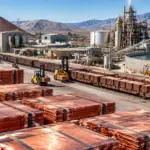
Moreover, mid-tier companies are increasingly acting as consolidators themselves. To avoid being “rolled up” at a lower premium, many mid-tier players are merging with peers to achieve a scale that demands a higher valuation multiple. This “merge to grow or merge to sell” mentality is creating a high-frequency deal environment across the ASX, TSX, and LSE.
Copper Leading the Charge
Copper remains the undisputed prize of the 2026 M&A cycle. As the backbone of the electric vehicle (EV) industry and renewable energy grids, copper is seeing intense competition from unconventional buyers. We are no longer just seeing mining companies at the table; state-backed investment vehicles and automotive original equipment manufacturers (OEMs) are increasingly participating in deal structures.
Recent activity in the Lobito Corridor highlights the lengths to which global players will go to secure supply chains. This 1,000-mile logistical shortcut in Africa is becoming a focal point for copper and cobalt logistics, supporting projects like Ivanhoe Mines’ Kipushi project, which is set for a significant operational update this year. These infrastructure-linked assets are prime candidates for mid-tier consolidation as majors look to leverage existing logistics networks.
Selective Growth in Nickel
While the nickel market faced significant volatility over the past 24 months due to an influx of Indonesian supply, 2026 marks a return to strategic, quality-focused deals in the nickel space. The focus has shifted toward high-grade, low-carbon nickel sulfides: assets predominantly found in Tier-1 jurisdictions like Canada and Australia.

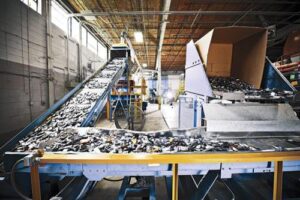
Active extraction of nickel ore in an underground facility, a key component of the EV battery supply chain.
Majors are paying a “security of supply” premium for these assets. Recent transactions have seen takeover premiums of 30% to 50% above market value, with competitive bidding for high-quality Canadian assets sometimes pushing premiums above 60%. Investors are prioritizing operations that can meet the stringent environmental, social, and governance (ESG) standards required by Western battery manufacturers.
The Role of Technology and Operational Intelligence
A significant factor often overlooked in M&A analysis is the technological value-add. Larger miners are not just buying the ore in the ground; they are buying the operational efficiency that many mid-tiers have honed to survive in a high-cost environment.
Modern mining is increasingly a data-driven enterprise. Mid-tier companies that have successfully integrated automated haulage, real-time telemetry, and advanced processing technologies are fetching higher multiples. These “smart assets” are easier to integrate into the global platforms of diversified majors, who are looking to standardize operational intelligence across their portfolios.

Centralized control rooms integrate data for operational efficiency and safety compliance.
2026 Market Outlook: Base, Bull, and Bear Cases
As we look toward the remainder of 2026, the M&A landscape for mid-tier energy metals is expected to follow one of three primary paths:
1. Base Case: Continued Strategic Consolidation
The most likely scenario involves a steady drumbeat of mid-tier acquisitions. Majors will continue to divest non-core coal or iron ore assets to fund the purchase of copper and nickel platforms. Expect to see deal volumes remain 20-30% higher than the 2020-2023 average, with a focus on North American and Australian assets.
2. Bull Case: The “Sovereign Surge”
If geopolitical tensions continue to fragment supply chains, we may see a surge in “policy-driven” M&A. In this scenario, state-backed capital from the US, EU, and Japan could partner with Western majors to outbid rivals for critical mineral producers. This could drive premiums to record highs, potentially exceeding 100% for tier-one assets in the most stable jurisdictions.
3. Bear Case: Capital Market Freeze
Should global interest rates remain higher for longer or if a significant economic slowdown dampens EV demand, the M&A wave could lose momentum. In this case, deal structures would likely pivot toward joint ventures and earn-in agreements rather than outright acquisitions, as majors look to preserve cash.
Key Risk: Geopolitical and Regulatory Scrutiny
While the appetite for deals is high, the “strategic” nature of copper and nickel means that mid-tier M&A in 2026 faces unprecedented regulatory hurdles. Cross-border transactions, particularly those involving foreign state-owned enterprises, are under intense scrutiny by bodies such as the Foreign Investment Review Board (FIRB) in Australia and the Investment Canada Act.
These regulatory “toll booths” are extending deal timelines. What used to take six months from announcement to closing now often takes 12 to 18 months. Companies must now navigate a complex web of mineral security policies, which can act as both a catalyst for deals and a barrier to completion.

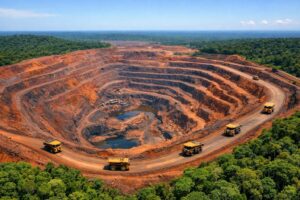
The remote nature of critical mineral extraction requires significant infrastructure and long-term planning.
Conclusion
The year 2026 will be remembered as the point where the mining industry’s transition to energy metals moved from rhetoric to reality. The mid-tier M&A shift is a rational response to the scarcity of quality assets and the urgency of the energy transition. For operators, the message is clear: scale and operational excellence are the primary currencies. For investors, the mid-tier remains the most fertile ground for capturing the value created by this global realignment of the mining sector.
The era of the generalist miner is fading. In its place, a new breed of commodity-focused, technologically advanced mid-tier producers is emerging: most of whom will likely end the year as part of a much larger global platform.