By Charles Pitts

Zambia is aggressively repositioning its mining sector to capitalize on the global nuclear renaissance, marking a significant departure from its historical reliance on copper. The Muntanga Uranium Project, now under the stewardship of ASX-listed Atomic Eagle Limited (ASX: AEU), has emerged as the centerpiece of this strategic shift. Following the acquisition of GoviEx Uranium Inc. in late 2025, Atomic Eagle has launched the largest exploration and development program the region has seen in nearly two decades.
The focal point of the 2026 campaign is the Chisebuka deposit, where a 30,000-meter drilling program aims to transition the site from a promising prospect into a primary resource center. As the global demand for carbon-free baseload power intensifies, Zambia’s transition from a “copper-first” economy to a diversified critical minerals hub is gaining international attention.
The Muntanga Project: Scale and Ownership
The Muntanga Uranium Project is a district-scale asset located in southeastern Zambia, near Lake Kariba. The project area spans approximately 1,136 km², comprising four mining licenses and two exploration licenses. It is situated within the Karoo Supergroup, a geological formation known for sandstone-hosted uranium deposits similar to those found in neighboring Namibia and Niger.
Following Atomic Eagle’s acquisition of GoviEx, which was completed in November 2025, the company has consolidated 100% ownership of the project. This move rebranded the former Tombador Iron into a pure-play African uranium developer. The company’s March 2026 Quarterly Activities Report confirmed a total Mineral Resource Estimate (MRE) of 58.8 million pounds (Mlb) of U₃O₈, a 24% increase over previous estimates.
More Read
Table 1: Muntanga Mineral Resource Snapshot (2026)
| Category | Tonnes (Mt) | Grade (ppm U₃O₈) | Contained Metal (Mlb U₃O₈) |
|---|---|---|---|
| Measured & Indicated | 50.4 | 359 | 40.0 |
| Inferred | 35.8 | 238 | 18.8 |
| Total | 86.2 | 309 | 58.8 |
Source: Atomic Eagle ASX Disclosure, March 2026.

Chisebuka: The 2026 Exploration Catalyst
While the broader Muntanga project contains five primary deposits: Muntanga, Dibbwi, Dibbwi East, Njame, and Gwabe: the 2026 focus has shifted heavily toward the Chisebuka deposit. Atomic Eagle’s technical team has identified Chisebuka as the key to scaling the project into a “mega-mine” operation.
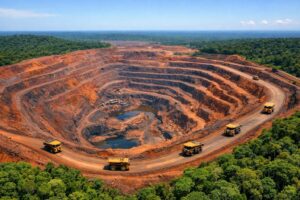
The current 30,000-meter drilling program, which commenced in April 2026, is designed to upgrade approximately 9.7 Mlb of uranium at Chisebuka from the Inferred category to Measured and Indicated. This reclassification is a critical step for project financing and definitive mine planning. Diamond drilling scheduled for late 2026 will specifically target metallurgical and high-grade zones to refine the processing flow sheet.
More Read

Diversification: Moving Beyond the Copper Cycle
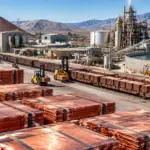
For decades, Zambia’s economic health has been tethered to the copper supply forecast and the volatility of the LME. While projects like Ivanhoe Mines’ Kipushi continue to strengthen the country’s base metal credentials, the “Nuclear Pivot” represents a move toward higher-margin, strategic energy minerals.
The Zambian government has signaled its support for this diversification through the streamlining of mining licenses and the recent granting of the Kariba Valley mining license. This regulatory tailwind comes at a time when uranium prices are buoyed by supply deficits and a global push for nuclear energy as a solution to AI-driven power demand.
Timeline to Production: 2028 and Beyond
The economic viability of Muntanga is supported by a feasibility study originally completed in 2025 and independently reviewed by Atomic Eagle in early 2026. The study outlines a shallow open-pit operation with an after-tax Net Present Value (NPV) of approximately $243 million at an 8% discount rate.

The development timeline currently targets initial production by late 2028. Key milestones for the next 24 months include:
- Late 2026: Completion of Chisebuka resource upgrade drilling.
- H1 2027: Updated Feasibility Study integrating expanded resource base.
- H2 2027: Final Investment Decision (FID) and commencement of long-lead item procurement.
- 2028: Plant construction and first ore-to-leach.
The project benefits from existing infrastructure, including proximity to the Lobito Corridor, which provides a strategic logistical route for exporting concentrates to global markets.
Key Risks and Operational Challenges
Despite the robust resource base and favorable government stance, the path to 2028 is not without hurdles.
- Regulatory Stability: While the current administration is pro-mining, changes in fiscal regimes or royalty structures remain a perennial concern for long-term investors in the region.
- Infrastructure Requirements: The Muntanga project requires reliable power and water supply. While its location near Lake Kariba is advantageous, the regional power grid has faced challenges due to climate-induced fluctuations in hydroelectric output.
- Market Volatility: While uranium prices are currently high, the long lead time to production exposes the project to future market cycles.
- Environmental and Social Impact: The project area is ecologically sensitive. Atomic Eagle’s filing of a draft Environmental and Social Impact Assessment (ESIA) with the Zambia Environmental Management Agency (ZEMA) is a necessary step, but community engagement will remain a critical focus.

Market Outlook: Zambia’s Strategic Position
Zambia’s entry into the uranium market comes at a pivotal moment. With Energy Fuels surging in production in the United States and other global players scrambling for supply, African projects are becoming increasingly vital. Muntanga’s sandstone-hosted mineralization allows for relatively low-cost open-pit extraction, positioning it competitively against higher-cost underground mines.
The success of Chisebuka and the broader Muntanga expansion could establish Zambia as a top-tier uranium producer, potentially rivaling established neighbors like Namibia. For investors and operators, the 2026 drilling results will serve as the primary indicator of whether Muntanga can deliver on its “mega-mine” ambitions.