By Penny Langford

The global copper market is entering a period of structural realignment as the U.S. Commerce Department formalizes its review of a proposed universal tariff on refined copper. As of June 2026, the industry is operating in a transition phase. While a 50% tariff on semi-finished copper products and derivatives has been in place since late 2025, the focus has shifted toward the "Phase Two" roadmap: a proposed 15% tariff on refined copper starting in 2027, escalating to 30% by 2028.
For mining operators, global investors, and domestic manufacturers, this "Copper Tariff Watch" is no longer a speculative exercise. It is a fundamental shift in the economics of the "green metal." With copper at the heart of both the energy transition and the explosive growth of AI-driven data centers, a 30% import tax on refined metal has the potential to redraw the global trade map, forcing a decoupling of Western supply chains from traditional Latin American hubs and accelerating the search for domestic alternatives.
The 2026 Transition: From Parts to Metal
The initial trade shock of 2025 focused on downstream products: wires, tubes, and copper-intensive components used in everything from consumer electronics to electric vehicles. Those measures carried a 50% duty, which immediately pressurized U.S. manufacturers. However, 2026 has seen the focus move "up-stream" toward refined copper (cathodes and billets).
Currently, the U.S. remains heavily reliant on imports to meet its refined copper requirements. While the 50% downstream tariff hit secondary processing, the primary metal had been largely spared under the previous Section 232 regime. The new proposal seeks to close this gap. According to the Commerce Department’s latest guidance, the 15% and 30% tiered tariffs are designed to incentivize the reopening of domestic smelting and refining capacity, which has dwindled significantly over the last three decades.
More Read


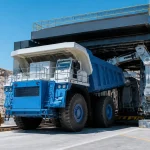
The scale of global extraction is being met with new trade barriers that prioritize domestic processing.

Regional Fallout: Chile, Peru, and Mexico
The proposed 30% tariff will not impact all suppliers equally. The U.S. copper supply chain is deeply integrated with its neighbors, but the new trade policy is testing these long-standing relationships.
- Chile: As the world's largest producer, Chile has historically seen only a fraction of its U.S.-bound exports (approximately 0.1%) hit by the 2025 downstream tariffs. However, the refined copper proposal changes the math. Since Chile's primary exports to the U.S. are refined cathodes, a 30% tariff would effectively price Chilean metal out of the U.S. market in favor of domestic or FTA-exempt partners, potentially pushing Codelco and other major producers to pivot even more aggressively toward Chinese and European buyers.
- Peru: Peru is in a more precarious position. Roughly 36% of its copper-related exports to the U.S. already fall under the 2025 tariff categories. A further tax on refined metal would represent a double hit, likely leading to a significant contraction in Peru-to-U.S. trade volumes.
- Mexico: The integration of the North American manufacturing sector via the USMCA (United States-Mexico-Canada Agreement) has historically protected Mexican producers. However, the "universal" nature of the proposed metals tariffs has already caused friction in the copper-intensive automotive and appliance sectors. If refined copper is included without specific carve-outs, the "nearshoring" trend could see a cost spike that offsets the logistical benefits of Mexican production.
The AI Factor: Higher Costs for the Digital Build-Out
Perhaps the most critical intersection of trade policy and technology lies in the AI sector. The massive expansion of data centers requires an unprecedented amount of copper for high-voltage power distribution, cooling systems, and transformers.
More Read

As explored in our analysis of copper supply vs AI data center demand, the U.S. is currently in a race to build out AI infrastructure to maintain its global lead in compute power. Analysts warn that a 30% tariff on refined copper could act as a "digital tax." When combined with existing 50% tariffs on copper-intensive electrical components, the total capex for a standard 100MW data center could rise by as much as 12-15%.

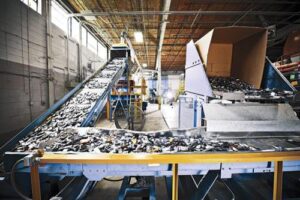
Operational efficiency and data-driven monitoring are becoming essential as input costs rise due to trade frictions.
The logic behind the tariff is to stimulate domestic production, but the lead time for new smelting capacity is measured in years, not months. In the interim, the U.S. tech sector may find itself paying a significant premium for the metal essential to its growth, a trend we detailed in our 2026 copper demand outlook.
Market Analysis: 2027-2028 Tariff Impact Scenarios
To help decision-makers navigate this shift, we have modeled three potential scenarios for the refined copper market as the 15-30% tariff window approaches.
Table 1: Refined Copper Trade & Cost Projections (2026-2028)
| Metric | 2026 (Baseline) | 2027 (15% Tariff) | 2028 (30% Tariff) |
|---|---|---|---|
| U.S. Import Reliance (Refined) | 35% | 31% | 24% |
| Projected Price Premium (US vs LME) | +$0.12/lb | +$0.45/lb | +$0.82/lb |
| Est. Data Center Infrastructure Cost Increase | 4.5% | 8.2% | 14.7% |
| Major Supplier Pivot | Chile/Peru stable | Shift to Canada/Australia | Massive redirection to Domestic/FTA |
Note: Data based on Commerce Dept. filings and Skillings Intelligence market modeling.
In the "Base Case" scenario, the U.S. manages to fast-track several "brownfield" refinery expansions, slightly mitigating the need for high-tariff imports. However, in the "Bull Case" for prices, a lack of new domestic supply combined with high AI demand leads to a significant price decoupling between the U.S. COMEX and the London Metal Exchange (LME).

Infrastructure like massive copper busbars and transformers will bear the brunt of refined metal price increases.
Strategic Outlook: Risks and Opportunities
For mining companies, the 30% tariff threat creates a bifurcated landscape. Companies with assets in the U.S. or in FTA-allied nations like Australia and Canada stand to gain a "tariff premium" on their production. Conversely, those heavily weighted toward non-exempt jurisdictions face a margin squeeze or the need to find new global customers.
Key Risks for 2027-2028:
- Supply Chain Inefficiency: Forcing trade away from established Latin American partners could lead to logistical bottlenecks and higher freight costs as the U.S. looks to more distant FTA partners.
- Retaliatory Measures: Chile and Peru are key partners in the critical minerals space. Aggressive tariffs on copper could lead to retaliatory restrictions on other essential materials or a shift toward Chinese investment in the Andean region.
- Inflationary Pressure: As copper is a "bellwether" metal, higher costs in the U.S. will likely trickle down into the power grid, housing, and transportation sectors.
Strategic Opportunities:
- Domestic Smelting Renaissance: The tariff provides a massive economic moat for any firm capable of bringing U.S.-based refining capacity online before 2028.
- Secondary Recovery (Scrap): Higher primary metal costs will significantly increase the value of copper scrap, making advanced recycling technologies more economically viable.

Underground extraction in domestic and allied regions is expected to accelerate to meet the tariff-protected demand.
Conclusion: The New Copper Reality
The "Copper Tariff Watch" signals the end of the era of global, frictionless metal trade. By the time the 30% tariff on refined copper is fully implemented in 2028, the U.S. market will likely look radically different. The "Digital Copper Crunch" driven by AI and the energy transition is hitting a wall of protectionist policy, creating a high-stakes environment for operators and investors alike.
Staying ahead of these regulatory shifts is no longer optional. As domestic capacity struggles to catch up with demand, the premium on "tariff-free" copper will become the defining metric of the late 2020s.
Social Media Snippet (LinkedIn/X):
? Copper Tariff Alert: The U.S. is moving toward a 30% tax on refined copper by 2028. What does this mean for the #AI build-out and global mining? We dive into the $CHLE, $PERU, and $MEX impacts in our latest deep-dive. Read more: [Link] #MiningNews #Copper #TradePolicy #EnergyTransition