By Charles Pitts

The global energy landscape is undergoing a structural realignment as the dual demands of decarbonization and the artificial intelligence revolution converge. For decades, the uranium market was defined by a predictable, utility-driven cycle. However, the emergence of Small Modular Reactors (SMRs) and unprecedented backing from the world’s largest technology firms have introduced a new, permanent demand floor.
As we move into 2026, the narrative surrounding uranium has shifted from a story of post-Fukushima recovery to one of long-term structural deficit. While conventional large-scale reactors remain the backbone of the nuclear fleet, the rapid acceleration of SMR deployment: funded by companies like Microsoft, Amazon, and Google: is fundamentally altering the supply-demand calculus for the next two decades.
The Big Tech entry: Securing 24/7 carbon-free power
In late 2024 and throughout 2025, the nuclear sector witnessed a series of landmark agreements that signaled a change in who buys nuclear power. Microsoft’s deal with Constellation Energy to restart the Three Mile Island Unit 1: now dubbed the Crane Clean Energy Center: provided the first clear signal that tech giants are willing to pay a premium for reliable, 24/7 carbon-free energy to power their burgeoning AI data centers.
This was quickly followed by Amazon’s investment in X-energy and Google’s partnership with Kairos Power to deploy a fleet of SMRs. For mining operators and investors, these deals are not merely symbolic. They represent a new class of creditworthy, long-term off-takers that are less price-sensitive than traditional regulated utilities. This “tech premium” is effectively de-risking the financing of new nuclear builds and, by extension, the mining projects required to fuel them.

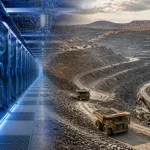
Mining operations control room where specialists monitor real-time data from global extraction sites.

Small Modular Reactors: What they are and why they matter
Small Modular Reactors are nuclear fission reactors that are smaller (typically up to 300 MWe) than conventional nuclear power plants. Their modular nature allows for factory fabrication and on-site assembly, significantly reducing the “mega-project” risks: such as multi-billion dollar cost overruns and decade-long delays: that have historically plagued the nuclear industry.
From a uranium demand perspective, SMRs are significant for three primary reasons:
- Lower Entry Barriers: SMRs can be deployed by industrial users, remote mining sites, and smaller municipal grids that cannot support a 1GW+ conventional reactor.
- Higher Enrichment Requirements: Many advanced SMR designs require High-Assay Low-Enriched Uranium (HALEU). Producing HALEU requires more natural uranium (U3O8) feed and more enrichment work per unit of fuel compared to standard reactor fuel.
- Deployment Velocity: Once the first-of-a-kind (FOAK) units are proven, the rollout of subsequent units is expected to be significantly faster than traditional builds, creating a more responsive demand curve.
Market Dynamics: The 2026 outlook
By 2026, the physical uranium market remains historically tight. According to industry reports, the supply shortfall: currently estimated in the tens of millions of pounds: is expected to persist as reactor restarts and lifetime extensions in the U.S., Japan, and Europe continue to outpace new mine production.
| Metric | 2024 Actual (Est.) | 2026 Forecast | 2030 Outlook |
|---|---|---|---|
| Global Reactor Demand (Mlbs U3O8) | ~175 | ~188 | ~210+ |
| Global Mine Production (Mlbs U3O8) | ~145 | ~160 | ~185 |
| SMR Market Valuation (Global) | $5.8B | $6.3B | $18.5B |
| Data Center Power Demand (TWh) | 460 | 650 | 1,000+ |
Note: Data synthesized from WNA, IEA, and sector analyst reports.
While SMRs will not be the primary driver of physical fuel burn in 2026, their impact is being felt through long-term contracting. Utilities and tech-backed power providers are moving to secure “pounds in the ground” for the late 2020s and early 2030s. This has led to a resurgence in term contracting, where prices are increasingly disconnected from the volatile spot market.

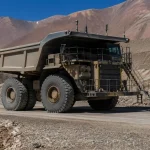
Large-scale mining operations highlighting the scale of extraction required to meet growing energy mineral demand.
Structural shifts in the supply chain
The move toward SMRs and advanced reactors is also forcing a geopolitical reshuffle of the nuclear fuel cycle. For years, the market relied on secondary supplies and underfeeding at enrichers. Those buffers have largely disappeared.
In 2026, the focus for the mining industry has expanded beyond just extraction to include the conversion and enrichment stages. The U.S. and its allies are aggressively funding domestic HALEU production capacity to break the reliance on Russian supply. This vertical integration is critical for the “AI-Energy Nexus,” as tech companies cannot afford the regulatory or reputational risk of a fuel chain dependent on geopolitical adversaries.
We have seen similar structural shifts in other battery and energy metals. For instance, our analysis of the lithium price forecast 2026 highlights how long-term supply agreements are becoming the norm to combat volatility. Uranium is now following a similar trajectory, albeit with much higher barriers to entry and stricter regulatory oversight.
Key Risks to the Bull Case
Despite the robust demand outlook, the uranium sector faces several headwinds:
- Permitting and Social License: Developing new uranium mines, particularly in North America and Australia, remains a lengthy and politically sensitive process.
- Enrichment Bottlenecks: Even if mine production increases, a lack of sufficient conversion and enrichment capacity could prevent that uranium from ever reaching a reactor core.
- Technological Delays: While SMRs are promising, any significant safety incident or major regulatory setback for FOAK designs could cool the enthusiasm of Big Tech investors.

Conceptual rendering of an industrial-scale energy site integrating advanced nuclear technology.
The Mining Operator Perspective
For mining companies, the 2026 environment is one of disciplined expansion. Major players like Kazatomprom and Cameco have signaled they will not flood the market, instead focusing on “value over volume.” This discipline, combined with the emergence of new demand from the tech sector, suggests that the uranium price floor has moved permanently higher.
Junior explorers and developers are also seeing renewed interest. As we noted in our recent deep-dive on copper deficit 2026, investors are increasingly looking for “pure play” exposure to the energy transition. In the uranium space, this means projects located in Tier-1 jurisdictions with clear paths to production are commanding significant premiums.
Conclusion: A new era for nuclear fuel
The rise of SMRs represents more than just a technological evolution; it is a market-clearing event for the uranium industry. By decoupling nuclear power from the traditional utility model and tethering it to the high-growth AI and data center sectors, the industry has secured a demand profile that is both structural and resilient.
As 2026 unfolds, the focus for decision-makers will remain on the execution of these early SMR projects and the build-out of the mid-stream fuel cycle. For the global mining industry, the message is clear: the nuclear renaissance is no longer a forecast: it is an operational reality.
Social Media Snippet (LinkedIn/X):
Big Tech is no longer just a consumer of energy: it’s becoming a nuclear financier. With Microsoft, Amazon, and Google backing SMR projects, the uranium market is seeing a structural demand shift that goes far beyond traditional utilities. As we look at the 2026 outlook, the “AI-Energy Nexus” is creating a permanent floor for uranium prices. Read our full analysis on the SMR revolution and what it means for global mining. #Uranium #SMR #NuclearEnergy #MiningNews #AI #EnergyTransition