By Charles Pitts

WASHINGTON D.C. : The geopolitical landscape of American mining shifted significantly this spring as President Donald Trump and a Republican-led Congress moved to dismantle one of the most contentious environmental restrictions of the previous decade. By overturning the 20-year moratorium on mineral leasing in Minnesota’s Superior National Forest, the federal government has cleared the primary obstacle for the Twin Metals project, a multi-billion-dollar underground mine targeting one of the world’s largest untapped deposits of copper, nickel, and cobalt.
The reversal was finalized through a Congressional Review Act (CRA) resolution signed on April 27, 2026. The resolution rescinds Public Land Order 7917. The 2023 order had withdrawn approximately 225,000 acres of federal land from mineral exploration. Its goal was to protect the watershed of the Boundary Waters Canoe Area Wilderness. As of June 2026, lawmakers are advancing budget legislation to restore mineral leases previously canceled by the Department of the Interior.
Twin Metals Minnesota is a subsidiary of Antofagasta PLC. The legislative breakthrough gives the project a second life. Political uncertainty had stalled development for more than eight years.
The Legislative Reversal: Overturning the 20-year Moratorium
The push to lift the Minnesota mining ban was spearheaded by Representative Pete Stauber (R-Minn.), whose district encompasses the Iron Range and the proposed mine site. Republicans utilized the Congressional Review Act: a tool that allows Congress to overturn executive branch regulations with a simple majority: to target the Biden administration’s long-term withdrawal.
More Read

The House of Representatives passed the resolution in January 2026, followed by a narrow Senate victory in mid-April. Supporters argued that the 20-year ban was an “executive overreach” that ignored the rigorous permitting processes already in place under federal law.

“This is about American mineral independence,” a senior administration official stated during the signing ceremony. “We cannot transition to a modern energy economy or maintain our national security while locking away the very minerals required for those technologies under a blanket moratorium.”
While the signing of the CRA resolution effectively reopens the land for leasing, it does not immediately grant Twin Metals the right to begin construction. The company must still navigate a complex web of federal and state environmental reviews, which were effectively paused when the land was withdrawn.
More Read


Project Profile: The Scale of the Duluth Complex
The Twin Metals project is centered on the Duluth Complex, a massive geological formation in northeastern Minnesota. According to geological surveys, the complex contains an estimated 95% of the United States’ nickel reserves, 88% of its cobalt, and a third of its copper.
The proposed underground mine is designed to produce:
- Copper: Essential for electrical grids, electric vehicle (EV) motors, and renewable energy infrastructure.
- Nickel: A critical component in high-performance batteries and stainless steel.
- Cobalt: Vital for battery stability and energy density.
- Platinum Group Metals (PGMs): Used in catalytic converters and industrial applications.
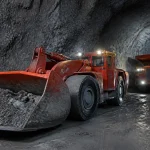
Unlike the open-pit iron ore mines traditional to the region, Twin Metals would be an underground operation utilizing dry-stack tailings technology.
This method involves removing water from the waste rock and stacking it on the surface, which the company claims significantly reduces the risk of water contamination compared to traditional wet tailings ponds.
| Feature | Specification |
|---|---|
| Operator | Twin Metals Minnesota (Antofagasta PLC) |
| Primary Minerals | Copper, Nickel, Cobalt, PGMs |
| Mine Type | Underground |
| Tailings Method | Dry-stack (filtered) |
| Estimated Life of Mine | 25+ years |
| Investment | Over $1.7 billion (initial estimate) |
| Resource Location | Duluth Complex, Superior National Forest |
Critical Minerals and the Energy Transition
The decision to overturn the ban is heavily influenced by the deepening copper deficit projected for late 2026 and the escalating global competition for battery metals. The Department of Energy has repeatedly classified nickel and cobalt as high-risk materials due to their concentrated supply chains, largely dominated by China, Indonesia, and the Democratic Republic of Congo.
By reviving the Twin Metals project, the administration aims to secure a domestic source of these metals, reducing reliance on foreign imports. This strategy aligns with broader industrial policies designed to bolster the U.S. manufacturing sector and the domestic EV supply chain.
For operators and investors, the reopening of northern Minnesota signals a return to “process-based” regulation rather than “policy-based” bans. Industry advocates argue that the National Environmental Policy Act (NEPA) provides a sufficient framework to assess whether the mine can operate without harming the surrounding environment, making the 20-year withdrawal redundant.

The Boundary Waters Debate: Environmental and Legal Risks
Despite the legislative victory in Washington, the project faces a formidable wall of opposition in Minnesota. Environmental groups, local outfitters, and tribal nations have vowed to challenge the reversal in federal court.
The primary concern involves the potential for acid mine drainage. Because the minerals in the Duluth Complex are bound in sulfide ores, exposing the rock to air and water can create sulfuric acid. Opponents argue that even with modern dry-stack technology, the proximity to the Boundary Waters: a 1.1-million-acre wilderness of interconnected lakes and rivers: is too risky.
“A mine of this type has never been operated in a water-heavy environment like the Superior National Forest without some level of contamination,” said a spokesperson for a regional conservation group. “Overturning the ban doesn’t change the geology; it only increases the threat to our nation’s most visited wilderness.”
Legal analysts expect a multi-year battle over the reinstatement of the leases. While the Trump administration can direct the Bureau of Land Management (BLM) to reissue the leases, those decisions will likely be subject to lawsuits questioning the adequacy of previous environmental impact statements.
2026 Outlook: What Happens Next?
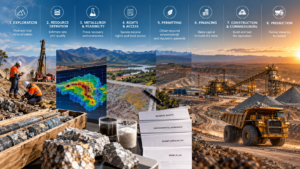
As of mid-2026, the focus has shifted to the Department of the Interior’s internal process. The administration is expected to issue a formal record of decision by late summer to reinstate Twin Metals’ two critical federal mineral leases. Following that, the company will need to resubmit its formal Mine Plan of Operations, triggering a new round of federal and state environmental reviews.
The current legislative push in June: incorporating lease reinstatement mandates into broader budget bills: is an attempt by Congress to “lawsuit-proof” the project by providing explicit statutory authority for the leases, rather than relying solely on executive discretion.

For the global mining community, the Minnesota situation serves as a bellwether for the tension between local environmental protection and national mineral security. The success or failure of Twin Metals will likely dictate the future of the Duluth Complex and the broader viability of sulfide-ore mining in the American Midwest.
Base, Bull, and Bear Case for Twin Metals (2026–2030)
- Base Case: The administration reinstates leases by late 2026; environmental reviews take 3-5 years; construction begins by 2030 pending successful court outcomes.
- Bull Case: Congressional budget language passes, fast-tracking permitting and shielding leases from litigation; Twin Metals breaks ground before 2028.
- Bear Case: Persistent litigation stays the project for another decade; a future administration reverses policy again before construction can begin.

The revival of the Twin Metals project remains one of the most high-stakes developments in the mining review for 2026. While the legislative hurdles in D.C. have been cleared, the path to first ore still runs through the federal courts and the rigorous scrutiny of Minnesota’s regulatory agencies.
Social Media Snippet (LinkedIn/X):
The U.S. mining landscape is shifting. With the Trump administration and Congress overturning the 20-year Minnesota mining ban, the Twin Metals copper-nickel project is back in play. As the global copper deficit looms, can the Duluth Complex secure America’s critical mineral future? #MiningNews #TwinMetals #CriticalMinerals #SuperiorNationalForest #CopperDeficit