By Charles Pitts

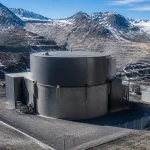
FORT SASKATCHEWAN, Alberta : The long-standing bridge between Cuban mineral wealth and Canadian industrial processing has buckled. Sherritt International Corp. (TSX: S) confirmed this week that it has moved its Fort Saskatchewan refinery into a formal “shutdown state,” effectively terminating Canada’s only domestic production of battery-grade cobalt.
The closure follows a rapid escalation of geopolitical tension. In May 2026, the United States Department of the Treasury expanded its sanctions regime against Cuba, specifically targeting the island’s metals and mining sectors. For Sherritt, which has relied on a 32-year partnership with the Cuban government to feed its Alberta refinery, the new measures proved insurmountable. The sanctions effectively choked the supply of mixed nickel-cobalt sulphides from the Moa Joint Venture, rendering the Canadian facility operationally and economically unviable.
As production ceases this month, the ripple effects are being felt across the North American electric vehicle (EV) supply chain. The loss of the Fort Saskatchewan facility removes a critical link in the continent’s effort to establish a secure, non-Chinese supply of transition metals.
The Sanctions Shockwave
The catalyst for the shutdown was the May 2026 update to the Cuban Assets Control Regulations. While Sherritt has operated under the shadow of the U.S. embargo for decades, the latest expansion specifically targeted “entities providing financial or logistical support to the Cuban extractive industries.”
More Read

By targeting the secondary layers of the supply chain: banks, insurers, and shipping lines: the U.S. government effectively isolated the Moa-to-Fort Saskatchewan pipeline. Major North American and European financial institutions, fearing “regulatory lawfare” and significant fines, pulled back from processing payments related to Sherritt’s Cuban operations. Without the ability to secure trade finance or clear U.S. dollar transactions, Sherritt’s logistical chain collapsed within weeks.


“The complexity of the current sanctions environment has made it impossible to maintain a reliable flow of feedstock,” a Sherritt spokesperson stated during a recent investor call. “While our refinery in Alberta remains a world-class asset, it cannot function without the specific mixed sulphide feed for which it was designed.”
More Read

The Moa Joint Venture: A 32-Year Partnership Ends
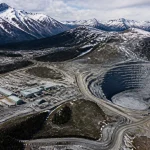
The Moa Joint Venture (Moa JV) was once hailed as a model of international mining cooperation. Since 1994, Sherritt and the Cuban state-owned General Nickel Company S.A. had successfully extracted limonitic ore in eastern Cuba, processed it into mixed sulphides, and shipped it to Alberta for final refining.
However, the partnership has faced increasing pressure as Washington tightened its grip on Havana. Earlier in 2026, Sherritt initially signaled an intent to terminate the Moa JV entirely, citing the “unmanageable risk profile” created by extraterritorial U.S. policy. While the company later attempted to pivot toward a suspended “care and maintenance” status for the Cuban assets, the loss of the refinery in Canada suggests a more permanent decoupling.
For Cuba, the impact is catastrophic. The Moa JV was a primary source of foreign currency and one of the island’s most significant export engines. For Canada, the closure highlights the vulnerability of domestic industrial strategy to shifting U.S. foreign policy.
North American Supply Chain Risks
The idling of the Fort Saskatchewan refinery creates a significant void in the Western critical minerals landscape. As automakers in Detroit and Ontario push for “friend-shored” battery materials, the removal of Canada’s only cobalt refinery moves the needle in the wrong direction.
Cobalt is a key component in the cathodes of lithium-ion batteries, prized for its ability to provide energy density and thermal stability. While the industry has made strides in reducing cobalt intensity, it remains essential for high-performance EV models.

“We are seeing a strategic retreat,” says a senior analyst at Skillings Mining Intelligence. “Just as North America was beginning to gain momentum in the copper deficit of 2026 and rare earth sectors, this closure hands a significant advantage back to global competitors who are not bound by these specific sanctions.”
The refinery’s capacity: roughly 3,800 tonnes of finished cobalt and 35,000 tonnes of nickel per year: cannot be easily replaced. Refining nickel and cobalt requires highly specialized chemical processes tailored to specific ore bodies. The Fort Saskatchewan plant was specifically engineered for the high-pressure acid leaching (HPAL) output from Cuba. Switching to alternative feedstocks would require hundreds of millions in capital expenditures and years of metallurgical reconfiguration.
Market Snapshot: Cobalt Price Forecast 2026
The sudden removal of Sherritt’s refined output has tightened an already volatile market. While global cobalt prices saw a period of oversupply in 2024-2025 due to surging Indonesian production, the loss of battery-grade refined metal in North America has created a localized premium.
Table 1: Cobalt Market Outlook (Mid-2026)
| Metric | Base Case | Bull Case (Supply Squeeze) | Bear Case (EV Slowdown) |
|---|---|---|---|
| Projected Price (USD/lb) | $18.50 | $24.00 | $14.50 |
| Supply Deficit (Tonnes) | -2,500 | -5,000 | +1,200 |
| N. American Refinery Cap. | 0% (Domestic) | 0% (Domestic) | 5% (New Entry) |
| Inventory Levels | Declining | Critically Low | Stable |
The lithium price forecast for 2026 has already shown how sensitive battery metals are to geopolitical shifts. Cobalt is now following a similar trajectory, with the “sanctions discount” for Cuban material being replaced by a “scarcity premium” for refined Western units.
Stock Performance and Corporate Fallout
Sherritt International (TSX: S) shares plummeted following the announcement, hitting multi-year lows. Investors are now weighing the company’s “post-refinery” future. Without the cash flow from processed metal sales, Sherritt is effectively transitioning into a mining services and technology licensing firm, a far cry from its former status as a vertically integrated major.
The company has announced immediate staff reductions at the Fort Saskatchewan site, affecting hundreds of specialized workers in the Edmonton region. Local officials have called for federal intervention, but Ottawa’s hands appear tied by the overarching reality of U.S. trade policy.

“This is an example of the ‘silent squeeze’ we’ve seen in other sectors,” notes a report on the antimony price breakout. “When a single geopolitical lever can shut down a nation’s entire refining capacity for a critical mineral, it exposes the fragility of the ‘Energy Transition’ narrative.”
The Road Ahead: 2026–2027
The shutdown of the Fort Saskatchewan refinery is more than a corporate failure; it is a geopolitical landmark. It signals the end of the “Globalized Mining” era where minerals could be mined in one jurisdiction and refined in another regardless of political friction.
For operators and investors, the key takeaways for the remainder of 2026 are:
- Feedstock Diversification: Companies can no longer rely on single-source, geopolitically sensitive feedstock for Western refineries.
- Regulatory Risk: The “compliance burden” is now a top-tier operational risk, often outweighing geological or technical challenges.
- North American Onshoring: The pressure to build entirely new, domestic HPAL and refining capacity in Canada and the U.S. will intensify, likely requiring massive government subsidies to offset the higher capital costs compared to established sites like Moa.
As the gates close at Fort Saskatchewan, the North American mining industry is left to wonder which critical mineral link might be the next to break.
Social Media Snippet (LinkedIn/X):
Canada loses its only cobalt refinery. ? Sherritt International has moved its Fort Saskatchewan plant into a shutdown state as expanded US-Cuba sanctions choke off vital feedstock. What does this mean for the North American EV supply chain? Penny Langford breaks down the geopolitical fallout, the Moa JV collapse, and the 2026 cobalt price forecast. #MiningNews #Cobalt #EVSupplyChain #Sherritt #CriticalMinerals