By Charles Pitts

The northern tip of the Andes has long been the “missing link” in global copper supply. While Chile and Peru have dominated the world stage for decades, their northern neighbor, Colombia, remained largely unexplored by modern standards. That narrative shifted significantly this year following a massive 1,000-meter intercept at the Mocoa project in Putumayo. As the industry looks toward a structural deficit in the coming decade, the question is no longer if Colombia has the copper, but whether it can navigate the regulatory and social complexities to become the next Andean powerhouse.
The Mocoa Intercept: Defining a Tier-One System
The Mocoa project, now a primary focus for Copper Giant Resources Corp (formerly Libero Copper), has recently delivered geological data that commands attention. Drill hole MD-045 and subsequent extensions have demonstrated that mineralization at Mocoa is not just surface-level; it is a deep, continuous, and robust porphyry system.
Specifically, the demonstration of copper-molybdenum mineralization continuing past the 1,000-meter depth mark suggests a scale comparable to some of the world’s largest operating mines. The system is currently described as a roughly cylindrical body approximately 600 meters in diameter. More importantly, recent field work has identified new leached cap occurrences in outcrop, suggesting that the current deposit may only be the “center of gravity” for a much larger, district-scale mineralized belt.
For investors and operators, this deep continuity is a critical metric. It shifts the project from a mid-tier exploration play to a potential bulk-tonnage underground operation, possibly utilizing block caving methods: a strategy increasingly favored for large-scale, low-cost extraction of deep porphyry deposits.
More Read

Geological Potential: The Northern Andes vs. The Southern Giants
Geologically, Colombia sits on the same Andean tectonic belt that hosts the world-class porphyries of Chile and Peru. However, the Colombian segment (the Northern Andes) is less eroded and remains covered by younger volcanic and sedimentary sequences. This “cover” has hidden massive deposits for generations.

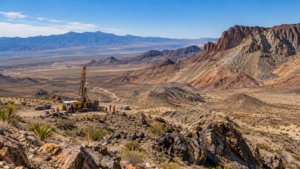
The Putumayo region, where Mocoa is located, represents the Andean-Amazon piedmont. It is a geological frontier that shares many characteristics with the prolific copper belts to the south but offers the “blue sky” upside of an underexplored territory. Unlike the mature districts in the Atacama Desert, which are struggling with declining grades and water scarcity, Colombia’s copper projects are starting from a high-grade baseline with ample: though environmentally sensitive: water resources.

More Read

Market Snapshot: Global Copper Supply and 2026 Projections
The urgency to develop Colombian copper is driven by a tightening global market. While record-high prices are predicted for 2026, the supply side remains constrained by a lack of new greenfield discoveries.
| Metric | 2026 Projection | Primary Drivers |
|---|---|---|
| Global Mine Production Growth | ~2.3% | Expansions in Chile, Peru, and Zambia. |
| LATAM Copper CAGR (2026-2033) | ~2.2% | Incremental growth from brownfield projects. |
| Copper Price Sentiment | Bullish | AI data center demand, grid electrification. |
| Structural Supply Gap | Widening | Lack of major greenfield approvals globally. |
Data source: Skillings Mining Intelligence research and industry consensus.
The market context for 2026 highlights that the world cannot rely solely on the expansion of existing mines. The “Path to $15,000 Copper” is increasingly built on the necessity of frontier jurisdictions like Colombia and Ecuador to fill the looming production void.
Navigating the “Roadmap for Copper”
Colombia’s transition to a copper exporter is not without friction. The administration of President Gustavo Petro has signaled a pivot away from coal and oil toward “minerals for the energy transition.” However, this policy shift comes with stringent environmental and social requirements.
- Environmental Licensing: Projects in the Putumayo region sit in a biodiverse Andean-Amazon transition zone. The regulatory scrutiny for environmental permits in this biome is among the highest in the world.
- Social License: Organized local resistance and the requirement for “prior consultation” with Indigenous communities are central pillars of the Colombian mining code. Successful developers will be those who can integrate community development into their core business model early on.
- Infrastructure and Security: Putumayo is a historically underserved region with low electrification and logistical challenges. The development of Mocoa will likely require significant public-private partnerships to build the necessary power and transport corridors.

Why it Matters: The Strategic Importance of Putumayo
Mocoa is more than just a single project; it is the “anchor” for a new mining district. If Copper Giant can successfully navigate the 1,000-meter extension and subsequent PEA/PFS stages, it will provide the blueprint for others to follow.
The strategic importance of this region cannot be overstated. As Western nations look to de-risk their supply chains and find stable, long-term sources of copper outside of traditional monopolies, the Northern Andes represent one of the few remaining geological frontiers with “tier-one” potential.
2026 Outlook: Drivers and Risks
As we look toward the remainder of 2026, the outlook for Colombia copper mining is divided into three distinct scenarios:
- Bull Case: Continued high-grade intercepts at Mocoa lead to a significant resource upgrade. The Petro government clarifies the permitting roadmap for “Strategic Mining Districts,” leading to a surge in foreign direct investment (FDI) and M&A interest from majors seeking greenfield exposure.
- Base Case: Exploration continues at a steady pace, but the timeline for environmental licensing remains long. Investors focus on de-risking through technical studies (PEA/PFS) while the project remains in the “advance exploration” phase.
- Bear Case: Regulatory gridlock or social unrest in the Putumayo region stalls field operations. Capital rotates toward more established jurisdictions or neighboring Ecuador, where the mining code is perceived as more streamlined.

Conclusion
Colombia copper mining is currently at a critical inflection point. The geology is undeniable: the 1,000-meter intercepts at Mocoa prove that the Andean copper belt does not stop at the border. However, the path to production in a frontier jurisdiction requires more than just high-grade drill results; it requires a sophisticated approach to ESG and a stable regulatory framework.
For the global mining industry, Colombia represents the “Next Great Andean Powerhouse” in waiting. Whether it realizes that potential in 2026 depends on the ability of operators like Copper Giant to turn geological success into a social and environmental reality.