By Charles Pitts

The silver market has entered a transformative phase in 2026, punctuated by a decisive breakout above the $54 mark. While traditional safe-haven demand and currency hedges remain influential, the primary catalyst for this price action is a structural shift in how the global technology sector manages power. Specifically, the rapid expansion of artificial intelligence (AI) data centers and their reliance on high-reliability solar backup systems have created a new, non-discretionary industrial demand floor.
As of mid-2026, silver’s price trajectory is no longer tied solely to the jewelry or coin markets. Instead, it has become an essential component of the energy transition, functioning as a critical metal for the massive photovoltaic (PV) arrays powering the next generation of cloud computing. This deep-dive examines the “silver secrets” behind the 2026 breakout and why the interplay between AI infrastructure and renewable energy is redefining silver price predictions for the years ahead.
The $54 breakout: A technical and fundamental confluence
The breach of $54 per ounce represented more than just a psychological milestone; it was a clear signal of market tightening. For much of late 2025 and early 2026, silver faced resistance as institutional investors weighed the impact of “thrifting”: the process by which manufacturers reduce the amount of silver used per solar cell. However, the sheer scale of the global solar build-out has overwhelmed these efficiency gains.
Data from the Skillings Mining Intelligence June 24 report suggests that the net present value (NPV) of new silver-primary projects has surged by 28% year-over-year. This indicates that while the industry is using less silver per unit, it is producing so many more units that the absolute demand remains in a sharp uptrend.
More Read

| Market Metric (June 2026) | Value / Change |
|---|---|
| Spot Silver Price | $54.22 (Breakout Level) |
| 2026 Forecast Average | $79 – $81 |
| Estimated Supply Deficit | 46.3 Million Oz |
| AI-Linked Industrial Demand | +12% YoY |
| Primary Silver Mine Capex | +15% YoY |
AI data centers: The hidden demand driver
The explosion of generative AI has created an insatiable demand for 24/7 power. Unlike traditional data centers, AI-focused facilities require significantly higher energy density and a “zero-downtime” guarantee. To meet ESG mandates and ensure grid independence, major tech players are increasingly pairing their facilities with massive dedicated solar farms and battery storage systems.


Silver plays a dual role in this ecosystem. First, it remains the most conductive metal for the busbars and grids of high-efficiency solar cells. Second, it is critical for the power electronics: the switchgear, relays, and silver-coated contacts: that manage the flow of electricity between the solar array, the backup batteries, and the server racks.
More Read
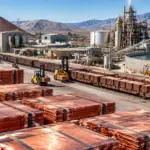
In 2026, the demand for these backup systems has reached a critical mass. Because AI workloads are non-interruptible, the reliability of silver-based components has become a non-negotiable requirement for operators. This “industrial floor” is a key reason why silver has successfully defended the $54 level during recent macro-economic volatility.
The 2026 silver deficit: A six-year trend
The silver price breakout of 2026 is underpinned by a persistent structural deficit. According to the latest industry data, 2026 marks the sixth consecutive year in which global silver demand has exceeded total supply (mine production plus recycling).
Several factors contribute to this tightening:
- Mining Lead Times: Despite higher prices, bringing new primary silver mines online takes 7 to 10 years. Much of the current supply comes as a byproduct of lead, zinc, and copper mining, where production rates are determined by those primary metals’ markets.
- Declining Ore Grades: Existing operations in Mexico and Peru are reporting a gradual decline in silver grades, requiring more ore to be processed to maintain current output levels.
- Logistics and Geopolitics: Disruptions in critical mineral supply chains have incentivized “near-shoring” of electronics manufacturing, increasing localized demand in North America and Europe.
As noted in recent Skillings investment analysis, the cumulative deficit since 2021 has now reached a point where industrial stockpiles are at their lowest levels in a decade. This lack of a buffer makes the price exceptionally sensitive to any sudden surge in demand, such as the current data center expansion.

Solar technology evolution: HJT and TOPCon
The transition from older PERC (Passivated Emitter and Rear Cell) technology to N-type cells like TOPCon (Tunnel Oxide Passivated Contact) and HJT (Heterojunction) is a primary factor in the silver price breakout 2026 factors. These newer technologies require significantly more silver paste per cell to achieve their higher efficiency ratings: sometimes as much as 30% to 50% more than legacy cells.
While manufacturers continue to experiment with copper-plated alternatives, the reliability and long-term performance of silver remain the gold standard (no pun intended) for the high-stakes environment of AI data center power. The risk of cell degradation in a $5 billion data center is simply too high for operators to switch to unproven materials.
Operational impact on the mining sector
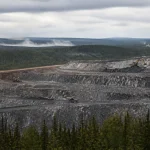
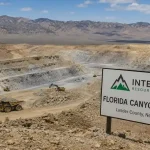
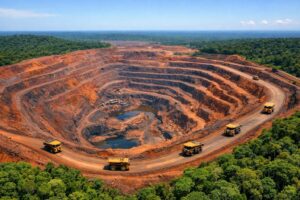
For mining operators, the $54 breakout has changed the economics of silver-zinc and silver-lead exploration. Projects that were once considered marginal are now seeing renewed investment. We are seeing a shift in focus toward “silver-heavy” jurisdictions where primary silver mines can be fast-tracked.

However, the industry faces headwinds in the form of rising operational costs. Decarbonization efforts and the transition to battery-electric haulage fleets are increasing initial capital expenditures (CAPEX), even as they promise to lower the all-in sustaining cost (AISC) over the life of the mine. Miners are now in a race to automate and electrify to stay competitive in this high-price environment.
Silver price prediction 2026: The base and bull cases
Looking ahead for the remainder of 2026, the consensus among institutional analysts has shifted toward a sustained high-price environment.
- Base Case ($70 – $85): Ongoing industrial demand from the solar sector and AI infrastructure provides a firm floor. Modest supply increases from byproduct mining keep the market in a manageable deficit.
- Bull Case ($100+): A sudden acceleration in the “AI arms race” leads to a massive pull-forward of data center construction. If combined with a geopolitical disruption in a major silver-producing region like Mexico, a squeeze toward the triple digits becomes highly plausible.
- Bear Case ($45 – $50): A significant global economic slowdown reduces demand for new electronics and pauses the expansion of data center capacity. Rapid breakthroughs in silver-free PV technology could also dampen long-term sentiment.
Conclusion: A new paradigm for silver
The 2026 breakout above $54 signals that silver has graduated from a speculative precious metal to a fundamental industrial commodity of the digital age. The synergy between AI’s need for reliable power and solar energy’s reliance on silver conductivity has created a demand cycle that is disconnected from traditional economic cooling. For investors and mining operators alike, the challenge will be navigating a market where supply remains inelastic while the technological requirements of the future show no signs of slowing down.