By Charles Pitts

The global push toward decarbonization and industrial regionalization has fundamentally redefined the mining sector. By 2026, the transition from fossil-fuel-intensive energy to a mineral-intensive economy is expected to reach a critical juncture. Governments in the West are no longer treating commodities like lithium, copper, and rare earths as mere trade items but as matters of national security.
As we look toward the 2026 outlook, the investment landscape for critical minerals is characterized by a shift from speculative hype to fundamental execution. For operators and investors, the focus has moved toward companies with established production, low-cost curves, and secure, non-adversarial supply chains. The emergence of strategic reserves, such as the United States’ “Project Vault,” and the development of logistical lifelines like the Lobito Corridor, are creating a new “Tier 1” class of mining equities.
Critical minerals price forecast 2026: Drivers and scenarios
The performance of critical minerals in 2026 will be dictated by the intersection of AI-driven power demand, the stabilization of the electric vehicle (EV) market, and geopolitical trade barriers.
Copper: The structural bull case
Copper remains the “metal of electrification.” The expansion of AI data centers and the modernization of global power grids have added a new layer of demand on top of the traditional EV and renewable energy sectors.
More Read

- Base Case: Analysts forecast copper to average approximately $11,400/t in 2026, supported by structural supply deficits.
- Bull Case: Prices could breach $12,000/t if mine disruptions in South America persist and US permitting reforms fail to accelerate new domestic supply.
- Bear Case: A global industrial slowdown or a significant retracement in China’s construction sector could see prices test $9,000/t.
Lithium: Normalization and recovery
After the extreme volatility of the mid-2020s, lithium is entering a period of normalization.

- Base Case: Prices are expected to stabilize around $15,000–$18,000/t for lithium carbonate as high-cost lepidolite production in China is sidelined.
- Bull Case: A 30–40% surge in lithium demand by 2026: driven by the mass adoption of long-range EVs: could push prices back toward $25,000/t.
- Bear Case: Continued oversupply from low-cost African and South American projects could keep prices suppressed near $10,000/t.

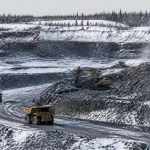
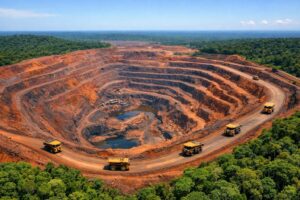
Modern open-pit operations are the backbone of global copper and lithium production.
10 Critical minerals stocks to watch for 2026
The following companies represent a mix of established producers and advanced developers that are strategically positioned to lead the supply chain transition.
More Read

1. MP Materials (NYSE: MP)
As the owner and operator of the Mountain Pass mine in California, MP Materials is the vanguard of the Western rare earths industry. By 2026, MP is expected to be fully integrated, moving from the sale of concentrates to the domestic production of NdPr (Neodymium-Praseodymium) magnets. The company’s strategic importance is highlighted by its deep ties with the U.S. Department of Defense and long-term offtake agreements that insulate it from Chinese price manipulation.
2. Albemarle (NYSE: ALB)
Albemarle remains the titan of the lithium sector. With a diverse asset base spanning the U.S., Chile, and Australia, the company is best positioned to capture the global energy transition. Its 2026 outlook is bolstered by the expansion of the Kings Mountain project and its ability to refine lithium to battery-grade specifications across multiple continents. Albemarle’s scale and low-cost brine operations in Chile provide a significant margin cushion against price cyclicality.
3. Freeport-McMoRan (NYSE: FCX)
Freeport-McMoRan is the premier “pure play” on copper. With massive operations at Grasberg in Indonesia and across the Americas, FCX is a beneficiary of the structural copper deficit. For 2026, the company is focusing on technological breakthroughs in leaching, which could unlock millions of tonnes of copper from existing stockpiles without the need for new mines: a strategy often referred to as the “invisible mine”.
4. Ivanhoe Mines (TSX: IVN)
Ivanhoe Mines’ Kamoa-Kakula project in the Democratic Republic of Congo is arguably the most significant copper discovery of the last century. By 2026, Ivanhoe is projected to become one of the top three global copper producers as its Phase 3 expansion reaches full capacity. The project’s high grades and use of clean hydroelectric power make it a preferred supplier for Western OEMs focused on ESG metrics.
5. BHP (NYSE: BHP)
BHP, the world’s largest miner, has pivoted its portfolio heavily toward “future-facing” commodities. Beyond its massive Escondida copper mine, BHP is making significant bets on nickel (West Musgrave) and potash (Jansen). By 2026, BHP’s integrated model and focus on high-margin, long-life assets make it a core holding for investors seeking diversified exposure to the critical minerals thematic.
6. Lynas Rare Earths (ASX: LYC)
Based in Australia, Lynas is the only significant producer of separated rare earths outside of China. Its Mt Weld mine and processing facilities in Malaysia and the United States (Texas) are essential to the diversification of the magnet supply chain. The 2026 outlook for Lynas is bright, as it benefits from Australian government support and increasing demand from the European and North American EV and defense sectors.

Brine extraction remains the lowest-cost method for lithium production.
7. Lithium Americas (NYSE: LAC)
The development of Thacker Pass in Nevada: the largest known lithium resource in the United States: places Lithium Americas at the center of the domestic supply chain. With significant backing from General Motors and a massive U.S. Department of Energy loan, the 2026 timeline for Thacker Pass is a key milestone for North American lithium independence. Investors should refer to the Lithium Power Map 2026 for a detailed breakdown of its competitive position.
8. Pilbara Minerals (ASX: PLS)
As a dominant producer of spodumene concentrate from its Pilgangoora operation in Australia, Pilbara Minerals has one of the strongest balance sheets in the lithium sector. By 2026, the company is expected to move further downstream through joint ventures in chemical refining, capturing more of the value chain. Its ability to sell via a sophisticated digital auction platform (BMX) provides real-time transparency into lithium market dynamics.
9. Arcadium Lithium (NYSE: ALTM)
Formed by the merger of Livent and Allkem, Arcadium Lithium is a vertically integrated giant with a footprint in every major lithium-producing region. This merger has created significant operational synergies, allowing the company to optimize production across brine and hard-rock assets. By 2026, Arcadium is expected to be a primary beneficiary of the move toward high-nickel battery chemistries that require high-purity lithium hydroxide.
10. Syrah Resources (ASX: SYR)
Graphite is often the “forgotten” battery mineral, yet it comprises nearly 50% of an EV battery by weight. Syrah Resources operates the world-class Balama mine in Mozambique and is developing an active anode material (AAM) facility in Vidalia, Louisiana. As China continues to weaponize graphite export controls, Syrah’s position as a non-Chinese supplier of processed anode material will be highly strategic by 2026.
Supply chain transition: The rise of the Western “Giga-Mine”
The transition to a localized supply chain is being fueled by unprecedented government intervention. In the United States, the Inflation Reduction Act (IRA) and the CHIPS Act have provided a multi-billion dollar tailwind for domestic mining and processing.
Operational efficiency is also being redefined through technology. The integration of AI in mining operations: ranging from autonomous fleet management to predictive geological modeling: is lowering the cost of extraction. Companies that leverage these technologies are better equipped to handle the rising costs of labor and energy.

Centralized control rooms are becoming the standard for modern, high-efficiency mining operations.
Risks and drivers for the 2026 outlook
While the macro drivers for critical minerals are robust, several risks remain:
- Permitting and Regulatory Hurdles: Despite political rhetoric, the timeline for bringing a new mine online still exceeds a decade in most Western jurisdictions.
- Resource Nationalism: As minerals become more valuable, host countries: particularly in Africa and South America: may seek a larger share of the profits through increased royalties or forced equity stakes.
- Technological Substitution: Breakthroughs in sodium-ion batteries or solid-state technology could shift demand away from traditional lithium and cobalt chemistries, though copper remains essential regardless of battery type.
Conclusion: Positioning for the 2026 cycle
The year 2026 will likely reward miners that have survived the consolidation of the mid-2020s and have emerged as reliable, low-cost producers. For investors, the “Critical minerals stocks to buy 2026” narrative is less about finding the next “multi-bagger” junior explorer and more about backing the industrial giants that are building the infrastructure of the future.
Whether it is copper’s role in powering AI data centers or the rare earths required for precision-guided defense systems, the strategic value of these 10 companies is set to increase as the supply chain transition accelerates.