By Charles Pitts

RED LAKE, ONTARIO : First Mining Gold Corp. has cleared a primary regulatory hurdle for its flagship Springpole Gold Project, receiving federal Environmental Assessment (EA) approval for what is designed to be one of the largest open-pit gold mines in Canada.
The decision, issued by the Minister of Environment, Climate Change and Nature on June 30, 2026, marks the conclusion of an 8.5-year federal review process under the Canadian Environmental Assessment Act, 2012. The approval authorizes the development of a 65,000 tonnes per day (tpd) ore production operation located approximately 110 kilometers northeast of Red Lake, Ontario.
With this federal mandate in hand, the project moves into a critical secondary phase of provincial permitting and technical optimization, as First Mining targets a final investment decision (FID) within the next 18 to 24 months.
The Springpole Decision: Context and Conditions
The federal EA approval is the culmination of a process that began in early 2018. First Mining voluntarily extended the final decision deadline from May 22, 2026, to the end of June to allow the Impact Assessment Agency of Canada (IAAC) to finalize its reporting.
More Read
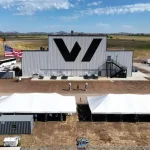
The Minister’s Decision Statement includes a series of binding conditions aimed at mitigating environmental impacts on the remote Northwestern Ontario site. These conditions focus heavily on aquatic and terrestrial protections, requiring First Mining to implement rigorous monitoring and adaptive management strategies for water quality and local wildlife habitats.

The project’s location in the District of Kenora necessitates a complex logistical and environmental management plan. As an open-pit operation with a proposed on-site mill capacity of 30,000 tpd ore input, the environmental footprint is substantial. The federal approval confirms that the mitigation measures proposed by the company are sufficient to meet national standards, provided the binding conditions are met throughout the project’s estimated 10-year mine life.

More Read

65,000 TPD: Scaling One of Canada’s Largest Resources
Springpole is currently characterized as one of the largest undeveloped gold resources in the country. The project’s Pre-Feasibility Study (PFS), which was updated in November 2025, outlines a massive scale of operation designed to process 65,000 tonnes of ore daily.
The mine plan involves:
- Production Capacity: 65,000 tpd of ore production.
- Processing: An on-site metal mill capable of 30,000 tpd throughput.
- Life of Mine (LOM): An initial 10-year operational period based on current reserves.
- Commodity Profile: Primary gold extraction with significant silver credits.
For operators and investors, the scale of Springpole represents a significant addition to the Ontario mining pipeline. At a time when gold price forecasts are testing previous ceilings, the entry of a large-scale producer in a Tier-1 jurisdiction like Ontario provides a potential hedge against geopolitical volatility in other mining regions.

Indigenous Engagement and the Path to Social License
Central to the 2026 regulatory success has been First Mining’s engagement with local Indigenous communities. Unlike the traditional top-down regulatory approach, the Springpole project was subject to an Anishinaabe-Led Impact Assessment conducted by the Cat Lake and Lac Seul First Nations.
This community-led process resulted in a series of votes held on June 4, 2026. First Mining has since negotiated term sheets and definitive agreement paths with three key First Nations: Cat Lake, Lac Seul, and Slate Falls.
Management has indicated that the goal is to align “social license”: the formal community agreements: with environmental licensing by the end of the 2026 summer season. This parallel track of regulatory and community approval is increasingly becoming the standard for major resource projects in Canada, where Indigenous consent is a critical component of project de-risking.
Provincial Status and Technical 2026 Outlook
While the federal approval is a major milestone, the project remains subject to a provincial Environmental Assessment under Ontario’s Environmental Assessment Act. The full provincial EA was submitted in November 2024, and a draft decision document is currently available for public comment through late July 2026.
First Mining expects a final provincial decision by the end of summer 2026. Should this timeline hold, the project will transition into a Feasibility Study (FS) phase, targeted for completion by mid-2027.
The technical focus for the remainder of 2026 will center on:
- Engineering Optimization: Refining the pit design and processing flowsheet to meet the specific conditions laid out in the federal Decision Statement.
- Permitting: Advancing secondary permits for water taking, waste management, and site infrastructure.
- Infrastructure Readiness: Planning for the logistical requirements of a site located 110 km from the nearest major mining hub in Red Lake.

Market Implications: The 2026 Mining Landscape
The approval of Springpole comes at a time of renewed interest in large-scale Canadian assets. As seen with recent M&A activity in the gold sector and operational shifts at major sites like Canadian Malartic, the industry is prioritizing jurisdictions with clear regulatory frameworks and established infrastructure.
For Ontario, the progress at Springpole reinforces the province’s status as a premier mining destination. The project joins a list of high-impact developments that are reshaping the regional economy, particularly in the northwestern corridor.
However, the 10-year mine life and the high daily throughput (65,000 tpd) suggest that First Mining will need to maintain a high level of operational efficiency to manage the capital intensity of the project. The upcoming Feasibility Study in 2027 will be the definitive document for determining the final economic parameters, including updated CapEx and OpEx estimates in the current inflationary environment.
Operational Oversight and Next Steps
As the project moves toward a potential construction phase, the role of real-time monitoring and data integration will become paramount. Large-scale open-pit operations are increasingly reliant on centralized control rooms to manage fleet logistics and safety metrics.

The integration of these technologies will be essential for Springpole to meet its environmental obligations while maintaining the 65,000 tpd production target. First Mining has indicated that it will continue to work closely with the IAAC and provincial regulators to ensure that the project’s design remains compliant with the evolving environmental standards of 2026.
With federal approval secured and provincial decisions on the horizon, the Springpole Gold Project has transitioned from a long-term exploration asset to a near-term development priority. For the mining industry in Ontario, the next 18 months will determine if Springpole can successfully navigate the final hurdles toward becoming one of the country’s next major gold producers.