By Charles Pitts

LILONGWE, Malawi : Rio Tinto has declined to exercise its option to become the operator of the Kasiya rutile-graphite project, handing full development control back to Sovereign Metals as the junior miner pivots toward a U.S.-centric strategic minerals supply chain.
The decision, announced July 8, 2026, marks a significant shift in the development trajectory for one of the world’s largest critical mineral deposits. While Rio Tinto will retain its 18.2% equity stake and its roughly $60 million total investment, the lapse of its exclusive marketing and pre-emption rights leaves Sovereign Metals free to pursue independent financing and offtake agreements.
Sovereign Metals immediately confirmed it will now prioritize a development strategy aligned with U.S. and allied critical minerals policies. This includes leveraging existing non-binding memorandums of understanding (MOUs) with major industrial partners and seeking support from the U.S. government’s “Project Vault” Strategic Critical Minerals Reserve program.
Rio Tinto’s Strategic Review and Focus Shift
The move by Rio Tinto comes as the diversified mining giant undergoes a broader strategic review of its iron and titanium business units. According to company statements, the decision not to take operatorship at Kasiya does not reflect a change in the project’s underlying economics or geological potential.
More Read

Industry analysts suggest Rio Tinto is prioritizing its capital and operational bandwidth for large-scale iron ore and copper ventures. This includes the massive Simandou project in Guinea, where Rio Tinto recently hit a critical rail milestone as part of a multi-billion dollar infrastructure push.

By stepping back from the operator role in Malawi, Rio Tinto avoids the immediate administrative and construction obligations of the $727 million project while maintaining exposure to the asset’s upside through its substantial shareholding. The Sovereign-Rio Tinto Technical Committee, which has overseen technical workstreams since 2023, is expected to wind down its formal oversight role as Sovereign resumes direct management.

A heavy haulage unit stationed at a mineral development site in East Africa.
More Read
Sovereign’s Pivot to U.S. Strategic Supply Chains
With full control restored, Sovereign Metals is refocusing Kasiya as a primary non-Chinese source of titanium and graphite for Western markets. The project holds the distinction of being the world’s largest known natural rutile deposit and the second-largest flake graphite deposit.
The company’s strategy now leans heavily into U.S. critical minerals security. The United States is currently 100% import-reliant for titanium sponge, a critical component for aerospace and defense manufacturing. With Chinese export restrictions on graphite and other minerals tightening throughout 2024 and 2025, Kasiya is being positioned as a “de-risked” alternative for North American OEMs.
Key to this pivot is Sovereign’s relationship with Traxys North America. In February 2026, the two parties signed an MOU for the marketing of up to 80,000 tonnes per annum of graphite. Traxys is notably one of the commodity traders selected for the U.S. government’s Project Vault, a $10 billion Strategic Critical Minerals Reserve program led by the Export-Import Bank (EXIM).
“By aligning with partners like Traxys and Mitsui & Co., Sovereign is moving beyond the junior explorer phase into a strategic infrastructure play,” noted one analyst following critical minerals stocks on the 2026 watchlist. “Taking full control allows them to negotiate directly with U.S. and Japanese agencies without Rio’s veto or marketing constraints.”
Kasiya Project Economics and Scale
The Definitive Feasibility Study (DFS), completed in the first quarter of 2026, outlined a 25-year mine life with robust financial returns. The project boasts a pre-tax Net Present Value (NPV8) of approximately $2.2 billion and an internal rate of return (IRR) of 32%.
Kasiya is expected to produce:
- Natural Rutile: 220,000 to 245,000 tonnes per annum (the purest form of titanium feedstock).
- Natural Flake Graphite: 275,000 to 288,000 tonnes per annum (essential for EV battery anodes).
The project also offers a potential third revenue stream via monazite, which contains heavy rare earth elements (HREEs) like dysprosium and terbium. Sovereign is currently evaluating the integration of a monazite circuit, which could provide feedstock to Western processors such as the White Mesa Mill in Utah.

Infrastructure development at a remote mineral processing facility.
Financing and the International Finance Corporation (IFC)
While the initial capital expenditure of $727 million remains a high hurdle for a junior developer, Sovereign has secured a collaboration agreement with the International Finance Corporation (IFC). The World Bank’s private sector arm is assisting Sovereign in developing its Environmental and Social Impact Assessment (ESIA) to global best-practice standards.
The IFC’s involvement is a critical signal to institutional lenders and commercial banks. It provides a “stamp of approval” for ESG compliance, which is increasingly mandatory for Western offtakers and government-backed financiers. Sovereign has indicated it will now pursue a mix of traditional project finance, export credit agency (ECA) support, and strategic equity from offtake partners.
This independence is a notable example of identifying deep value in junior miners during a high-conviction M&A cycle. While most juniors seek a buyout, Sovereign is choosing to build, betting that the strategic value of its minerals will command a premium in the late-2020s supply squeeze.
Logistics via the Nacala Corridor
The project’s viability is underpinned by existing infrastructure. Kasiya plans to utilize the Nacala Logistics Corridor, a $7 billion rail and port system connecting Malawi to the deep-water Port of Nacala in Mozambique.
Japan’s commitment to upgrading this corridor has been a boon for regional exporters. Sovereign intends to construct a 6-kilometer rail spur to connect the Kasiya processing plant directly to the main line, ensuring a low-cost route to the Indian Ocean and onto U.S. and European markets.

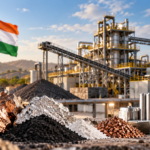
Samples of natural rutile and flake graphite extracted from the Kasiya project site.
Market Snapshot: Kasiya Project Data (2026 DFS)
| Metric | Value |
|---|---|
| Mine Life | 25 Years |
| Pre-tax NPV (8%) | US $2.2 Billion |
| Initial Capital (Phase 1) | US $727 Million |
| Annual Rutile Production | 222,000 tonnes |
| Annual Graphite Production | 275,000 tonnes |
| Operating Cost (Graphite) | US $216 per tonne |
| Operating Cost (Rutile) | US $364 per tonne |
The 2026 Outlook
Sovereign Metals enters the second half of 2026 with a clear mandate. The company expects to submit its final ESIA for approval later this year, which remains the critical path toward a Final Investment Decision (FID).
With Rio Tinto moving to a passive shareholder role, the market’s focus will shift to Sovereign’s ability to convert non-binding MOUs with Mitsui and Traxys into definitive, bankable offtake contracts. If successful, Kasiya could see first production by 2028 or 2029, potentially becoming the largest supplier of its kind to the Western world.
For now, the project remains a centerpiece of the East African mining renaissance, proving that even as majors retreat to core iron and copper assets, the demand for critical minerals provides a fertile path for well-capitalized juniors to take the lead.

The Nacala Corridor serves as the primary export route for Malawian mineral wealth.