By Charles Pitts

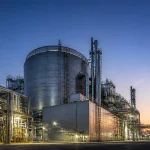
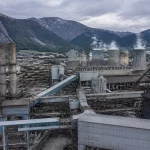
On the outskirts of Nashwauk, Minnesota, the skyline of the Mesabi Iron Range is undergoing its most significant transformation in half a century. The Mesabi Metallics project, a massive $2.5 billion industrial undertaking, has reached a critical milestone as it nears the finish line of a multi-decade development saga. As of May 31, 2026, the project’s Engineering, Procurement, and Construction (EPC) phase stands at 95.5% complete, clearing the path for commissioning to begin in the coming weeks.
For the first time in 50 years, Minnesota is on the verge of opening a brand-new, fully integrated iron ore mine and processing facility. This is not merely an addition to the state’s storied mining legacy; it represents a fundamental shift in the North American steel supply chain. Designed to produce 7 million tons per year of high-purity, Direct Reduction (DR)-grade iron ore pellets, the facility is a direct response to the decarbonization of the global steel industry.
With commissioning targeted for July and August 2026, and full commercial production slated for the second half of the year, Mesabi Metallics is arriving at a pivotal moment for both regional economics and national industrial strategy.
The Push Toward Commissioning: 95.5% and Counting
The transition from a construction site to an operational powerhouse is a complex logistical dance involving more than 1,500 contractors currently on-site. The 95.5% completion figure reported at the end of May reflects the near-total installation of the beneficiation plant, the pelletizing furnace, and the sprawling conveyor systems that will move raw ore from the pit to the processing lines.
More Read

The commissioning phase, set to begin this July, involves the rigorous testing of every electrical, mechanical, and automated system within the plant. Operators will begin “dry” runs of the equipment before introducing raw material into the circuit. For the Nashwauk community and the broader Iron Range, this phase is the culmination of years of legal, financial, and regulatory hurdles that often threatened to derail the project.

“We are moving into the most critical window of the project’s history,” notes a project lead familiar with the Nashwauk site. “Transitioning 1,500 construction workers into a permanent operational team of approximately 200 high-skill miners and technicians is the final hurdle in bringing this asset to life.”

More Read
DR-Grade Pellets: Fueling the “Green Steel” Transition
The strategic importance of Mesabi Metallics lies in the specific chemistry of the pellets it will produce. Traditional blast furnace steelmaking can utilize lower-grade iron ore, but the industry is rapidly shifting toward Electric Arc Furnaces (EAFs) and Direct Reduced Iron (DRI) modules to reduce carbon emissions.
To function efficiently, these modern DRI plants require “DR-grade” pellets with an iron (Fe) content exceeding 67% and very low levels of impurities like silica and alumina. Mesabi Metallics is designed specifically for this high-spec market. By producing 7 million tons of merchant DR-grade pellets annually, the facility aims to replace a significant portion of the ore that U.S. steelmakers currently must import from overseas sources, such as Brazil or the Middle East.
This shift mirrors broader trends seen in global mining hubs. For context, as Rio Tinto hits critical rail milestones for the Simandou project in Africa to secure high-grade supply, Mesabi Metallics is doing the same for the domestic North American market. The ability to source these critical inputs locally reduces the carbon footprint of the entire supply chain: a key requirement for the “Green Steel” initiatives currently being funded by both the private sector and the U.S. Department of Energy.
National Security and the $10 Billion Strategic Backing
The project has recently gained significant traction in Washington D.C., framed as a matter of national security. As the U.S. looks to shore up domestic manufacturing and reduce dependency on foreign adversaries for critical industrial inputs, iron ore has regained its status as a strategic mineral.
The scale of the project is supported by substantial financial interest, including potential backing of up to $10 billion from the Export-Import Bank (Ex-Im Bank). This level of federal interest underscores the project’s role in the “Iron & Steel” pillar of the U.S. industrial base. By securing a domestic source of DR-grade pellets, the U.S. ensures that its most advanced steel mills remain operational even during periods of global supply chain volatility or geopolitical tension.
The investment is already trickling down into the local economy. Beyond the $2.5 billion capital expenditure, the project’s 200 permanent operational roles are expected to sustain high-wage employment in the Nashwauk area for decades.

Market Context: Great Lakes Shipments on the Rise
The timing of Mesabi Metallics’ entry into the market coincides with a strengthening trend in regional ore logistics. According to the latest data for June 2026, Great Lakes iron ore shipments reached 5.1 million tons, a 4.5% increase compared to the same month last year.
Two Harbors, MN, continues to be the dominant gateway for Minnesota’s iron ore, leading the region with 4.6 million tons shipped year-to-date (YTD). Meanwhile, Marquette, MI, posted a strong June performance with 995,000 tons shipped.
Great Lakes Iron Ore Shipment Snapshot (June 2026)
| Port | June 2026 Tons | YTD 2026 (Jan-June) | Trend vs. 2025 |
|---|---|---|---|
| Total Great Lakes | 5.1 Million | 17.3 Million | +4.2% |
| Two Harbors, MN | 1,353,408 | 4,665,290 | Steady |
| Marquette, MI | 994,823 | 3,126,184 | +12% |
| Duluth/Superior | 1,120,500 | 4,110,000 | +3.5% |
Source: Skillings Mining Intelligence Regional Port Data
As Mesabi Metallics ramps up to full production in the second half of 2026, these shipping figures are expected to see a significant boost. The influx of 7 million additional tons annually will require refined logistics and potentially new investments in rail and dock capacity to handle the surge in outbound pellets destined for EAF mills in the Great Lakes and Ohio River Valley regions.

Regional Rebound: The Minnesota Context
The progression of the Nashwauk site is part of a broader industrial reawakening in the state. While Minnesota has faced regulatory headwinds in other sectors, the iron ore industry remains the bedrock of the northern economy. The success of Mesabi Metallics is seen as a signal to other investors that large-scale, complex mining projects can indeed reach the finish line in the state.
This progress contrasts with the challenges faced by other mineral projects in the region, such as those discussed in our previous analysis on how Minnesota’s policy reversals affect the copper and nickel sectors. Unlike those more contentious critical mineral projects, Mesabi Metallics benefits from the long-standing infrastructure and public familiarity with the Iron Range’s taconite industry.
Outlook: H2 2026 and Beyond
As July approaches, the eyes of the North American steel industry are fixed on Nashwauk. The successful commissioning of the pellet plant will mark the end of a 50-year drought in new mine development for the region.
The base case for Mesabi Metallics in late 2026 remains bullish: a smooth ramp-up to full capacity by year-end, bolstered by strong demand from EAF operators looking to lock in domestic contracts. However, the bear case involves potential teething issues common in new beneficiation circuits, which could delay the achievement of nameplate capacity into early 2027.
Regardless of the immediate ramp-up speed, the arrival of Mesabi Metallics fundamentally alters the landscape. It secures a high-purity iron source within American borders, supports a “green” transition for heavy industry, and revitalizes a community that has waited decades for this moment.